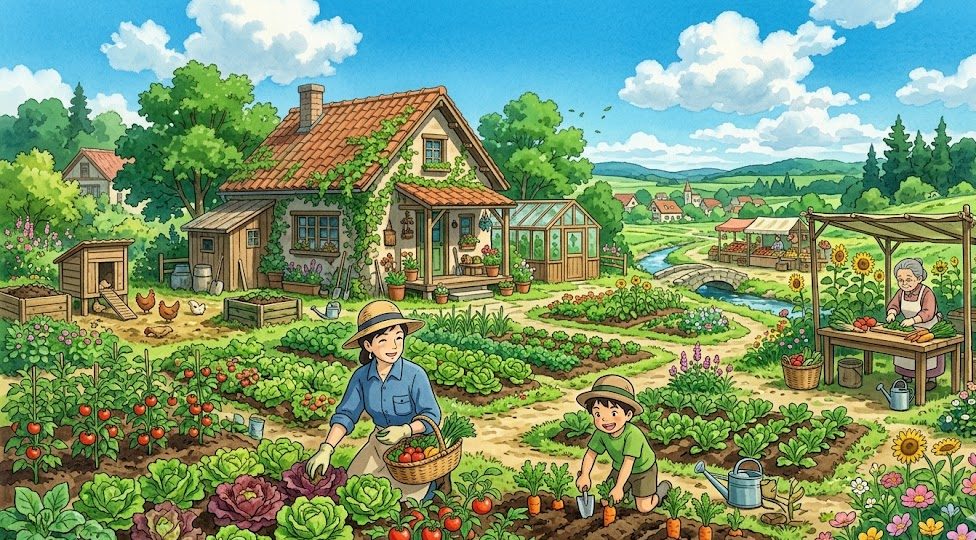
For generations, the agricultural narrative has been dominated by the idea that “bigger is better.” We have been conditioned to believe that profitability is tied strictly to massive acreage. However, a quiet, powerful shift is occurring. Farmers around the globe are discovering that size is not a prerequisite for success. Welcome to the era of micro-farming—where intelligence, intensity, and technology generate maximum revenue from less than one acre of land.
Micro-farming is not merely “small-scale gardening.” It is a high-precision business model that treats every square foot as a factory floor. By focusing on rapid turnover, high-value crops, and direct-to-consumer relationships, you can turn a small plot into a robust income stream.
1. The Strategy of Intensive Cultivation
When you have less than an acre, you cannot afford to waste space on low-margin crops that take months to mature. Your land must be in constant, productive use.
- Bio-Intensive Methods: Adopt methods like permanent raised beds and “no-till” soil management. By never compacting the soil with machinery, you encourage deep root growth, which allows for closer plant spacing without nutrient competition.
- Succession Planting: Never let a bed sit empty. The moment one crop is harvested, the next is planted. By mapping out a 52-week crop schedule, you can achieve three to four harvests per year from the same physical space.
- Vertical Integration: If you cannot grow out, grow up. Trellising vining crops—tomatoes, cucumbers, peas, and pole beans—maximizes your yield per square foot and keeps produce clean and disease-free.
2. Crop Selection: The “High-Value” Rule
On a small scale, you are not competing with industrial farms on volume; you are competing on quality and freshness.
- Target Niche Markets: Focus on high-value, fast-turnaround crops. Salad greens (microgreens, arugula, baby kale), culinary herbs (basil, cilantro, mint), and specialty edible flowers command a premium price at local farmers’ markets and through restaurant subscriptions.
- The “Year-Round” Mindset: Invest in season-extension technology. A simple hoop house or low-tunnel system can protect crops from frost, allowing you to harvest through the shoulder seasons when market prices are highest because supply is low.
3. The Digital Dashboard: Managing Your “Farm-Factory”
Micro-farming is a business of metrics. If you aren’t tracking your data, you aren’t managing your revenue.
- Yield per Square Foot: Track the revenue generated by every individual bed. If a particular crop isn’t hitting your profit threshold, rotate it out for something more lucrative.
- Automated Irrigation: Precision irrigation is non-negotiable. Drip tape systems deliver water directly to the roots, saving labor and water, and preventing the foliar diseases caused by overhead sprinklers.
- Market-Linked Production: Do not grow what you hope to sell. Survey local chefs and neighbors, identify what is in short supply in your area, and grow specifically to meet that demand. This “pull-marketing” approach guarantees a customer for your harvest before you even plant the seed.
4. Maximizing Revenue Channels
Revenue in micro-farming is not just about selling raw vegetables; it’s about capturing more of the value chain.
- Direct-to-Consumer (DTC): The most profitable path is the one with the fewest middlemen. CSA (Community Supported Agriculture) subscriptions provide you with upfront capital at the start of the season, effectively funding your production costs.
- Value-Added Products: Take the “seconds” (produce that is aesthetically imperfect but perfectly edible) and turn them into value-added goods. Dried herbs, pestos, pickles, and infused oils turn waste into profit.
- The “Experience” Economy: Host farm tours, workshops, or “pick-your-own” events. When you invite customers onto your land, you are no longer selling just food—you are selling a connection to the source, which allows you to charge premium prices.
5. Soil Fertility: The Engine of Growth
Because micro-farming involves pulling massive amounts of biomass out of the soil every year, you must put the nutrition back in at an even higher rate.
- Composting as a Profit Center: Don’t just buy compost; make it. Turning farm waste and local organic scraps into high-quality compost builds your soil, reduces your input costs, and can even be a product you sell to other local gardeners.
- Living Soils: Practice cover cropping during short fallow periods to fix nitrogen and build organic matter. A healthy soil microbiome is your most reliable “hired hand,” ensuring plants are resilient and productive.
The Economics of Scale vs. The Economics of Intensity
Industrial farming relies on the economy of scale—getting bigger to lower the unit cost. Micro-farming relies on the economy of intensity—getting smarter to raise the value of the unit.
You do not need hundreds of acres to build a successful agricultural business. You need a few thousand square feet, a disciplined schedule, a clear focus on high-value crops, and a direct line to your customer. When you treat your micro-farm like a boutique manufacturing facility, the revenue potential is limited only by your ability to manage your systems.
The revolution in agriculture is not happening on the vast plains; it is happening in the backyard, the urban lot, and the small plot at the edge of town. It is time to stop thinking about how much land you have, and start thinking about how much productivity you can pack into every square inch.