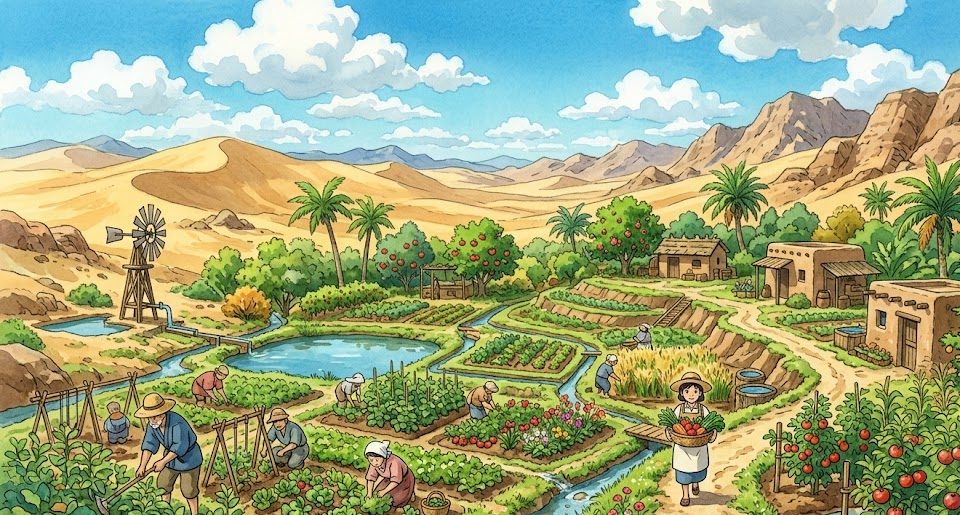
The narrative of global agriculture is shifting from “conquering the land” to “collaborating with the environment.” As we face increasing desertification and climate instability, the most resilient path forward lies at the intersection of three powerful domains: Micro-Farming Efficiency, Desert Cultivation Technology, and Heirloom Crop Stewardship.
By integrating these strategies, we can transform even the most arid landscapes into high-output, sustainable frontiers. This “triple-threat” approach is not just about survival; it is about creating a high-profit, eco-positive ecosystem that works in harmony with the earth’s harshest conditions.
1. The Micro-Farming Blueprint: Precision in Small Spaces
Micro-farming is the art of maximizing output on a small footprint—whether it’s a backyard, a rooftop, or a small rural plot. In desert environments, the “small footprint” is a mechanical advantage because it allows for total environmental control.
- Verticality as Strategy: Using vertical hydroponic towers or A-frame aeroponic systems allows you to grow 10x more produce per square meter than traditional row farming.
- The “Closed Loop” Logic: Micro-farming succeeds when waste is eliminated. By using automated sensors to deliver water and nutrients directly to the root zone (Precision Irrigation), we ensure that not a single drop is lost to evaporation.
- High-Value Focus: Instead of low-margin commodity crops, micro-farmers focus on “super-specialized” greens and medicinal herbs that fetch premium prices in urban markets.
2. Desert Cultivation: Engineering the Impossible
Desert farming is often viewed as a battle against sand and sun. However, modern sustainable frontiers view the desert’s abundant solar energy and “clean” (pest-free) environment as an asset.
A. Liquid Natural Clay (LNC) & Soil Transformation
One of the biggest hurdles in the desert is sandy soil that cannot hold water. Liquid Natural Clay is a revolutionary technology that wraps sand particles in a thin layer of clay, turning the desert floor into a “biological sponge.” This can reduce water usage by up to 50-80% while providing a stable medium for root growth.
B. Integrated Agri-Aquaculture (IAA)
In the desert, every resource must do double duty. IAA systems use saline-tolerant fish (like Tilapia) to provide nutrient-rich water for crops. The water passes through the fish tanks, is filtered by the plants, and returns to the fish—creating a symbiotic, self-fertilizing loop that thrives in arid heat. +1
C. Smart Greenhouses and Retrofitting
The modern desert farm utilizes “Cooling Wall” technology and smart-tinting glass that blocks UV rays while allowing growth-spectrum light to pass through. This keeps the internal temperature a stable 25°C even when the outside world is a blistering 45°C.
3. Heirloom Crop Management: The Genetic Goldmine
If technology is the “hardware” of the farm, Heirloom Crops are the “software.” Unlike hybridized commercial seeds designed for chemical-heavy monocultures, heirloom varieties have spent centuries adapting to specific local micro-climates.
| Heirloom Benefit | Strategic Advantage | Market Impact |
|---|---|---|
| Natural Resilience | Deep root systems and heat-tolerance evolved over generations. | Lower insurance risks and reduced need for synthetic inputs. |
| Genetic Diversity | A “biological buffer” against new pests and climate shifts. | Greater farm stability and long-term food security. |
| Superior Flavor | Heirloom varieties are bred for taste, color, and nutrition. | Ability to charge a 30-50% premium at farm-to-table markets. |
Export to Sheets
The “Desert-Adapted” Heirloom Strategy
For desert frontiers, we prioritize heirlooms like Khapli (Emmer) Wheat, Tepary Beans, and Black Kabuli Chickpeas. These varieties naturally require less water and have developed “stealth” mechanisms to survive intense solar radiation.
4. The Synergy: How the Integration Scales
When you combine these three pillars, you create a Sustainable Frontier Hub.
- The Hub (Desert Cultivation): The physical structure (Smart Greenhouse) protects the crops from the wind and heat.
- The Engine (Micro-Farming): The intensive, vertical systems inside ensure that every cubic meter of the greenhouse is generating revenue.
- The Soul (Heirloom Management): The choice of seeds ensures that the crops are naturally hardy, nutrient-dense, and highly marketable.
5. Economic Logic: High-Margin Arid Agriculture
The integration of these systems changes the math of rural and desert farming.
- Low Input, High Output: By using LNC and Heirloom seeds, you drastically reduce your bill for chemical fertilizers and pesticides.
- Energy Sovereignty: Deserts are the best places for solar energy. A sustainable frontier farm is often energy-independent, using solar to run its pumps, fans, and IoT sensors.
- Direct-to-Plate Branding: There is a massive global market for “Desert-Grown Heirlooms.” This branding speaks to both luxury and sustainability, allowing farmers to bypass traditional middlemen.
6. Overcoming the Challenges of the Frontier
Scaling a desert micro-farm requires a “Stealth Operator” mindset:
- Salinity Management: Use salt-tolerant “halophyte” crops (like Samphire or Sea Asparagus) on the fringes of your farm to utilize drainage water.
- Wind Protection: Planting “Shelterbelts” of drought-resistant trees (like Neem or Moringa) around the perimeter reduces wind-chill and erosion.
- Seed Sovereignty: Establish a community “Seed Bank” for your heirloom varieties to ensure you never have to rely on expensive commercial seed corporations.
7. The Environmental Impact: Reversing the Trend
Sustainable frontiers don’t just grow food; they fight desertification.
- Carbon Sequestration: By building soil organic matter in the desert using LNC and compost, you are effectively pulling carbon out of the air and locking it into the ground.
- Biodiversity Restoration: A micro-farm acting as a “green oasis” attracts beneficial insects, birds, and soil microbes, helping to re-wild the surrounding arid landscape.
Conclusion: The Logic of Abundance in Arid Lands
The Sustainable Frontier is proof that scarcity is a matter of management, not geography. By integrating the precision of Micro-Farming, the innovation of Desert Cultivation, and the heritage of Heirloom Crops, we turn the “wasteland” into a wealth-land.
The logic is simple: Technology provides the environment, but Nature provides the resilience. When we use our smartest tools to protect our oldest seeds, we create a version of agriculture that is not only sustainable but truly revolutionary.
The frontier is open. It’s time to grow.