For decades, the global food system has been moving toward a precarious state of homogenization. Today, humanity relies on just three crops—wheat, rice, and maize—for nearly 60% of our plant-based caloric intake. While these staples have powered agricultural expansion, this over-reliance has created a fragile system vulnerable to climate volatility, pests, and nutritional deficiencies.
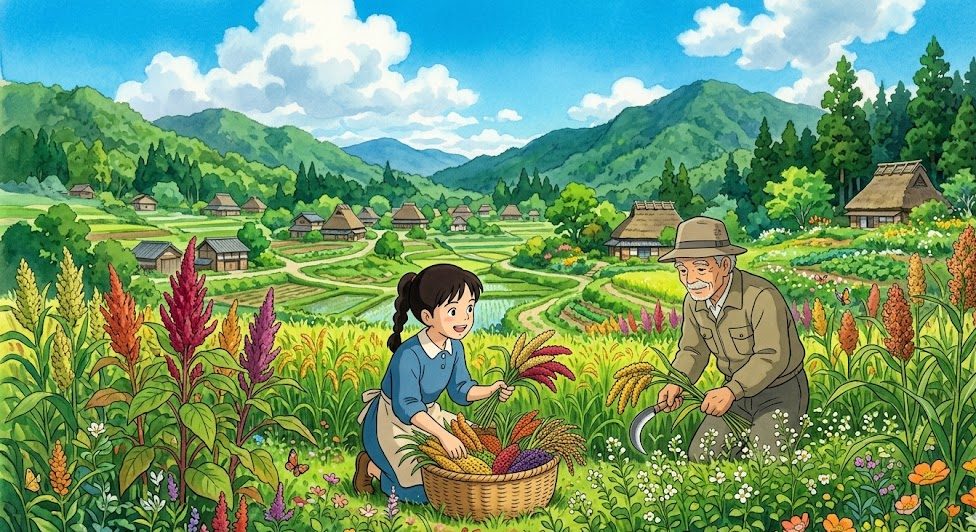
However, a quiet revolution is taking place. Farmers, scientists, and culinary innovators are looking backward to move forward. They are rediscovering “forgotten crops”—ancient grains, pulses, and tubers that sustained civilizations for millennia and are now being hailed as the secret to future food security.
1. The Vulnerability of Monoculture
The modern agricultural model is built on high-input, high-yield monocultures. While efficient in the short term, this approach relies heavily on specific climatic conditions. As climate change increases the frequency of droughts, heatwaves, and erratic rainfall, our “Big Three” staples are struggling.
Forgotten crops, by contrast, were selected by our ancestors for their hardiness. Crops like millet, sorghum, amaranth, teff, and finger millet evolved in harsh, unpredictable environments. They don’t just survive in poor soil or high heat; they thrive in them. By reintroducing these species into our agricultural mosaic, we create a buffer against the unpredictability of the coming decades.
2. The Nutritional Powerhouse
Modern staples have been selectively bred for bulk—yield per acre—often at the expense of nutrient density. In many cases, we are producing more calories but less nutrition.
Ancient grains and forgotten pulses are often nutritional goldmines. For instance:
- Finger Millet (Ragi): Exceptional in calcium content and iron, making it a powerful tool against anemia.
- Amaranth: A rare grain that contains all essential amino acids, making it a “complete” protein.
- Sorghum: Rich in antioxidants and fiber, and completely gluten-free.
Integrating these crops back into our diets is not just a trend; it is a public health imperative to combat the “hidden hunger” caused by micronutrient deficiencies.
3. Ecological Resilience and Low-Input Farming
One of the most compelling reasons to embrace forgotten crops is their ecological “frugality.” Most of these ancient varieties require significantly less water and fewer chemical inputs than modern wheat or rice.
- Water Efficiency: Many millet varieties are C4 plants, meaning they are incredibly efficient at photosynthesis even under high temperatures, requiring only a fraction of the water that rice demands.
- Soil Health: Many ancient pulses and grains have deep, complex root systems that prevent soil erosion and improve soil structure. They often require little to no synthetic fertilizer because they have adapted to thrive in nutrient-sparse conditions.
By scaling up the production of these crops, we can reduce the agricultural sector’s reliance on nitrogen fertilizers and water-guzzling irrigation, lowering the carbon footprint of our farms.
4. Economic Empowerment for Smallholder Farmers
For smallholder farmers, particularly in developing nations, shifting toward forgotten crops offers a path to financial stability. Modern industrial crops are often tied to expensive proprietary seeds and chemical packages.
Ancient crops, however, are often “open-pollinated” varieties. Farmers can save their own seeds from year to year, fostering independence from seed conglomerates. Furthermore, because these crops are uniquely adapted to local microclimates, they often produce reliable yields where modern hybrids might fail. Reviving these harvests isn’t just about food; it’s about reclaiming local food sovereignty.
5. The Culinary Renaissance: Bringing the Past to the Plate
The final barrier to the widespread adoption of forgotten crops has always been culinary. How do we make these grains appeal to a modern palate accustomed to the convenience of white bread and processed rice?
The answer lies in innovation. Chefs and food technologists are proving that ancient grains can be transformed into delicious, modern formats. We are seeing:
- Amaranth flour being used in artisanal baking.
- Millet-based “ancient grain” bowls and breakfast cereals.
- Sorghum syrups used as sustainable sweeteners.
As these products hit mainstream grocery shelves, the demand will increase, creating a virtuous cycle that encourages more farmers to transition away from monocultures.
The Path Forward: Building a Diverse Future
Reviving forgotten crops is not about abandoning the staples that feed the world today. Instead, it is about diversification. By integrating these resilient, nutrient-dense varieties into our crop rotation, we can create a food system that is flexible, robust, and capable of weathering the storms ahead.
Agriculture must be a reflection of the biodiversity it seeks to preserve. The future of food security lies not in creating a new, expensive technological miracle, but in rediscovering the diverse, hardy seeds that our ancestors cultivated for thousands of years.
It is time to dust off these ancient harvests. They have been waiting in the soil for generations, and they are ready to feed the future.