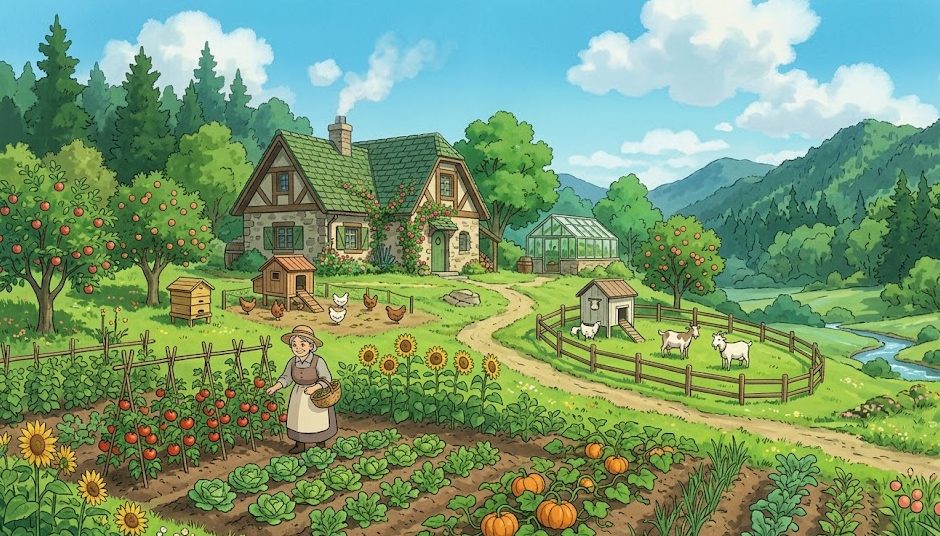
True self-sufficiency is not just about growing food; it is about building a system that can sustain itself through adversity. Whether you are facing economic instability, climate extremes, or supply chain disruptions, a resilient homestead acts as a localized ecosystem—a closed-loop circuit of energy, nutrition, and security.
To move from “gardening” to “survival farming,” you must shift your focus from yield-at-any-cost to durability-at-all-costs. Here are the essential strategies to build a homestead that doesn’t just survive, but thrives.
1. Soil: The Foundation of Independence
In a survival scenario, you cannot rely on store-bought fertilizers or imported amendments. Your soil must be a self-sustaining engine of fertility.
- Closed-Loop Fertility: Aim for a “zero-input” fertility model. This involves keeping animals (like chickens or rabbits) to provide manure, composting every ounce of organic matter, and utilizing green manures (cover crops) to fix nitrogen naturally.
- Building Soil Structure: Practice “no-till” methods. By leaving the soil structure undisturbed, you preserve the mycelial networks and earthworm channels that transport water and nutrients, making your crops significantly more drought-resistant.
- Composting Systems: Master the hot-compost method to kill pathogens and weed seeds, ensuring your fertility supply is safe and potent.
2. Water Security: Beyond the Garden Hose
Water is the lifeblood of the homestead. Relying on municipal lines or electricity-dependent pumps is a strategic vulnerability.
- Rainwater Harvesting: Install large-scale catchment systems on all roof surfaces. Even a modest roof can collect thousands of liters of water during a single storm. Ensure you have high-capacity storage tanks that can gravity-feed your gardens.
- Passive Irrigation: Design your land using “swales” and “contour trenches.” These features capture surface runoff and allow it to infiltrate the ground slowly, effectively charging your landscape’s “groundwater battery” instead of letting water wash away as erosion.
- Drought-Tolerant Varieties: Cultivate seeds that have been “landraced” or specifically bred for your local climate’s extremes. Diversity in your crop genetics is your best insurance against a bad season.
3. The Protein-Calorie Balance
Gardening often focuses on vegetables, but survival requires calories and protein. A resilient homestead must integrate livestock as part of the production cycle.
- Small-Scale Livestock: Chickens, rabbits, and quail are the “workhorses” of the homestead. They provide high-quality protein and convert kitchen scraps into valuable nitrogen-rich manure.
- Caloric Crops: Relying solely on leafy greens will not keep you fed. Dedicate a portion of your land to “staple crops”—potatoes, sweet potatoes, dry beans, and flint corn. These crops are calorie-dense, easy to store, and provide the energy required for physical labor.
- Storage and Preservation: A harvest is only as valuable as your ability to save it. Master the trifecta of survival food preservation: dehydration, fermentation (lacto-fermentation), and canning. Each method offers a different way to store nutrients for the “lean months.”
4. Building Biological Defenses
When you cannot head to the store for pesticides or medicine, you must rely on the environment’s natural immunity.
- Polycultures and Guilds: Monocultures are pest magnets. By interplanting diverse species—using aromatic herbs to confuse pests and tall flowers to attract predatory insects—you create a self-regulating ecosystem.
- Seed Saving: The ultimate act of self-sufficiency is controlling your seed supply. By saving seeds from your strongest plants every year, you are essentially “breeding” a variety that is perfectly adapted to your specific soil and microclimate. Over time, these seeds become more resilient and productive than any commercial variety you could buy.
5. The Infrastructure of Resilience
A homestead is not just plants and animals; it is the physical infrastructure that keeps them functioning.
- Tool Versatility: Focus on high-quality, hand-operated tools. An electric rototiller is useless if the grid goes down, but a well-maintained broadfork or wheel hoe will work as long as you have the strength to use it.
- Energy Independence: While not strictly farming, integrating renewable energy—such as small-scale solar or passive geothermal designs—ensures your processing and storage tools (like freezers or water pumps) remain functional during outages.
- Skills Over Assets: The most resilient tool you own is your knowledge. Learn basic veterinary care for your livestock, carpentry for fixing fences, and food chemistry for preservation. In a survival situation, your ability to diagnose a sick goat or fix a leaky roof is worth more than all the supplies in the world.
Conclusion: The Mindset of the Resilient Farmer
Building a resilient homestead is a marathon, not a sprint. It requires a fundamental shift in how you view the land: not as a source of production, but as a living partner.
You must move from a “consumer” mentality—where you buy solutions to problems—to a “producer” mentality, where you create solutions from the resources already present on your land. By building soil fertility, securing your water, diversifying your protein sources, and mastering the art of preservation, you create a sanctuary of food and security.
Start small. Establish your soil foundation first, learn to save your seeds, and gradually expand your systems. The road to self-sufficiency is built one bed, one harvest, and one skill at a time.