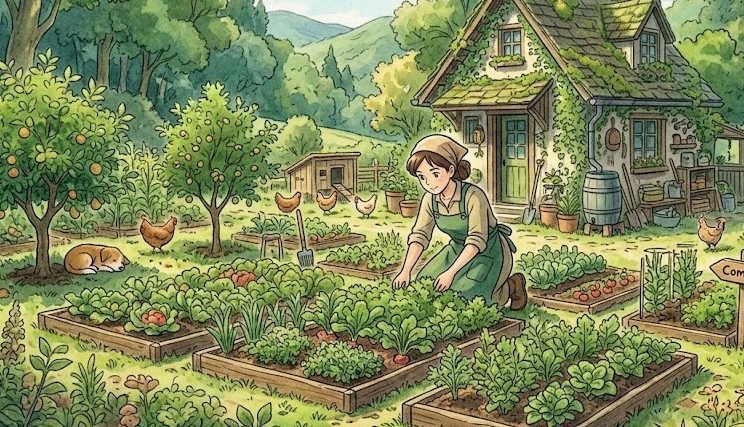
The global agricultural landscape is standing at a critical crossroads where traditional industrial methods are facing the limits of chemical dependency and soil depletion. As we move toward a more sustainable future, a new movement is emerging—one that combines AgriTech & Innovation with deep-rooted biological wisdom. For the modern farmer and the digital entrepreneur, the goal is no longer just about volume; it is about “Smart Farming” that ensures long-term profitability and ecological health through resilience.
Phase 1: The Power of Micro Farming
You don’t need hundreds of acres to build a productive agricultural engine. Micro Farming allows for intense productivity on a small scale by utilizing vertical space and high-density planting techniques.
- Intense Productivity: Micro farming focuses on maximizing the yield per square inch, often through “Smart Crop Farming” methods like hydroponics or vertical stacking.
- Urban Integration: These techniques allow for food production in urban and peri-urban areas, reducing the distance between the farm and the consumer.
- Resource Efficiency: Smaller plots are easier to monitor with “AI and Smart Technology,” ensuring that water and nutrients are applied with absolute precision.
- Low Entry Barrier: Micro farming is an ideal entry point for digital entrepreneurs looking to build a “Digital Wealth Blueprint” in the agricultural sector with minimal initial land investment.
Phase 2: Reclaiming Resilience with Survival Crops
A key pillar of survival cultivation is the reintroduction of Forgotten Crops. These are resilient, low-input varieties that have been sidelined by industrial monocultures but hold the secret to food security in a changing climate.
- Genetic Diversity: Reintroducing these crops adds essential genetic diversity to your farm, acting as a natural insurance policy against extreme seasonal shifts and total crop failure.
- Climate Resilience: Many survival crops are naturally adapted to local conditions, requiring less water and fewer synthetic inputs than modern commercial hybrids.
- Nutritional Density: Often, these traditional varieties are more nutrient-dense, providing higher quality food for a growing population.
- Niche Market Potential: For the entrepreneur, these crops represent high-value cash crops that command a premium in health-conscious and gourmet markets.
Phase 3: Survival Techniques & Natural Protection
True resilience means being able to protect your harvest without relying on external, fragile supply chains of chemicals and pesticides.
- Natural Protection: Protecting high-value investments involves creating a balanced environment where pests are managed by biological competitors rather than harsh chemicals.
- Integrated Pest Management (IPM): This involves using predatory insects and trap crops to keep pest populations below the threshold of economic damage naturally.
- Effective Weed Control: Instead of using herbicides, “Weed Control” is achieved through mulching, cover cropping, and practical manual techniques that keep the soil covered.
- Water Saving Farming: In survival scenarios, water is gold. Automated irrigation, drip systems, and rainwater harvesting ensure every drop is utilized effectively.
Phase 4: Healing the Soil: The Foundation of Success
Resilient agriculture treats the soil as a living ecosystem. “Natural Soil Healing” is the process of restoring the microbial health of your land to ensure it remains productive for generations.
- Microbial Synergy: Fostering beneficial bacteria and fungi helps crops feed and protect themselves naturally against stressors.
- Organic Matter Enrichment: Focusing on compost and natural fertilizers restores nutrient cycles and improves water retention.
- Carbon Sequestration: Healthy soil management not only improves yields but also helps combat climate change by trapping carbon in the ground.
- Climate & Soil Management: Implementing advanced management strategies allows farmers to prepare for and adapt to unpredictable weather patterns, minimizing long-term risk.
Phase 5: Integrating the Circular Economy Hub
A resilient small-scale farm is an integrated hub where every output becomes an input for another section, creating a closed-loop system.
- Livestock & Dairy Hub: Integrating poultry or dairy animals provides a natural source of fertilizer for soil restoration while diversifying your income streams.
- Aqua Integration: “Fish & Aqua Farming” can be integrated to provide nutrient-rich water for crops, creating a symbiotic growth relationship.
- Animal Health Mastery: Maintaining high standards of animal care ensures that your livestock remain productive assets rather than liabilities in a survival situation.
- Passive Income: For the digital entrepreneur, these integrated systems can be monitored via automated dashboards, creating a sustainable business model.
Conclusion: Future-Proofing Your Harvest
The future of agriculture lies in the balance between the precision of AgriTech & Innovation and the foundational principles of soil and water conservation. By mastering the techniques in this handbook—from forgotten survival crops to high-efficiency micro farming—you create a model that is both profitable and permanent.
Whether you are an established cultivator or a digital entrepreneur building an “Innovation Hub,” the era of smart, sustainable, and high-yield resilient farming has arrived. Secure your harvest today by embracing the techniques of the past and the technology of the future.