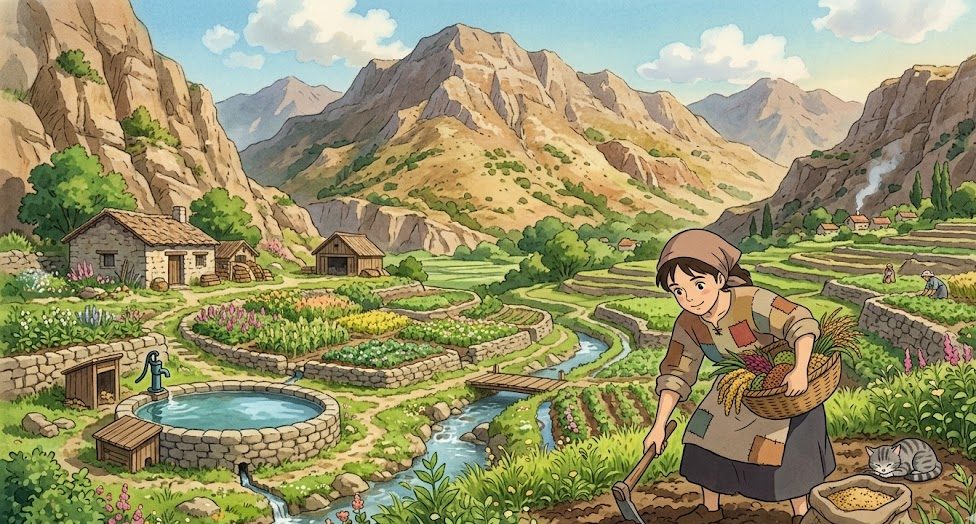
For decades, global agriculture has been dominated by a “Big Three” mentality: Wheat, Rice, and Maize. While these crops feed the world, their intensive cultivation has led to a dangerous decline in biodiversity and a heavy reliance on chemical inputs.
In 2026, a new movement is taking root—The Hidden Harvest. This is the strategic revival of “forgotten” or underutilized crops that are naturally resilient, nutritionally dense, and perfectly suited for small-scale Micro-Farming. By combining ancient genetics with modern Arid-Land Techniques, we can turn dry, neglected plots into high-value, sustainable goldmines.
1. The Power of the “Forgotten”: Why Ancient Crops Matter
Forgotten crops (also known as “Orphan Crops”) are species that were once staples but were pushed aside by industrial agriculture. These crops, such as Millets (Shree Anna), Fonio, Amaranth, and Bambara Groundnut, possess a superpower: Environmental Resilience.
- Genetic Strength: Unlike modern hybrids, these crops have evolved over millennia to survive extreme heat, poor soil, and erratic rainfall.
- Nutritional Density: Many underutilized legumes and grains are “Superfoods,” containing higher levels of iron, zinc, and protein than their mainstream counterparts.
- Low Input Costs: They are naturally resistant to many local pests, meaning they require little to no synthetic pesticides.
2. Strategic Micro-Farming: Maximum Value on Minimal Land
Micro-farming is the practice of intensive cultivation on small plots (often less than 1–2 acres). In the context of the Hidden Harvest, micro-farming allows for a High-Diversity, Low-Risk model.
The “Poly-Culture” Approach
Instead of a single crop, the strategic micro-farmer plants a “guild.” For example:
- The Overstory: Drought-hardy trees like Lasora (Gonda) or Khejri provide shade and windbreaks.
- The Mid-Story: High-value ancient grains like Pearl Millet or Sorghum.
- The Understory: Underutilized legumes like Moth Bean or Cowpea, which fix nitrogen into the soil for the other plants.
3. Arid-Land Techniques: Farming Where Others Fail
In 2026, water is the most valuable currency. Arid-land techniques allow us to grow the Hidden Harvest in regions previously deemed “unproductive.”
A. The “Zai” Pit Method
An ancient African technique modernized with data. Small pits are dug and filled with compost before the rain. These act as “moisture micro-reservoirs,” concentrating water and nutrients directly at the root zone.
B. Sub-Surface Moisture Traps
Using biodegradable membranes or clay pots (Ollas) buried in the soil, farmers can ensure that every drop of water is delivered directly to the roots, reducing evaporation by up to 90%.
C. Bio-Stimulants and “Maru Samridhi”
Leveraging modern research, such as the Maru Samridhi (a high-yielding Lasora variety), allows arid farmers to produce gourmet-quality produce with “occasional life-saving irrigation” only. Using natural bio-stimulants like Jeevamrut helps these crops tap into deep-soil nutrients even in parched conditions.
4. Featured Crops for the Arid Micro-Farmer
| Crop Name | Why it’s a “Hidden Gem” | Market Potential (2026) |
|---|---|---|
| Kair (Capparis decidua) | Thrives in zero-rainfall zones; high medicinal value. | Gourmet Pickles & Nutraceuticals. |
| Millet (Shree Anna) | High fiber, gluten-free, and requires 70% less water than rice. | Global “Healthy Grain” exports. |
| Bambara Groundnut | A “complete food” legume that grows in poor, sandy soils. | Plant-based protein alternatives. |
| Lasora (Gonda) | Drought-hardy tree fruit rich in minerals and fiber. | Local vegetable markets & export pickles. |
Export to Sheets
5. The Economic Engine: From Niche to Mainstream
Reviving forgotten crops is not just an ecological act; it is a brilliant business strategy.
- High-Margin Branding: In 2026, consumers are willing to pay a premium for “Ancestral Grains” and “Climate-Resilient Foods.”
- AdSense & Content Strategy: If you are documenting your Hidden Harvest, focus on keywords like “Climate-Smart Crops,” “Ancient Grain Cultivation,” and “Dryland Permaculture.” These topics attract high-paying advertisers in the sustainable tech and health-food sectors.
- Seed Sovereignty: By growing open-pollinated forgotten crops, micro-farmers can save their own seeds, eliminating the annual cost of buying expensive hybrid seeds.
6. Challenges: The Road to Revival
While the potential is massive, reviving forgotten crops requires overcoming two main hurdles:
- Market Awareness: People need to be taught how to cook and eat these “new” old foods.
- Processing Infrastructure: Many ancient grains have tough husks. Strategic micro-farmers are now investing in community-level “Micro-Mills” to process their harvest into flour or value-added products on-site.
7. Strategic Checklist for the Arid Innovator
- Analyze Your Soil: Don’t fight the pH; choose the crop that loves your specific soil.
- Identify Your “Anchor Tree”: Select a drought-hardy fruit or timber tree to provide the micro-climate for your smaller crops.
- Capture the Monsoon: Use swales or small farm ponds to catch every drop of seasonal rain.
- Focus on Value-Addition: Don’t just sell the raw grain; sell the “Ancient Grain Mix” or the “Arid-Land Pickle.”
Conclusion: The Future is in the Past
The “Hidden Harvest” represents the ultimate synergy of heritage and innovation. By looking back at the crops that sustained our ancestors through droughts and hardships, and applying the Smart Farming tools of 2026, we create a food system that is truly “Anti-Fragile.”
Strategic micro-farming on arid land isn’t about struggling with nature; it’s about choosing the right partners in the plant kingdom and letting them do what they have done for thousands of years: Thrive.
Expert Insight: In a world of climate uncertainty, diversity is your only insurance policy. Don’t just grow what everyone else is growing. Find the “Hidden Harvest” in your region and be the one to bring it back to the table.