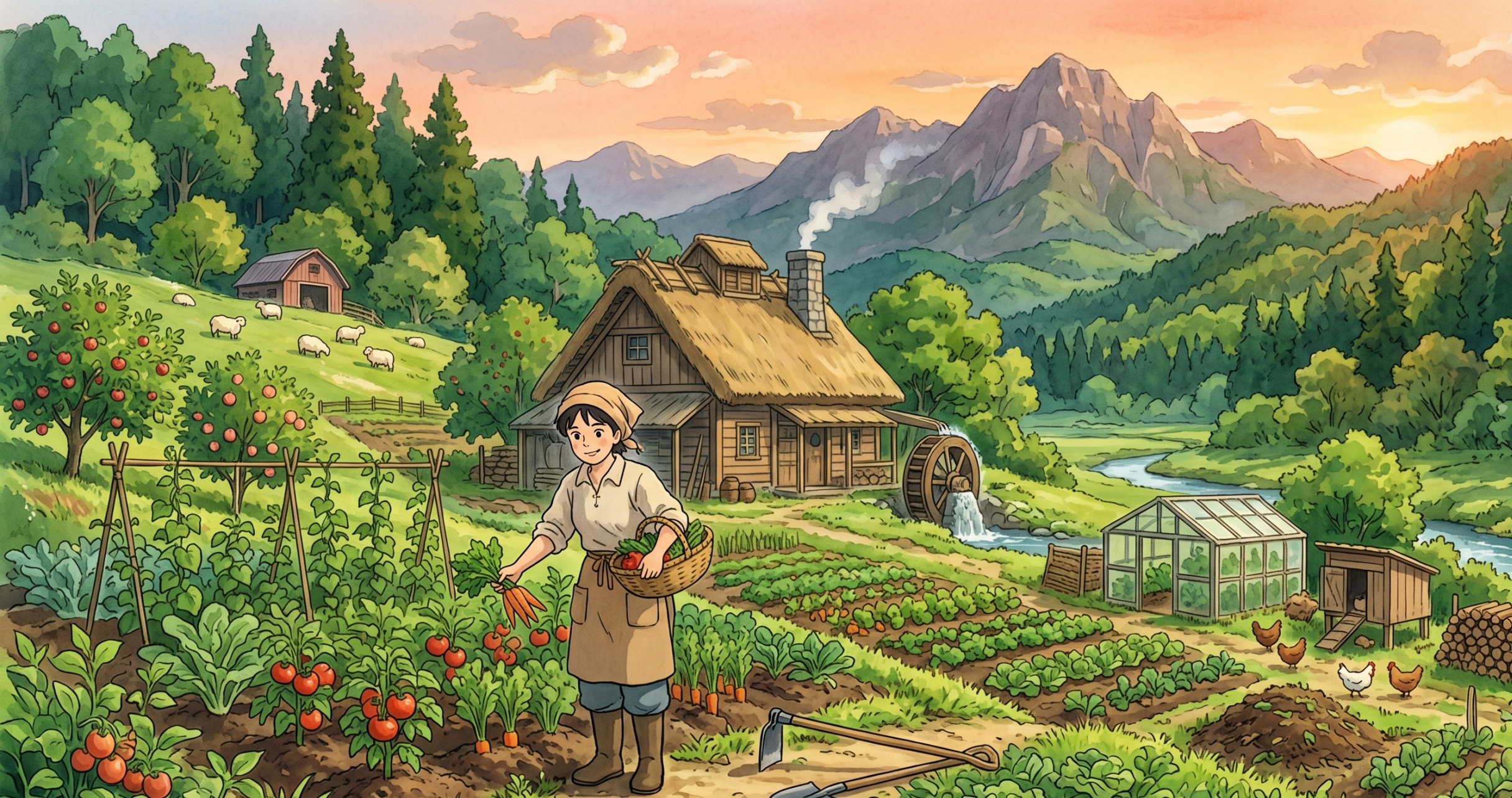
In an unpredictable world, the ability to sustain yourself and your family independently is more than just a skill—it’s a powerful form of insurance. Survival farming is the practice of growing your own food, managing essential resources, and creating a closed-loop system that doesn’t rely on the commercial supply chain.
Unlike traditional agriculture, which focuses on profit, survival farming focuses on calories, nutrition, and longevity.
The Core Philosophy of Survival Farming
Survival farming is built on the tripod of Self-Sufficiency, Sustainability, and Storage. It is about creating a homestead where your basic needs—food, water, and energy—are met through your own efforts.
- Self-Sufficiency: Reducing dependence on supermarkets and external providers.
- Sustainability: Ensuring that your farm can replenish itself year after year through composting, seed saving, and water management.
- Storage: Preserving the harvest so you have food during the “lean months” or emergencies.
Getting Started: The Survival Homestead Strategy
If you are looking to build a resilient food system, start with these essential pillars:
1. The “Calorie King” Crops
While tomatoes and herbs are great, they don’t provide the energy needed for survival. Focus on high-calorie, storable crops:
- Potatoes and Sweet Potatoes: Dense in calories and easy to store in root cellars.
- Beans and Legumes: Excellent sources of protein that can be dried and kept for years.
- Corn and Grains: The backbone of long-term energy.
- Squash and Pumpkins: Highly nutritious and naturally shelf-stable for months.
2. Seed Saving
In a true survival situation, you won’t be able to buy seeds from a store. Learning to save heirloom seeds is the most important skill for a survival farmer. It ensures you have a cycle of life that continues indefinitely without needing external inputs.
3. Water Security
Water is the lifeblood of any farm. Your survival strategy must include:
- Rainwater Harvesting: Using catchment systems to collect and filter water from roofs.
- Well or Natural Source Access: Knowing how to access and purify water from local streams or groundwater.
- Drip Irrigation: Maximizing the efficiency of every drop of water to prevent waste.
4. The Protein Cycle
Survival isn’t just plants. Integrating small-scale animal husbandry provides essential fats and proteins:
- Chickens: They provide eggs and meat, and their manure acts as “liquid gold” for your garden soil.
- Rabbits: Quiet, space-efficient, and they reproduce quickly, making them an ideal survival protein source.
Preservation: The Secret to Survival
Growing food is only half the battle; the other half is keeping it edible. A survival farmer must master the art of traditional food preservation:
- Dehydration: The oldest method for storing fruits, vegetables, and meats.
- Fermentation: Methods like pickling and sauerkraut not only preserve food but also boost gut health (probiotics).
- Canning/Bottling: Essential for storing harvest yields for 1–2 years.
- Root Cellaring: Creating a cool, dark, underground space to store tubers and winter vegetables without electricity.
The Challenges of Survival Farming
Survival farming is not an easy lifestyle. It requires discipline and physical labor.
- Pest and Disease Control: Without chemical pesticides, you must rely on companion planting (e.g., planting marigolds with tomatoes) and natural barriers.
- Soil Fertility: You cannot buy fertilizer in a crisis. Start your compost pile today. Everything—kitchen scraps, leaves, and animal manure—is a resource for tomorrow’s soil.
- Security: As your farm becomes productive, you must learn to protect your crops from local wildlife and potential theft.
Why Now is the Time to Start
You don’t need a hundred acres to begin. You can start “survival prep” in a small backyard or even with container-based farming. The goal is to build the skills now, while you still have the safety net of the modern world.
Survival farming isn’t just about preparing for a catastrophe; it’s about regaining control over what you eat and how you live. It is the ultimate act of independence.
3 Actionable Tips to Start Your Survival Path:
- Start a Compost Pile: Begin turning your waste into soil immediately.
- Learn One Preservation Method: Try pickling or dehydrating your next batch of vegetables.
- Stockpile Heirloom Seeds: Build a collection of non-GMO seeds that you can replant year after year.