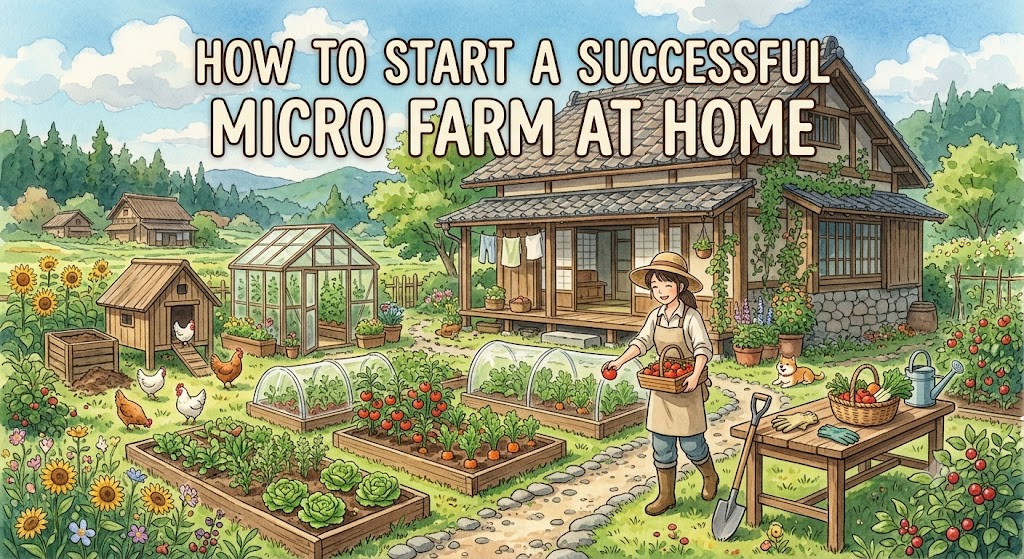
Home-based micro farming has become one of the fastest-growing trends in modern agriculture. Rising food prices, increasing demand for fresh produce, and growing interest in sustainable living have encouraged many people to transform small spaces into productive farms. Whether you have a backyard, rooftop, balcony, terrace, or even an unused indoor room, a well-planned micro farm can provide fresh food for your family and even generate a steady source of income.
Unlike large commercial farms, a micro farm focuses on producing high-value crops in limited space using efficient growing methods. Success depends on proper planning, selecting profitable crops, maintaining healthy soil, and finding reliable local customers. With dedication and consistent management, even beginners can build a productive micro farm from home.
This guide explains everything you need to know to start a successful micro farm at home.
What Is a Micro Farm?
A micro farm is a small-scale farming system designed to maximize production in a limited area. Instead of growing large quantities of low-value crops, micro farms usually focus on premium vegetables, herbs, mushrooms, fruits, or specialty products that offer better profits.
Micro farms can be established in:
- Backyards
- Rooftops
- Balconies
- Small gardens
- Greenhouses
- Indoor growing spaces
- Vacant residential land
Even a few hundred square feet can become a productive growing area with proper planning.
Benefits of Starting a Home Micro Farm
Micro farming offers many practical advantages for beginners and experienced growers.
Some of the biggest benefits include:
- Low startup investment
- Better use of limited space
- Fresh vegetables throughout the year
- Additional household income
- Lower transportation costs
- Sustainable food production
- Greater control over food quality
It also provides an excellent opportunity to learn farming skills before expanding into larger commercial operations.
Choose the Right Location
The location of your micro farm plays a major role in plant health and productivity.
Look for an area that offers:
- At least 6–8 hours of sunlight daily
- Easy access to water
- Good drainage
- Protection from strong winds
- Space for future expansion
- Safe and convenient access
If outdoor space is limited, consider vertical gardening or indoor growing systems with proper lighting.
Decide What to Grow
Choosing the right crops is one of the most important business decisions.
Beginners should focus on crops that:
- Grow quickly
- Have consistent local demand
- Require limited space
- Produce multiple harvests
- Sell at premium prices
Popular micro farming crops include:
- Lettuce
- Spinach
- Kale
- Basil
- Mint
- Coriander
- Microgreens
- Strawberries
- Tomatoes
- Chili peppers
- Mushrooms
Growing two or three crops initially makes management easier.
Prepare Healthy Soil
Healthy soil is the foundation of successful farming.
Improve soil quality by adding:
- Organic compost
- Well-rotted manure
- Coco peat
- Vermicompost
- Leaf mold
- Natural mulch
Healthy soil improves water retention, root development, and crop productivity while reducing the need for chemical fertilizers.
Consider Raised Beds or Containers
Raised beds and containers are ideal for home micro farms.
Their advantages include:
- Better drainage
- Easier weed control
- Improved soil management
- Reduced soil compaction
- Efficient use of space
Containers also make it possible to grow crops on patios, rooftops, and balconies.
Install an Efficient Irrigation System
Consistent watering is essential for healthy plant growth.
Efficient options include:
- Drip irrigation
- Soaker hoses
- Watering cans for small gardens
- Rainwater harvesting systems
Drip irrigation delivers water directly to plant roots, reducing waste and improving water efficiency.
Grow Vertically
Vertical farming helps maximize production in small areas.
You can use:
- Wall-mounted planters
- Hanging baskets
- Trellises
- Multi-level shelving
- Vertical towers
Crops such as herbs, strawberries, lettuce, and leafy greens perform particularly well in vertical systems.
Feed Plants Naturally
Balanced nutrition promotes healthy growth and better yields.
Natural options include:
- Compost
- Vermicompost
- Fish emulsion
- Seaweed extract
- Organic liquid fertilizers
- Compost tea
Organic feeding improves soil biology while reducing dependence on synthetic chemicals.
Control Pests Naturally
Healthy crops require regular pest monitoring.
Natural pest management methods include:
- Neem oil sprays
- Companion planting
- Sticky traps
- Hand removal of insects
- Beneficial insects
- Crop rotation
Early intervention helps prevent serious infestations without excessive pesticide use.
Harvest at the Right Time
Harvesting crops at peak maturity improves both quality and market value.
For best results:
- Harvest leafy greens while tender.
- Pick herbs regularly to encourage new growth.
- Collect vegetables during cooler parts of the day.
- Store harvested produce properly.
Fresh, high-quality products attract repeat customers.
Sell Your Produce
A successful micro farm combines production with smart marketing.
Potential customers include:
- Local households
- Restaurants
- Grocery stores
- Farmers’ markets
- Organic food shops
- Community-supported agriculture (CSA) groups
Selling directly to consumers often provides better profit margins than wholesale markets.
Keep Farm Records
Good record keeping helps improve productivity over time.
Track information such as:
- Planting dates
- Harvest quantities
- Crop varieties
- Fertilizer use
- Irrigation schedules
- Pest problems
- Sales and expenses
These records help identify which crops generate the highest profits.
Expand Gradually
Once your first crops become successful, consider expanding your operation.
Possible additions include:
- Hydroponic systems
- Mushroom cultivation
- Beekeeping
- Compost production
- Seedling sales
- Specialty herbs
- Seasonal vegetables
Expanding slowly reduces financial risk while allowing you to gain valuable experience.
Common Mistakes to Avoid
Many beginners face challenges because of avoidable mistakes.
Avoid:
- Growing too many crops at once
- Ignoring soil health
- Overwatering plants
- Planting crops without market research
- Poor pest monitoring
- Neglecting regular harvesting
- Failing to keep financial records
Learning from these mistakes improves long-term success.
Tips for Long-Term Success
To build a profitable home micro farm:
- Start with a small growing area.
- Focus on high-value crops.
- Maintain healthy soil.
- Use water efficiently.
- Build relationships with local buyers.
- Continue learning modern growing techniques.
- Reinvest profits into better equipment and infrastructure.
Small improvements made consistently often lead to significant increases in productivity and profitability.
Conclusion
Starting a successful micro farm at home is an excellent way to produce fresh food, reduce household expenses, and create an additional source of income. By choosing the right location, growing profitable crops, improving soil health, using efficient irrigation, and marketing your produce effectively, even a small space can become a productive farming business.
The key to long-term success is careful planning, consistent management, and a willingness to keep learning. With patience and dedication, a home micro farm can grow from a simple gardening project into a sustainable and profitable agricultural enterprise that benefits both your family and your local community.