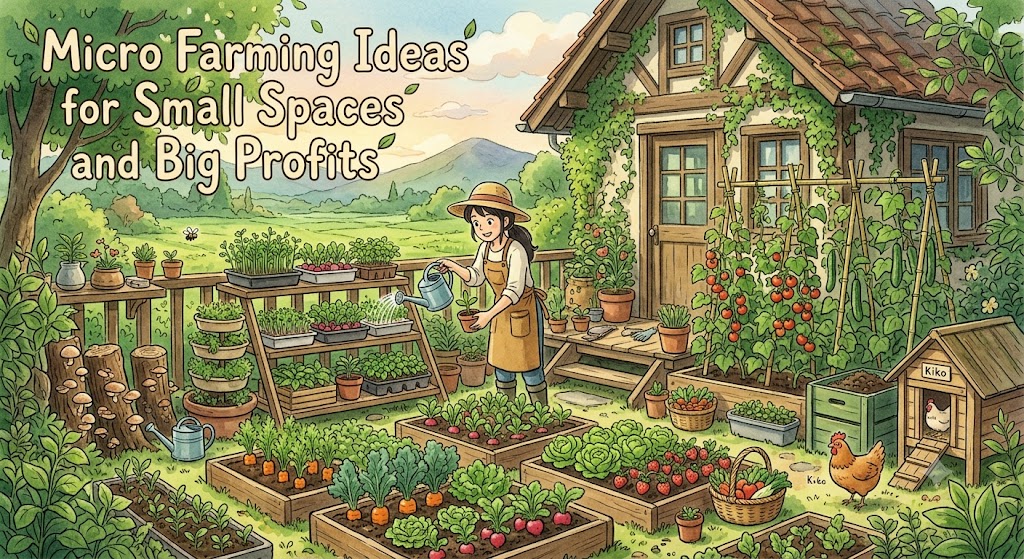
Micro farming is proving that you don’t need hundreds of acres to build a successful agricultural business. With rising demand for fresh, locally grown, and organic produce, small-scale farming has become an attractive opportunity for entrepreneurs, homeowners, and beginners alike. By making smart use of limited land, micro farmers can grow high-value crops, reduce production costs, and generate impressive profits from relatively small spaces.
Whether you have a backyard, rooftop, greenhouse, unused corner of land, or even an indoor growing area, micro farming offers flexible ways to produce food year-round. Success depends on choosing profitable crops, using efficient growing methods, and understanding local market demand. This guide explores practical micro farming ideas that can help maximize income while making the best use of limited space.
What Is Micro Farming?
Micro farming is the practice of producing crops, herbs, mushrooms, or small livestock on a limited area of land using efficient management techniques. Instead of focusing on large-scale production, micro farms prioritize high-value products that generate strong returns from every square meter.
Micro farming is suitable for:
- Homeowners with backyards
- Urban gardeners
- Small landowners
- Beginners entering agriculture
- Retired farmers
- Families seeking additional income
With proper planning, even a small growing area can become a profitable business.
Benefits of Micro Farming
Small-scale farming offers several advantages over traditional large farms.
Some of the biggest benefits include:
- Lower startup investment
- Better use of limited space
- Easier daily management
- Reduced labor requirements
- Faster harvesting cycles
- Opportunity to grow premium products
- Direct sales to local customers
These advantages make micro farming an excellent option for entrepreneurs with limited land or capital.
1. Grow Microgreens
Microgreens are among the most profitable crops for small spaces because they grow quickly and require very little room.
Popular varieties include:
- Sunflower
- Radish
- Broccoli
- Mustard
- Pea shoots
- Basil
Most microgreens are ready for harvest within two to three weeks, allowing multiple harvests throughout the year.
2. Start a Mushroom Farm
Mushrooms require minimal space and can be grown indoors under controlled conditions.
Profitable varieties include:
- Oyster mushrooms
- Button mushrooms
- Shiitake mushrooms
- Lion’s Mane
Unused rooms, sheds, or small greenhouses can often be converted into productive mushroom-growing spaces.
3. Cultivate Culinary Herbs
Fresh herbs are widely used by households, restaurants, hotels, and food businesses.
Popular herbs include:
- Basil
- Mint
- Coriander
- Parsley
- Rosemary
- Thyme
- Oregano
Because herbs occupy little space and have frequent harvesting cycles, they can generate consistent income.
4. Grow Leafy Vegetables
Fast-growing leafy greens are ideal for micro farms.
Good choices include:
- Lettuce
- Spinach
- Kale
- Arugula
- Swiss chard
These vegetables mature quickly and often allow multiple harvests from the same planting.
5. Hydroponic Farming
Hydroponics allows crops to grow without soil by supplying nutrients through water.
Advantages include:
- Higher yields in small areas
- Lower water consumption
- Faster plant growth
- Reduced weed problems
- Year-round production
Hydroponic systems are especially useful in urban environments where land is limited.
6. Vertical Farming
Vertical farming increases production by growing crops on stacked shelves or vertical structures instead of spreading horizontally.
Suitable crops include:
- Herbs
- Leafy greens
- Strawberries
- Microgreens
This method maximizes productivity while making efficient use of available space.
7. Strawberry Cultivation
Strawberries are a high-value fruit that can be grown in containers, hanging baskets, or vertical systems.
Benefits include:
- Strong consumer demand
- Premium selling prices
- Attractive appearance
- Suitable for direct marketing
Fresh strawberries often sell well at farmers’ markets and local grocery stores.
8. Specialty Chili Peppers
Hot peppers are popular among restaurants, food manufacturers, and home cooks.
Profitable varieties include:
- Jalapeño
- Habanero
- Bird’s Eye Chili
- Cayenne
These crops require relatively little space while offering good market value.
9. Beekeeping
Beekeeping complements micro farming by producing honey while improving pollination for nearby crops.
Possible income sources include:
- Honey
- Beeswax
- Bee colonies
- Pollination services
Healthy pollinator populations also increase the productivity of many fruit and vegetable crops.
10. Compost Production
Organic compost can become an additional revenue stream using farm and household organic waste.
Benefits include:
- Low production costs
- Reduced waste
- Improved soil fertility
- Strong demand among gardeners and organic farmers
Selling high-quality compost creates value from materials that would otherwise be discarded.
Choose High-Value Crops
Profitability depends more on crop value than the amount of land available.
When selecting crops, consider:
- Market demand
- Selling price
- Growth cycle
- Local climate
- Ease of production
- Storage requirements
Growing premium products often provides better returns than cultivating large quantities of low-value crops.
Use Smart Irrigation
Efficient irrigation improves crop health while reducing water consumption.
Recommended methods include:
- Drip irrigation
- Rainwater harvesting
- Mulching
- Soil moisture monitoring
Efficient water management lowers operating costs and supports sustainable farming.
Sell Directly to Customers
Direct marketing often increases profit by reducing the number of intermediaries.
Potential customers include:
- Farmers’ markets
- Restaurants
- Grocery stores
- Local households
- Community-supported agriculture (CSA) groups
- Online local marketplaces
Building relationships with repeat customers can provide a stable source of income.
Reduce Production Costs Naturally
Lower expenses contribute directly to higher profits.
Practical strategies include:
- Producing your own compost
- Saving seeds where appropriate
- Using organic mulches
- Collecting rainwater
- Practicing crop rotation
- Preventing pests through integrated management
Small savings made consistently can have a significant impact on annual profitability.
Common Mistakes to Avoid
Many beginners lose money because of preventable mistakes.
Avoid:
- Growing crops without researching demand
- Planting too many varieties at once
- Overwatering plants
- Ignoring soil health
- Poor pest monitoring
- Weak marketing efforts
- Expanding before establishing reliable sales
Starting small allows you to learn and improve before scaling up.
Tips for Long-Term Success
To build a profitable micro farming business:
- Focus on one or two high-value crops first.
- Maintain excellent product quality.
- Keep detailed production records.
- Build relationships with local buyers.
- Continue learning modern farming techniques.
- Diversify gradually as demand grows.
- Reinvest part of your profits into better equipment and growing systems.
Consistency and careful planning are often more important than farm size.
Conclusion
Micro farming proves that limited space does not have to limit profitability. By choosing high-value crops such as microgreens, mushrooms, herbs, leafy vegetables, strawberries, and specialty peppers, farmers can generate reliable income from surprisingly small areas. Modern techniques like hydroponics, vertical farming, compost production, and efficient irrigation further increase productivity while keeping costs under control.
With careful planning, quality production, and smart marketing, even a backyard or rooftop can become a successful agricultural enterprise. As demand for fresh, locally grown produce continues to rise, micro farming offers an exciting opportunity for beginners and experienced growers to build a sustainable and profitable farming business.