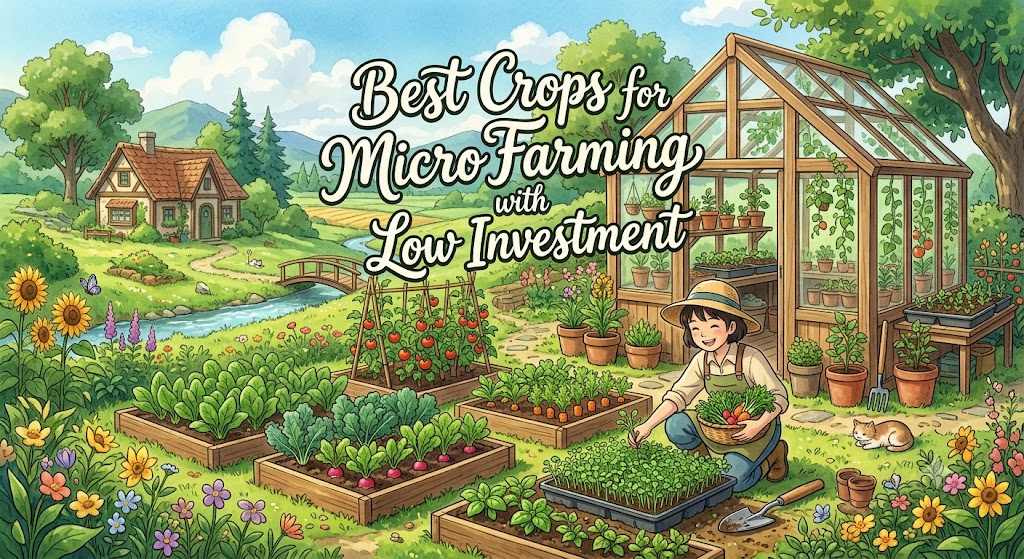
Micro farming has become one of the most practical ways to earn income from agriculture without owning large areas of land. As urban farming, organic food, and locally grown produce continue to gain popularity, many farmers and beginners are discovering that a small plot of land can generate impressive profits when managed efficiently. The secret to success lies in choosing crops that require low investment, grow quickly, and have strong market demand.
Unlike traditional farming, micro farming focuses on maximizing production from limited space while keeping costs under control. With proper planning, even a backyard, rooftop, greenhouse, or small field can become a profitable farming business. By selecting the right crops and using efficient farming techniques, you can reduce risks and build a sustainable source of income.
This guide highlights the best crops for micro farming with low investment and explains how to grow them successfully.
Why Choose Low-Investment Crops?
Starting with affordable crops allows beginners to learn farming without taking on significant financial risk.
Some advantages include:
- Low startup costs
- Quick returns on investment
- Easy management
- Less labor required
- Faster harvesting cycles
- Strong local demand
- Opportunity to expand gradually
Beginning with a few profitable crops also helps farmers gain practical experience before increasing production.
Factors to Consider Before Choosing Crops
Before planting, evaluate several important factors.
Local Climate
Choose crops that naturally perform well in your region’s temperature and rainfall conditions.
Market Demand
Research which vegetables, herbs, or specialty crops are popular in nearby markets, grocery stores, restaurants, and local communities.
Available Space
Some crops require very little space and are ideal for container gardening or vertical farming, while others need raised beds or open fields.
Water Availability
If water is limited, select drought-tolerant crops or install efficient irrigation systems such as drip irrigation.
Growing Time
Fast-growing crops provide quicker income and allow multiple harvests each year.
1. Microgreens
Microgreens are among the most profitable crops for small-scale farming.
Popular varieties include:
- Radish
- Sunflower
- Broccoli
- Mustard
- Pea shoots
- Basil
Why They Are Profitable
- Harvested within 10–20 days
- Require very little space
- High market value
- Low water consumption
- Suitable for indoor production
Restaurants and health-conscious consumers often pay premium prices for fresh microgreens.
2. Lettuce
Lettuce grows quickly and is in steady demand throughout the year.
Advantages
- Short growing cycle
- Easy cultivation
- Suitable for containers and raised beds
- Multiple planting seasons
- High demand from restaurants and supermarkets
Growing different lettuce varieties can help attract more customers.
3. Spinach
Spinach is another fast-growing leafy vegetable ideal for beginners.
Benefits include:
- Low production cost
- Rich nutritional value
- Quick harvest
- Multiple harvests from one planting
- Consistent consumer demand
Fresh spinach sells well in local vegetable markets and grocery stores.
4. Basil
Basil is one of the most profitable culinary herbs for micro farming.
Why Farmers Choose Basil
- Small growing space required
- High selling price
- Continuous harvesting
- Popular with restaurants
- Suitable for container farming
Fresh basil is widely used in home cooking and commercial kitchens.
5. Mint
Mint grows vigorously and requires relatively little maintenance.
Its advantages include:
- Rapid growth
- Continuous harvesting
- High market demand
- Low input costs
- Suitable for pots and garden beds
Fresh mint is sold for cooking, beverages, herbal products, and medicinal uses.
6. Coriander (Cilantro)
Coriander is one of the easiest herbs to grow.
Benefits include:
- Fast germination
- Short harvest period
- Strong local demand
- Low fertilizer requirement
- Suitable for repeated planting
Farmers often harvest both leaves and seeds for additional income.
7. Chili Peppers
Hot peppers are popular because they require relatively little space while offering excellent market value.
Popular varieties include:
- Green chili
- Jalapeño
- Bird’s Eye chili
- Cayenne
With proper care, chili plants continue producing over an extended period.
8. Tomatoes
Tomatoes remain one of the most profitable vegetable crops for small farms.
Advantages include:
- High consumer demand
- Multiple harvests
- Suitable for greenhouse production
- Good market prices
- Easy container cultivation
Supporting plants with stakes or trellises helps improve fruit quality.
9. Mushrooms
Mushroom farming is ideal for people with limited land because production takes place indoors.
Popular varieties include:
- Oyster mushrooms
- Button mushrooms
- Shiitake mushrooms
Benefits include:
- Small growing area
- Fast production cycle
- Premium selling price
- Growing market demand
Unused rooms or sheds can often be converted into mushroom production areas.
10. Spring Onions
Spring onions grow quickly and require minimal maintenance.
Why they are a good choice:
- Low seed cost
- Continuous demand
- Short harvest period
- Suitable for containers
- Easy cultivation
Their frequent use in cooking creates a steady market.
Best Farming Practices for Higher Profits
Choosing the right crops is only part of the equation. Good management is equally important.
Follow these practices:
- Use quality seeds or seedlings.
- Prepare fertile soil with compost.
- Apply organic mulch to conserve moisture.
- Install drip irrigation where possible.
- Rotate crops to reduce pests and diseases.
- Harvest produce at the correct stage.
- Store harvested crops properly.
Small improvements in crop management often lead to better yields and higher profits.
Reduce Costs Naturally
Keeping expenses low helps improve profit margins.
Ways to reduce costs include:
- Make compost from kitchen and garden waste.
- Collect rainwater for irrigation.
- Save seeds from suitable open-pollinated crops.
- Use natural pest control methods.
- Reuse containers and growing trays.
- Produce your own organic fertilizers.
These simple practices support sustainable farming while lowering operating expenses.
Marketing Your Produce
Growing quality crops is important, but finding reliable buyers is equally essential.
Potential customers include:
- Local vegetable markets
- Grocery stores
- Restaurants
- Hotels
- Organic food shops
- Farmers’ markets
- Direct home delivery customers
Building long-term relationships with buyers helps create stable income throughout the year.
Common Mistakes to Avoid
Many beginners reduce profits because of avoidable mistakes.
Avoid:
- Growing crops without researching market demand
- Planting too many varieties at once
- Ignoring soil fertility
- Overwatering or underwatering crops
- Delaying pest management
- Poor harvesting practices
- Failing to keep production records
Learning from these mistakes helps improve future harvests.
Tips for Long-Term Success
To build a profitable micro farming business:
- Start with two or three high-demand crops.
- Focus on quality rather than quantity.
- Keep production costs under control.
- Maintain healthy soil through organic practices.
- Learn modern farming techniques.
- Track expenses and profits carefully.
- Expand gradually as demand increases.
Consistency and careful planning are often more valuable than having a large farm.
Conclusion
Micro farming offers an excellent opportunity to earn income from limited land with relatively low investment. Crops such as microgreens, lettuce, spinach, basil, mint, coriander, tomatoes, chili peppers, mushrooms, and spring onions combine fast growth, manageable production costs, and strong market demand. These qualities make them ideal for beginners and experienced growers alike.
Success in micro farming depends on selecting profitable crops, maintaining healthy soil, using water efficiently, and building reliable marketing channels. By starting small, improving your skills, and focusing on quality production, you can turn a modest growing space into a productive and profitable farming business that delivers sustainable income for years to come.