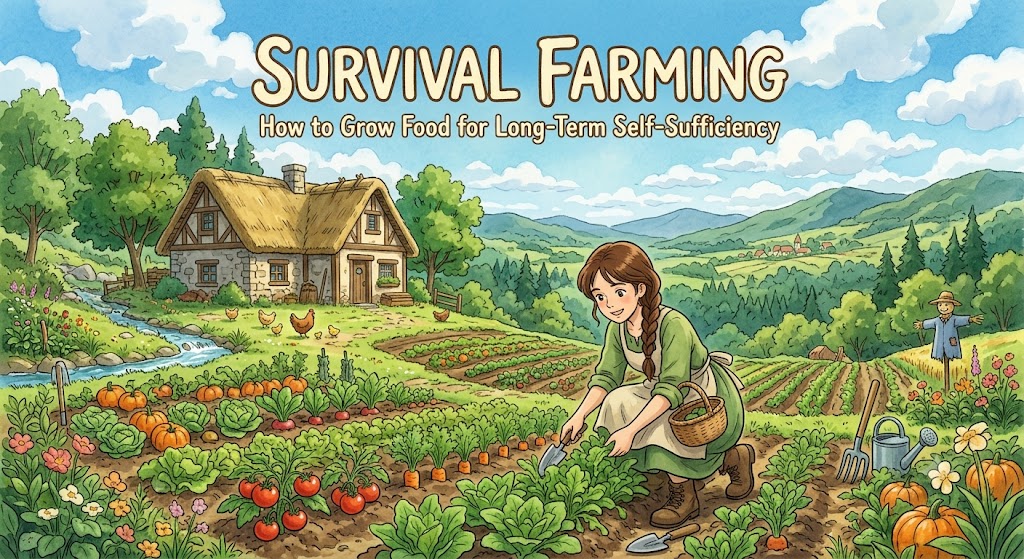
In an uncertain world where food prices continue to rise, weather patterns become less predictable, and supply chains occasionally face disruptions, many people are rediscovering the value of survival farming. Unlike commercial farming, which focuses primarily on selling crops for profit, survival farming is designed to provide a reliable and sustainable food supply for individuals and families over the long term.
Survival farming is not about preparing for extreme situations alone. It is about creating a resilient farming system that reduces dependence on outside food sources while producing healthy, nutritious food throughout the year. Whether you own a small backyard, a rural homestead, or a few acres of land, survival farming can help you build food security, reduce grocery expenses, and develop practical agricultural skills that benefit future generations.
This guide explains the principles of survival farming, the best crops to grow, and practical strategies for building a self-sufficient food production system.
What Is Survival Farming?
Survival farming is a method of growing crops and raising food-producing plants or animals primarily to meet household needs rather than commercial sales.
A survival farm focuses on:
- Reliable food production
- Crop diversity
- Sustainable resource management
- Long-term productivity
- Minimal dependence on external inputs
- Efficient land use
The goal is to produce a continuous supply of nutritious food regardless of changing economic or environmental conditions.
Why More People Are Choosing Survival Farming
Several global trends have increased interest in self-sufficient farming.
These include:
- Rising food costs
- Climate change
- Supply chain disruptions
- Interest in organic food
- Sustainable living
- Rural lifestyle movements
- Greater awareness of food security
Growing even part of your own food can reduce household expenses while increasing resilience.
Benefits of Survival Farming
A well-planned survival farm provides advantages beyond food production.
These include:
- Greater food independence
- Lower grocery bills
- Fresh, nutritious produce
- Better soil health
- Reduced food waste
- Increased biodiversity
- Valuable practical skills
- Long-term sustainability
Many families also appreciate knowing exactly how their food is grown.
Step 1: Assess Your Available Land
Every successful survival farm begins with careful planning.
Evaluate your property by considering:
- Soil quality
- Sunlight exposure
- Water availability
- Drainage
- Climate
- Wind conditions
- Available space
Even small areas can become productive with proper design.
Step 2: Improve Soil Before Planting
Healthy soil produces healthier crops.
Focus on building fertile soil using natural methods.
Recommended practices include:
- Composting
- Mulching
- Crop rotation
- Cover crops
- Organic matter
- Well-rotted manure
Healthy soil stores nutrients and water more efficiently while supporting beneficial microorganisms.
Step 3: Grow Staple Food Crops
Survival farming prioritizes crops that provide calories, nutrition, and reliable harvests.
Excellent staple crops include:
Potatoes
Advantages:
- High calorie production
- Easy storage
- Adaptable to many climates
Sweet Potatoes
Benefits include:
- Nutrient-rich
- Long storage life
- Heat tolerance
Corn
Useful for:
- Human food
- Animal feed
- Grain storage
Beans
Beans provide:
- High protein
- Nitrogen fixation
- Dry storage for long periods
Winter Squash
Squash offers:
- Long shelf life
- High yields
- Nutritional value
These crops form the foundation of many self-sufficient food systems.
Step 4: Grow Fresh Vegetables Year-Round
Fresh vegetables provide essential vitamins and minerals.
Good choices include:
- Lettuce
- Spinach
- Carrots
- Cabbage
- Broccoli
- Kale
- Onions
- Garlic
Planting different crops throughout the seasons extends harvest periods.
Step 5: Include Fruit-Producing Plants
Fruit crops provide important nutrients while increasing dietary variety.
Examples include:
- Apple trees
- Pear trees
- Citrus (where climate allows)
- Blueberries
- Strawberries
- Grapes
- Raspberry bushes
Perennial fruit plants continue producing for many years after establishment.
Step 6: Plant Herbs
Herbs require little space but provide significant value.
Useful herbs include:
- Basil
- Mint
- Rosemary
- Thyme
- Oregano
- Parsley
Herbs can be used fresh or dried for long-term storage.
Step 7: Practice Crop Rotation
Growing the same crop repeatedly reduces soil fertility and increases disease pressure.
Crop rotation helps:
- Improve soil nutrients
- Break pest cycles
- Reduce diseases
- Maintain productivity
Rotating plant families each season strengthens the overall farming system.
Step 8: Save Seeds
Seed saving increases long-term independence.
Benefits include:
- Lower costs
- Preservation of adapted varieties
- Reduced reliance on outside suppliers
Store seeds in cool, dry conditions using properly labeled containers.
Step 9: Collect and Conserve Water
Reliable water is essential for survival farming.
Practical conservation methods include:
- Rainwater harvesting
- Mulching
- Drip irrigation
- Water-efficient scheduling
- Soil moisture management
Efficient water use becomes increasingly valuable during dry periods.
Step 10: Protect Crops Naturally
Healthy ecosystems reduce pest problems naturally.
Sustainable pest management includes:
- Companion planting
- Beneficial insects
- Crop diversity
- Physical barriers
- Healthy soil
Reducing unnecessary pesticide use supports long-term environmental health.
Food Preservation for Self-Sufficiency
Growing food is only part of survival farming.
Proper storage ensures year-round availability.
Common preservation methods include:
- Drying
- Freezing
- Fermentation
- Pickling
- Root cellaring
- Canning (when appropriate and following safe food preservation practices)
Food preservation reduces waste and extends harvest benefits.
Raise Small Livestock (Optional)
Where appropriate and permitted, some survival farms also include small livestock.
Examples include:
- Chickens for eggs
- Ducks
- Rabbits
- Bees for pollination and honey
Livestock can diversify food production while providing valuable manure for composting.
Build Biodiversity
Diverse farms are generally healthier and more resilient.
Include:
- Vegetables
- Fruits
- Herbs
- Flowers
- Pollinator-friendly plants
- Native species
Greater biodiversity improves pollination and ecological balance.
Essential Tools for Survival Farming
Basic equipment includes:
- Garden fork
- Hoe
- Hand trowel
- Watering can
- Wheelbarrow
- Pruning shears
- Compost bin
- Seed storage containers
Simple, durable tools often last for many years with proper care.
Common Mistakes Beginners Should Avoid
Avoid these common challenges:
Growing Too Many Crops
Start with manageable varieties before expanding.
Ignoring Soil Health
Healthy soil remains the most valuable farm asset.
Poor Water Management
Overwatering and underwatering both reduce productivity.
Forgetting Crop Rotation
Continuous planting of the same crops weakens soil over time.
Not Planning Food Storage
Harvesting without preservation leads to unnecessary waste.
Suggested Survival Farm Layout
| Area | Purpose |
|---|---|
| Vegetable Garden | Daily food production |
| Root Crop Section | Long-term calorie supply |
| Fruit Trees | Seasonal harvests |
| Herb Garden | Flavor and preservation |
| Compost Area | Soil improvement |
| Rainwater Storage | Water conservation |
| Pollinator Plants | Support biodiversity |
A well-organized layout improves efficiency and simplifies farm management.
Long-Term Strategies for Self-Sufficiency
Building a resilient farm takes time.
Focus on:
- Improving soil every year
- Saving seeds
- Diversifying crops
- Conserving water
- Expanding food preservation skills
- Monitoring local climate conditions
- Continuing agricultural education
Small improvements made consistently create stronger farming systems.
Conclusion
Survival farming is about more than growing food—it’s about building resilience, reducing dependence on outside resources, and creating a sustainable way of living. By combining diverse crops, healthy soil management, efficient water use, seed saving, and thoughtful planning, even a modest piece of land can provide a reliable supply of nutritious food for years to come.
Whether your goal is greater food security, lower household expenses, or a more sustainable lifestyle, survival farming offers practical solutions that benefit both people and the environment. Starting small, learning continuously, and improving your farming system over time are the keys to long-term self-sufficiency.
Frequently Asked Questions (FAQs)
1. What is survival farming?
Survival farming is the practice of producing food primarily for household consumption with the goal of achieving greater long-term self-sufficiency and food security.
2. Which crops are best for survival farming?
Staple crops such as potatoes, sweet potatoes, beans, corn, winter squash, onions, garlic, and leafy vegetables are commonly chosen because they provide nutrition, reliable yields, and good storage potential.
3. Can survival farming work on a small property?
Yes. Careful planning, crop rotation, vertical gardening, and efficient land use can make even small plots productive.
4. Why is seed saving important?
Saving seeds reduces future costs, preserves locally adapted varieties, and increases independence from external seed suppliers.
5. How can I make my survival farm more sustainable?
Improve soil with compost, conserve water, diversify crops, rotate plant families, encourage pollinators, preserve harvested food properly, and continue learning sustainable farming practices.