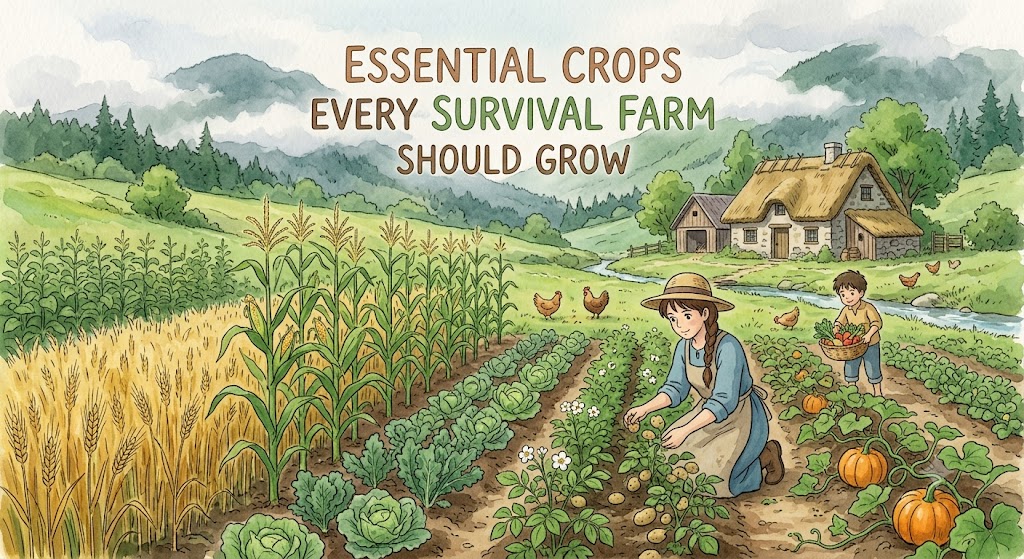
A successful survival farm is built on one simple goal: producing enough nutritious food to support yourself and your family throughout the year. Unlike commercial farming, where profit is often the primary objective, survival farming focuses on food security, sustainability, and resilience. The crops you choose play the biggest role in determining whether your farm can provide reliable harvests during changing weather conditions, market disruptions, or rising food prices.
Not every crop is suitable for a survival farm. The best choices are those that provide high nutritional value, dependable yields, long storage life, and adaptability to local growing conditions. By growing a balanced mix of staple crops, vegetables, fruits, legumes, and herbs, farmers can create a diverse food system that supplies carbohydrates, proteins, vitamins, minerals, and healthy fats throughout the year.
This guide highlights the essential crops every survival farm should consider growing to achieve long-term self-sufficiency.
What Makes a Crop Essential for Survival Farming?
The ideal survival crop should offer more than just good yields. It should also contribute to long-term food security and require reasonable maintenance.
Key characteristics include:
- Reliable production
- High nutritional value
- Long storage life
- Climate adaptability
- Disease resistance
- Multiple uses
- Easy seed saving
- Efficient use of land
Growing crops with these qualities helps create a resilient farming system.
Build a Balanced Food Production System
Instead of relying on one or two crops, successful survival farms grow several categories of food.
A balanced farm includes:
- Staple crops
- Protein-rich legumes
- Fresh vegetables
- Fruits
- Culinary herbs
- Root crops
- Oilseed crops
This diversity improves nutrition while reducing farming risks.
1. Potatoes
Potatoes remain one of the most productive staple crops for survival farming.
Why They Are Essential
- High calorie production
- Easy cultivation
- Reliable yields
- Long storage life
- Adaptable to many climates
Properly stored potatoes can provide food for several months after harvest.
2. Sweet Potatoes
Sweet potatoes are another excellent staple crop.
Benefits include:
- Rich in vitamins
- Good drought tolerance
- Long storage potential
- Productive harvests
- Versatile cooking options
They also produce edible young leaves in many varieties.
3. Dry Beans
Beans are among the most valuable survival crops because they provide plant-based protein.
Popular options include:
- Kidney beans
- Pinto beans
- Black beans
- Navy beans
- Lima beans
Advantages include:
- Excellent storage life
- High protein content
- Nitrogen fixation
- Easy seed saving
Beans help improve both nutrition and soil fertility.
4. Corn
Corn serves multiple purposes on a survival farm.
It can be used for:
- Fresh consumption
- Dry grain storage
- Livestock feed
- Flour production
When combined with beans, corn provides a more balanced nutritional profile.
5. Winter Squash
Winter squash stores well and produces large harvests.
Popular varieties include:
- Butternut squash
- Acorn squash
- Hubbard squash
- Pumpkin
Benefits include:
- Long shelf life
- Rich in vitamins
- High yields
- Good calorie source
Stored correctly, many varieties remain usable for several months.
6. Garlic
Garlic offers both culinary and practical value.
Reasons to grow garlic:
- Easy storage
- Strong market demand
- Multiple culinary uses
- Relatively low maintenance
Healthy bulbs can also be saved for future planting.
7. Onions
Onions are one of the most versatile crops for household use.
Advantages include:
- Long storage
- Wide culinary applications
- Good adaptability
- Reliable production
Proper curing significantly extends storage life.
8. Leafy Greens
Leafy vegetables provide essential vitamins and minerals.
Recommended crops include:
- Spinach
- Kale
- Swiss chard
- Lettuce
- Mustard greens
Successive planting provides fresh harvests throughout the growing season.
9. Cabbage
Cabbage is highly productive and stores well.
Benefits include:
- High nutritional value
- Good cold tolerance
- Fermentation potential
- Long storage life
It is suitable for both fresh consumption and preservation.
10. Carrots
Carrots are dependable root vegetables with excellent storage characteristics.
Advantages include:
- Rich in vitamin A
- Cold tolerance
- Long storage
- Good yield
Stored in cool conditions, carrots remain fresh for extended periods.
11. Peas
Peas contribute valuable protein and improve soil fertility.
Benefits include:
- Nitrogen fixation
- Early harvest
- Fresh or dried use
- Easy seed saving
They fit well into crop rotation systems.
12. Herbs
Herbs improve meals while offering additional practical uses.
Useful herbs include:
- Basil
- Rosemary
- Thyme
- Mint
- Oregano
- Parsley
Many herbs can be dried for year-round use.
13. Fruit Trees
Perennial fruit trees provide long-term food production.
Examples include:
- Apple
- Pear
- Plum
- Peach
- Citrus (where climate allows)
Although trees require patience, they produce harvests for many years.
14. Berry Bushes
Berry plants produce nutritious fruit while requiring relatively little maintenance once established.
Good choices include:
- Strawberries
- Blueberries
- Raspberries
- Blackberries
Berries can be frozen, dried, or made into preserves.
15. Oilseed Crops
Healthy fats are an important part of a balanced diet.
Suitable crops include:
- Sunflower
- Sesame
- Flaxseed
Oilseed crops provide additional nutritional diversity.
Grow Crops with Different Harvest Times
A successful survival farm avoids harvesting everything at once.
Plan production around:
Early Season
- Peas
- Lettuce
- Spinach
Mid-Season
- Tomatoes
- Beans
- Herbs
Late Season
- Potatoes
- Squash
- Corn
- Sweet potatoes
This approach ensures a continuous food supply.
Include Crops That Store Well
Long-term storage is essential for self-sufficiency.
Excellent storage crops include:
- Potatoes
- Garlic
- Onions
- Winter squash
- Dry beans
- Corn
- Carrots
Proper storage reduces food waste and extends the usefulness of each harvest.
Improve Soil with Crop Diversity
Different crops contribute differently to soil health.
Examples:
- Legumes add nitrogen.
- Deep-rooted crops improve soil structure.
- Cover crops reduce erosion.
- Diverse planting supports beneficial microorganisms.
Healthy soils produce healthier crops over time.
Seed Saving for Long-Term Independence
Many survival crops produce seeds that can be collected for future planting.
Seed saving offers several benefits:
- Lower farming costs
- Preservation of locally adapted varieties
- Increased self-reliance
- Improved long-term sustainability
Store seeds in cool, dry, and properly labeled containers.
Common Mistakes to Avoid
Many beginners reduce their farm’s productivity by making avoidable mistakes.
Avoid:
- Growing only one staple crop.
- Ignoring local climate conditions.
- Choosing crops with poor storage life only.
- Planting too many unfamiliar varieties.
- Neglecting crop rotation.
Diversity remains one of the strongest defenses against farming risks.
Suggested Crop Plan for a Survival Farm
| Crop Category | Recommended Crops |
|---|---|
| Staple Crops | Potatoes, Corn, Sweet Potatoes |
| Protein Crops | Beans, Peas |
| Root Vegetables | Carrots, Onions, Garlic |
| Leafy Greens | Kale, Spinach, Swiss Chard |
| Long Storage Crops | Winter Squash, Garlic, Dry Beans |
| Fruits | Apples, Berries |
| Herbs | Basil, Mint, Rosemary |
| Oil Crops | Sunflower, Sesame |
Growing crops from each category creates a balanced and resilient food system.
Long-Term Planning Tips
To maintain a productive survival farm:
- Rotate crops every season.
- Improve soil with compost.
- Save quality seeds.
- Preserve surplus harvests.
- Diversify production.
- Monitor crop performance.
- Adapt planting schedules to local weather.
Continuous improvement strengthens long-term food security.
Conclusion
The strength of a survival farm depends largely on the diversity and reliability of the crops it produces. By combining calorie-rich staples, protein-producing legumes, nutritious vegetables, fruits, herbs, and long-storage crops, farmers can build a sustainable food system capable of supporting their families throughout the year.
Rather than depending on a single harvest, focus on creating a balanced farm that provides continuous production across multiple seasons. Healthy soil, careful crop planning, seed saving, and proper food storage all contribute to greater self-sufficiency. With thoughtful preparation and consistent management, even a modest survival farm can provide security, resilience, and nutritious food for years to come.
Frequently Asked Questions (FAQs)
1. What is the most important crop for a survival farm?
There is no single most important crop. A balanced combination of staple crops, legumes, vegetables, fruits, and herbs provides better nutrition and greater resilience than relying on one crop alone.
2. Which crops store the longest?
Potatoes, onions, garlic, winter squash, dry beans, corn, and carrots are among the crops known for their good storage potential when kept under suitable conditions.
3. Why should survival farms grow legumes?
Legumes such as beans and peas provide valuable protein while naturally improving soil fertility through nitrogen fixation.
4. How can I make my survival farm more sustainable?
Use crop rotation, compost, water conservation methods, seed saving, diverse planting, and natural soil improvement practices to support long-term productivity.
5. Can I build a survival farm on a small property?
Yes. With careful planning, efficient land use, vertical gardening, succession planting, and crop diversity, small properties can produce a substantial amount of food for household needs.