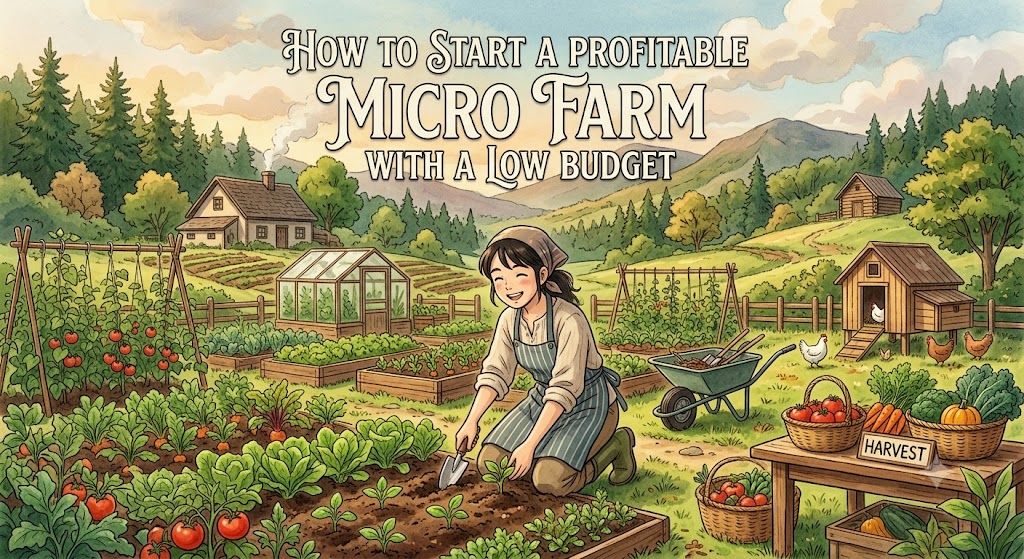
Starting a farm often sounds expensive, but successful farming isn’t always about owning hundreds of acres or investing large amounts of money. Across the world, thousands of farmers are proving that even a small piece of land and a limited budget can become the foundation of a profitable agricultural business. By choosing the right crops, using available resources wisely, and focusing on efficiency rather than size, a micro farm can generate a steady income while keeping startup costs under control.
Micro farming is especially suitable for beginners, young entrepreneurs, homeowners, and small landowners who want to earn from agriculture without taking on significant financial risk. With careful planning and gradual expansion, even a backyard or a small plot of land can produce vegetables, herbs, fruits, mushrooms, or specialty crops that are in demand throughout the year.
This guide explains how to start a profitable micro farm on a low budget while building a business that can grow over time.
What Is a Micro Farm?
A micro farm is a small-scale agricultural operation that focuses on producing high-value crops or farm products using limited land and efficient farming techniques.
Instead of depending on large machinery and extensive acreage, micro farms emphasize:
- Intensive cultivation
- Smart land use
- Sustainable practices
- Quality over quantity
- Local market sales
- Efficient resource management
The objective is to maximize productivity from every square meter of available land.
Why Micro Farming Is Growing in Popularity
Several trends have made micro farming an attractive option for new farmers.
These include:
- Rising demand for fresh local food
- Higher prices for organic produce
- Limited farmland availability
- Lower startup costs
- Increasing interest in sustainable agriculture
- Growing urban and peri-urban farming
For many beginners, micro farming offers a practical way to enter agriculture without making a large financial commitment.
Step 1: Start with the Land You Already Have
You don’t need a large farm to begin.
Many successful micro farms operate on:
- Backyards
- Small family plots
- Vacant land
- Rooftops
- Community gardens
Before planting anything, evaluate:
- Sunlight availability
- Water access
- Soil condition
- Drainage
- Space for expansion
Understanding your land helps you choose crops that are more likely to succeed.
Step 2: Set a Realistic Budget
A low-budget farm should focus on essential expenses only.
Typical startup costs may include:
- Quality seeds or seedlings
- Basic hand tools
- Compost or organic matter
- Watering equipment
- Protective fencing (if necessary)
- Simple storage materials
Avoid purchasing expensive machinery during the early stages.
Reinvest profits gradually as your farm grows.
Step 3: Choose High-Value Crops
Limited land requires crops that generate higher returns.
Good options include:
Leafy Vegetables
- Spinach
- Lettuce
- Kale
- Swiss chard
Culinary Herbs
- Basil
- Mint
- Coriander
- Parsley
Mushrooms
Mushrooms require little space and often sell at premium prices.
Microgreens
These fast-growing crops mature within weeks and are popular with restaurants and health-conscious consumers.
Cherry Tomatoes
High demand and continuous harvesting make them ideal for small farms.
Selecting crops with strong local demand improves profitability.
Step 4: Improve Soil Naturally
Healthy soil reduces long-term production costs.
Low-cost methods include:
- Composting kitchen waste
- Using farmyard manure
- Applying mulch
- Planting cover crops
- Recycling crop residues
Organic matter improves soil fertility, water retention, and beneficial microbial activity.
Step 5: Save Money on Irrigation
Efficient water use lowers operating costs.
Affordable solutions include:
- Drip irrigation kits
- Rainwater harvesting
- Mulching
- Watering during cooler parts of the day
Reducing water waste improves both sustainability and profitability.
Step 6: Use Vertical Growing Techniques
Growing upward increases production without requiring more land.
Suitable crops include:
- Cucumbers
- Beans
- Tomatoes
- Peas
Simple trellises made from locally available materials can significantly improve space utilization.
Step 7: Practice Succession Planting
Instead of planting everything at once, sow crops at regular intervals.
Benefits include:
- Continuous harvests
- Regular income
- Better labor management
- Reduced crop losses
This approach works particularly well for leafy greens and herbs.
Step 8: Grow More Than One Crop
Crop diversification reduces financial risk.
A balanced micro farm might include:
- Vegetables
- Herbs
- Mushrooms
- Fruits
- Flowers
Diversification also attracts a wider range of customers.
Step 9: Market Before Harvest
Many beginners focus entirely on production and only start looking for buyers after harvesting.
Instead, identify potential customers early.
Possible markets include:
- Local grocery stores
- Farmers’ markets
- Restaurants
- Hotels
- Neighbors
- Community-supported agriculture (CSA) programs
- Online local delivery groups
Having buyers ready before harvest reduces waste.
Step 10: Keep Detailed Farm Records
Record keeping helps improve decision-making.
Track information such as:
- Planting dates
- Harvest quantities
- Expenses
- Sales
- Water use
- Crop performance
Simple notebooks or spreadsheets are sufficient for most small farms.
Low-Cost Equipment Every Beginner Needs
You don’t need expensive machinery to manage a micro farm.
Essential tools include:
- Hand trowel
- Garden fork
- Hoe
- Watering can
- Wheelbarrow
- Pruning shears
- Buckets
- Gloves
Buy durable tools that will last for several seasons.
Add Value to Increase Profits
Selling raw produce isn’t your only option.
Value-added products may include:
- Fresh herb bundles
- Dried herbs
- Salad mixes
- Mushroom grow kits
- Homemade compost
- Seedlings
- Herbal teas
Processing products can increase profit margins.
Reduce Costs with Sustainable Practices
Many sustainable methods also save money.
Examples include:
Composting
Turns waste into valuable fertilizer.
Crop Rotation
Reduces disease problems and improves soil fertility.
Mulching
Conserves moisture while reducing weeds.
Natural Pest Management
Encourages beneficial insects and reduces pesticide costs.
Common Mistakes That Increase Expenses
Avoid these common beginner errors:
Buying Too Much Equipment
Start with basic tools and upgrade gradually.
Growing Crops Without Market Research
Always confirm local demand before planting.
Planting Too Many Varieties
Focus on a few profitable crops during your first season.
Ignoring Soil Health
Healthy soil often produces better long-term results than excessive fertilizer use.
Overwatering
Too much irrigation wastes water and may damage crops.
Ways to Expand Your Farm Gradually
Once your first season becomes profitable, consider reinvesting your earnings.
Possible improvements include:
- Better irrigation
- Greenhouse structures
- Additional raised beds
- Improved storage
- Higher-quality tools
- Expanded crop selection
Steady growth is generally more sustainable than rapid expansion.
Budget-Friendly Micro Farm Plan
| Investment | Low-Cost Option |
|---|---|
| Seeds | Buy locally or save seeds where appropriate |
| Fertilizer | Homemade compost |
| Irrigation | Rainwater harvesting + drip lines |
| Tools | Basic hand tools |
| Weed Control | Mulching |
| Pest Control | Integrated pest management practices |
| Marketing | Local community groups and farmers’ markets |
This approach helps minimize expenses while maintaining productivity.
Long-Term Success Strategies
Successful micro farmers often follow these habits:
- Improve soil every season.
- Continue learning new techniques.
- Monitor crops daily.
- Build loyal customer relationships.
- Diversify gradually.
- Reinvest profits wisely.
- Focus on product quality rather than quantity.
Small improvements made consistently can produce significant long-term results.
Conclusion
Starting a profitable micro farm doesn’t require a large investment—it requires smart planning, careful resource management, and consistent effort. By selecting high-value crops, improving soil naturally, conserving water, practicing succession planting, and building strong relationships with local customers, small landowners can develop sustainable farming businesses that grow over time.
Rather than trying to build a large farm immediately, focus on creating an efficient and productive micro farm that delivers quality products and reliable income. With patience, continuous learning, and gradual reinvestment, even a modest piece of land can become a thriving agricultural enterprise.
Frequently Asked Questions (FAQs)
1. Can I start a micro farm with very little money?
Yes. Many successful micro farms begin with basic hand tools, quality seeds, homemade compost, and a small piece of land. Gradual reinvestment can support future growth.
2. Which crops are best for a low-budget micro farm?
Leafy greens, herbs, microgreens, mushrooms, cherry tomatoes, peppers, and strawberries are commonly chosen because they provide relatively high value from small growing areas.
3. How can I reduce farming costs naturally?
Use compost, mulch, crop rotation, rainwater harvesting, natural pest management, and locally available materials whenever possible.
4. Is a micro farm suitable for beginners?
Yes. Micro farming is often an excellent choice for beginners because it requires less land, lower startup costs, and allows farmers to gain experience before expanding.
5. How long does it take for a micro farm to become profitable?
The timeline depends on crop selection, market demand, and management practices. Fast-growing crops such as leafy vegetables, herbs, and microgreens can begin generating income relatively quickly, while long-term profitability develops through consistent planning and reinvestment