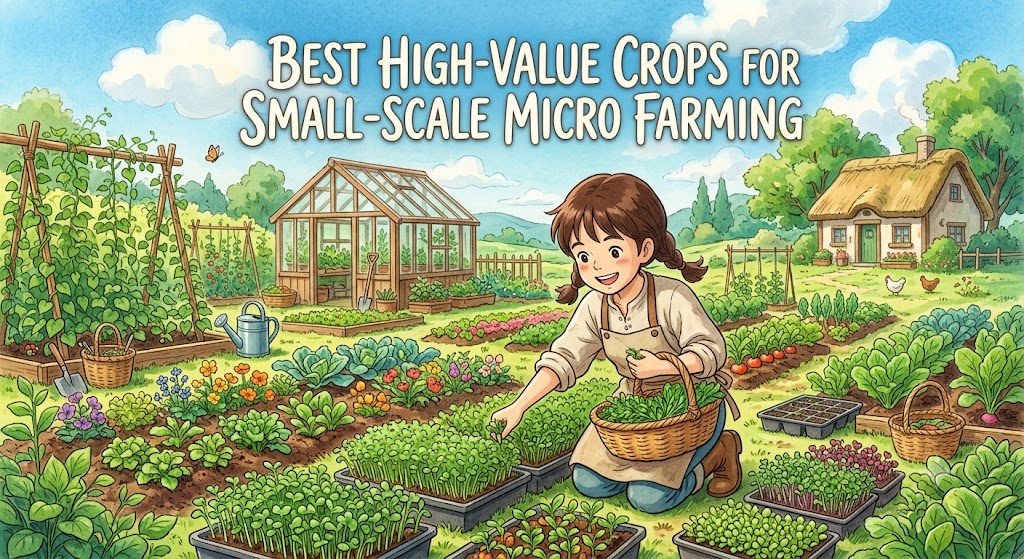
Small-scale farming is no longer limited to producing food for household consumption. Today, many farmers are generating impressive profits from compact plots of land by growing high-value crops that offer strong market demand and excellent returns. With proper planning, crop selection, and efficient farming techniques, even a small piece of land can become a productive and sustainable farming business.
The secret to successful micro farming is not growing the largest quantity of crops—it is choosing crops that provide the highest value per square meter. Premium vegetables, herbs, specialty fruits, mushrooms, and medicinal plants often generate significantly more income than traditional field crops while requiring less land.
This guide explores the best high-value crops for small-scale micro farming, along with practical tips for maximizing productivity and profitability.
Why Crop Selection Matters in Micro Farming
When farming space is limited, every square meter counts.
Choosing the right crops can help farmers:
- Increase income per harvest
- Reduce production costs
- Improve land efficiency
- Harvest multiple times each year
- Supply local premium markets
- Diversify farm income
Rather than focusing only on yield, successful micro farmers focus on market value and consistent demand.
What Makes a Crop High Value?
Not every crop is suitable for intensive small-scale production.
The best high-value crops usually have these characteristics:
- Strong consumer demand
- Short growing period
- High selling price
- Multiple harvests
- Easy storage or quick sales
- Efficient use of limited land
Selecting crops with these qualities helps improve overall farm profitability.
1. Microgreens
Microgreens are among the most profitable crops for small spaces.
Popular varieties include:
- Sunflower
- Radish
- Broccoli
- Pea shoots
- Mustard
- Beet greens
Advantages
- Ready for harvest within a few weeks
- Require very little space
- High market value
- Suitable for indoor production
- Popular with restaurants and health-conscious consumers
Multiple harvest cycles each year make microgreens attractive for year-round farming.
2. Gourmet Mushrooms
Mushroom cultivation offers excellent returns without requiring large fields.
Common varieties include:
- Oyster mushrooms
- Shiitake
- Lion’s mane
- Button mushrooms
Benefits
- Indoor cultivation possible
- High demand
- Fast production cycles
- Efficient use of vertical space
- Premium market prices
Mushrooms are ideal for farmers with limited outdoor land.
3. Culinary Herbs
Fresh herbs remain in demand throughout the year.
Profitable herbs include:
- Basil
- Mint
- Coriander
- Parsley
- Rosemary
- Thyme
- Oregano
Herbs offer:
- Multiple harvests
- Small space requirements
- Strong local restaurant demand
- Good value-added opportunities
Drying herbs can further increase profitability.
4. Cherry Tomatoes
Cherry tomatoes are popular because of their flavor, versatility, and premium market value.
Advantages include:
- Continuous harvesting
- High consumer demand
- Suitable for greenhouse production
- Vertical growing systems
- Relatively high returns
Proper support structures maximize production.
5. Bell Peppers
Bell peppers perform well in both open fields and protected cultivation.
Reasons to grow them include:
- Attractive selling prices
- Strong market demand
- Multiple harvests
- Color variety
- Long harvesting season
Quality management significantly influences market value.
6. Garlic
Garlic remains one of the most reliable specialty crops.
Benefits include:
- Long storage life
- Consistent demand
- Low maintenance
- Value-added opportunities
- Good profitability
Processed garlic products create additional income streams.
7. Strawberries
Fresh strawberries attract premium prices, especially during local harvest seasons.
Advantages include:
- High market value
- Direct-to-consumer sales
- Vertical growing options
- Greenhouse suitability
- Strong consumer demand
Proper irrigation improves fruit quality.
8. Leafy Greens
Leafy vegetables mature quickly and allow frequent harvesting.
Popular options include:
- Lettuce
- Spinach
- Kale
- Swiss chard
- Arugula
Benefits include:
- Short production cycles
- Repeat harvests
- Strong demand
- Suitable for succession planting
Fresh local produce often commands premium prices.
9. Chili Peppers
Chili peppers remain profitable because of their culinary popularity.
Farmers benefit from:
- Long harvesting season
- Fresh and dried markets
- Value-added products
- Export opportunities
Different varieties allow market diversification.
10. Medicinal and Aromatic Plants
Interest in herbal products continues growing worldwide.
Examples include:
- Lavender
- Chamomile
- Lemongrass
- Aloe vera
- Peppermint
These plants serve multiple industries, including cosmetics, wellness, and food production.
11. Specialty Flowers
Flower farming can provide attractive returns from small plots.
Popular options include:
- Sunflowers
- Marigolds
- Roses
- Lavender
- Zinnias
Local florists, weddings, and events create year-round opportunities.
12. Ginger and Turmeric
These traditional spice crops remain valuable because of their culinary and wellness uses.
Advantages include:
- Strong demand
- Long storage life
- Value-added processing
- Good export potential
Processing into powders or packaged products can increase profitability.
How to Maximize Small Farm Productivity
Growing profitable crops is only one part of successful micro farming.
Improve efficiency by:
Using Raised Beds
Raised beds improve drainage and simplify maintenance.
Growing Vertically
Support crops such as:
- Tomatoes
- Cucumbers
- Beans
- Peas
Vertical systems increase production without expanding land area.
Succession Planting
Plant crops at regular intervals to ensure continuous harvests.
Crop Rotation
Changing crop families each season improves soil health and reduces disease pressure.
Organic Soil Management
Healthy soil produces healthier plants with better yields.
Selling High-Value Crops
Growing quality produce is only part of the business.
Potential customers include:
- Local grocery stores
- Restaurants
- Hotels
- Farmers’ markets
- Community-supported agriculture (CSA) programs
- Online local delivery services
Building relationships with buyers helps create stable income.
Value-Added Products
Increase profitability by processing fresh crops into premium products.
Examples include:
- Dried herbs
- Herb seasoning blends
- Garlic paste
- Chili powder
- Strawberry jam
- Mushroom growing kits
- Herbal teas
Value-added processing often generates higher profit margins.
Common Mistakes to Avoid
Many beginners reduce their earning potential through avoidable mistakes.
Avoid:
- Growing too many crop varieties initially.
- Ignoring local market demand.
- Planting without production planning.
- Poor irrigation management.
- Skipping soil improvement.
- Harvesting too late.
- Neglecting product quality.
Careful planning improves long-term success.
Choosing the Right Crop for Your Farm
Consider these factors before planting:
- Local climate
- Soil condition
- Water availability
- Labor requirements
- Market demand
- Harvest frequency
- Storage options
The best crop is one that matches both your growing conditions and customer needs.
Comparison of High-Value Crops
| Crop | Harvest Speed | Profit Potential |
|---|---|---|
| Microgreens | Very Fast | Excellent |
| Mushrooms | Fast | Excellent |
| Herbs | Fast | Very High |
| Cherry Tomatoes | Medium | High |
| Bell Peppers | Medium | High |
| Garlic | Medium | High |
| Strawberries | Medium | High |
| Leafy Greens | Fast | Very High |
| Chili Peppers | Medium | High |
| Ginger | Slow | High |
Combining fast-growing and longer-term crops creates a balanced production system.
Conclusion
High-value crops allow small-scale farmers to generate meaningful income without needing large amounts of land. By focusing on premium vegetables, herbs, mushrooms, medicinal plants, berries, and specialty crops, micro farmers can maximize productivity while reducing waste and improving sustainability.
Success depends on selecting crops suited to local conditions, maintaining healthy soil, practicing efficient irrigation, and understanding customer demand. With careful planning and consistent management, even a small farm can become a profitable agricultural business that supports long-term growth and environmental responsibility.
Frequently Asked Questions (FAQs)
1. What are high-value crops?
High-value crops are plants that generate relatively high income compared to the amount of land required to grow them, often due to strong market demand or premium pricing.
2. Which crop is most profitable for a small farm?
The most profitable crop depends on local climate and market demand. Microgreens, mushrooms, herbs, leafy greens, strawberries, and specialty vegetables are commonly chosen for small-scale micro farming.
3. How can I increase profits from a small piece of land?
Choose high-value crops, use vertical growing systems, improve soil health, practice succession planting, and explore value-added products to increase income.
4. Are high-value crops suitable for beginners?
Yes. Many crops such as herbs, leafy greens, microgreens, and mushrooms are suitable for beginners when proper cultivation practices are followed.
5. How do I choose the best crop for my farm?
Evaluate your local climate, soil quality, water availability, available labor, and market demand before selecting crops. Starting with a few carefully chosen varieties and expanding gradually is often the most effective approach.