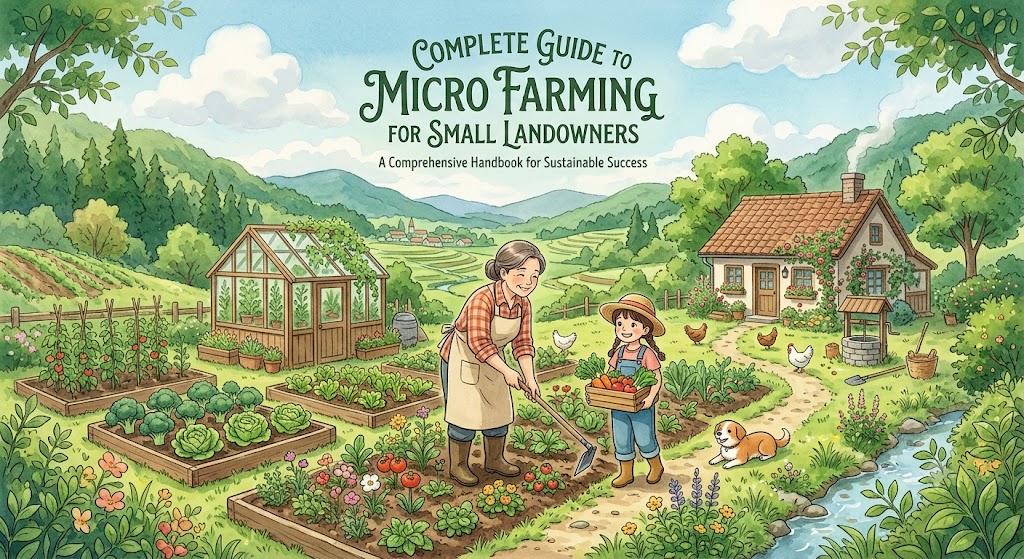
Owning a small piece of land doesn’t mean your farming opportunities are limited. In fact, many successful farmers today are proving that even a small plot can generate a steady income when managed efficiently. This approach, known as micro farming, focuses on maximizing productivity through careful planning, smart crop selection, intensive cultivation techniques, and sustainable resource management.
As land prices continue to rise and urban populations expand, micro farming has become an attractive option for homeowners, beginners, young entrepreneurs, and small landowners. Whether you have a backyard, a quarter-acre plot, or a few thousand square meters of land, you can build a productive farming system that supplies fresh food, supports your family, and even creates additional income.
This guide explains everything you need to know about starting and managing a successful micro farm.
What Is Micro Farming?
Micro farming is the practice of producing crops, herbs, fruits, vegetables, mushrooms, flowers, or small livestock on limited land using efficient farming methods.
Unlike large commercial farms that rely heavily on machinery and extensive acreage, micro farms focus on:
- Intensive land use
- High-value crops
- Smart irrigation
- Sustainable production
- Careful planning
- Maximum yield per square meter
The goal is to produce more while using fewer resources.
Why Micro Farming Is Becoming Popular
Several factors have increased interest in small-scale farming.
These include:
- Rising food demand
- Limited farmland availability
- Urban agriculture growth
- Interest in organic produce
- Higher land prices
- Improved farming technologies
- Local food movements
Micro farming allows individuals to enter agriculture without purchasing large areas of land.
Benefits of Micro Farming
A well-managed micro farm offers many advantages.
Some of the biggest benefits include:
- Lower startup costs
- Easier daily management
- Faster harvesting cycles
- Reduced water usage
- Higher crop diversity
- Better land efficiency
- Opportunity for year-round production
Many successful micro farmers earn consistent income by producing premium-quality products rather than large quantities.
Step 1: Evaluate Your Available Land
Every successful farm begins with understanding the land you already have.
Assess:
- Total available space
- Soil quality
- Sunlight exposure
- Water availability
- Drainage
- Wind protection
- Access to roads
Even small differences in these conditions can influence crop selection.
Step 2: Test Your Soil
Healthy soil is essential for productive farming.
A soil assessment helps determine:
- Soil texture
- Organic matter
- pH level
- Nutrient availability
- Drainage capacity
Improving soil before planting often produces better long-term results than relying solely on fertilizers later.
Step 3: Choose High-Value Crops
Since land is limited, focus on crops that generate higher returns per square meter.
Popular options include:
Leafy Vegetables
- Lettuce
- Spinach
- Kale
- Swiss chard
Culinary Herbs
- Basil
- Mint
- Coriander
- Parsley
- Rosemary
Specialty Vegetables
- Cherry tomatoes
- Bell peppers
- Chili peppers
- Cucumbers
Mushrooms
Mushrooms require very little space while offering attractive market value.
Microgreens
Microgreens mature quickly and are popular with restaurants and health-conscious consumers.
Step 4: Design Your Farm Layout
A thoughtful layout improves productivity and simplifies daily work.
Separate your farm into zones such as:
- Vegetable beds
- Herb section
- Compost area
- Irrigation system
- Storage space
- Walking paths
Efficient organization saves time and reduces labor.
Step 5: Build Healthy Soil Naturally
Healthy soil produces healthy crops.
Improve fertility by adding:
- Compost
- Well-rotted manure
- Mulch
- Organic matter
- Green manure crops
Healthy soil also supports beneficial microorganisms that improve nutrient availability.
Step 6: Install Efficient Irrigation
Water management is one of the most important aspects of micro farming.
Efficient irrigation methods include:
- Drip irrigation
- Soaker hoses
- Rainwater harvesting
- Mulching to reduce evaporation
These systems reduce water waste while maintaining consistent soil moisture.
Step 7: Practice Intensive Planting
Micro farming focuses on maximizing production without overcrowding plants.
Methods include:
- Raised beds
- Vertical gardening
- Intercropping
- Succession planting
- Companion planting
These techniques increase harvests while making efficient use of limited space.
Step 8: Rotate Crops
Growing the same crop repeatedly in one location may reduce soil fertility and increase pest problems.
Crop rotation helps:
- Improve nutrient balance
- Reduce diseases
- Control pests
- Maintain soil structure
Rotating crop families each season supports healthier production.
Step 9: Control Pests Naturally
Integrated pest management helps protect crops while reducing chemical use.
Natural strategies include:
- Crop rotation
- Beneficial insects
- Hand removal of pests
- Physical barriers
- Healthy soil management
- Companion planting
Regular monitoring allows early intervention before pest populations increase.
Step 10: Plan Continuous Harvests
Instead of planting everything at once, stagger planting dates.
Benefits include:
- Continuous income
- Fresh produce throughout the season
- Better labor management
- Reduced waste
Succession planting is especially effective for leafy vegetables and herbs.
Add Value Beyond Fresh Produce
Micro farms become more profitable by selling value-added products.
Examples include:
- Dried herbs
- Herbal teas
- Vegetable baskets
- Homemade compost
- Mushroom kits
- Fresh salad mixes
- Seedlings
- Organic fertilizers
Diversification creates multiple income opportunities.
Use Vertical Space Efficiently
Limited land doesn’t mean limited production.
Vertical growing systems work well for:
- Tomatoes
- Beans
- Cucumbers
- Peas
- Strawberries
Growing upward increases production without expanding land area.
Marketing Your Farm Products
Finding reliable customers is just as important as growing healthy crops.
Potential markets include:
- Farmers’ markets
- Local grocery stores
- Restaurants
- Hotels
- Community-supported agriculture (CSA) programs
- Direct home delivery
- Online local marketplaces
Building strong customer relationships encourages repeat sales.
Essential Tools for Micro Farmers
You don’t need expensive machinery to start.
Basic equipment includes:
- Hand trowel
- Garden fork
- Pruning shears
- Watering cans
- Wheelbarrow
- Garden hoe
- Gloves
- Compost bins
Invest gradually as your farm grows.
Common Mistakes Beginners Should Avoid
Many new farmers make similar mistakes.
Avoid:
Planting Too Many Crops
Focus on a few profitable crops before expanding.
Ignoring Market Demand
Grow what customers actually want to buy.
Overwatering
Too much water can damage roots and encourage disease.
Skipping Soil Improvement
Healthy soil is more valuable than expensive fertilizers.
Poor Record Keeping
Track planting dates, harvests, expenses, and sales to improve future decisions.
Tips for Long-Term Success
Successful micro farmers often follow these habits:
- Continue learning new techniques.
- Observe crops daily.
- Improve soil every season.
- Diversify production gradually.
- Build loyal customer relationships.
- Maintain consistent product quality.
- Adapt to changing market trends.
Small improvements made consistently often produce impressive long-term results.
Example Micro Farm Layout
| Farm Area | Recommended Use |
|---|---|
| Raised Beds | Vegetables |
| Vertical Trellises | Cucumbers, Beans |
| Herb Section | Basil, Mint, Parsley |
| Mushroom Corner | Indoor or shaded area |
| Compost Area | Organic waste recycling |
| Water Storage | Rainwater harvesting |
| Walking Paths | Easy farm access |
A simple, organized layout improves efficiency and makes expansion easier.
The Future of Micro Farming
As populations grow and agricultural land becomes more limited, micro farming is expected to play an increasingly important role in local food production.
Future trends include:
- Smart irrigation systems
- Precision farming tools
- Organic production
- Urban agriculture
- Vertical farming
- Climate-smart farming
- Community food networks
Technology combined with sustainable practices will continue improving productivity on small farms.
Conclusion
Micro farming proves that successful agriculture isn’t measured by the size of the land but by how efficiently it is managed. By choosing high-value crops, improving soil health, using water wisely, practicing crop rotation, and focusing on local market demand, small landowners can build productive and profitable farming businesses.
Whether your goal is producing fresh food for your family, earning additional income, or developing a full-time farming enterprise, micro farming offers a practical and sustainable solution. With careful planning, consistent management, and a willingness to learn, even the smallest piece of land can become a thriving agricultural success.
Frequently Asked Questions (FAQs)
1. What is micro farming?
Micro farming is the practice of growing crops or raising small-scale agricultural products on limited land using efficient and intensive farming methods to maximize productivity.
2. Is micro farming profitable?
Yes. When farmers focus on high-value crops, efficient production methods, and reliable markets, micro farming can generate a steady income even on small plots of land.
3. Which crops are best for micro farming?
Leafy vegetables, herbs, microgreens, mushrooms, strawberries, cherry tomatoes, peppers, and other high-value crops are commonly chosen because they produce good returns from limited space.
4. How can I improve soil health on a micro farm?
Use compost, organic matter, crop rotation, mulch, cover crops, and proper irrigation practices to maintain fertile and productive soil.
5. Can beginners start a micro farm?
Absolutely. Micro farming is well suited for beginners because it requires less land, lower startup costs, and allows new farmers to learn gradually while expanding their operations over time.