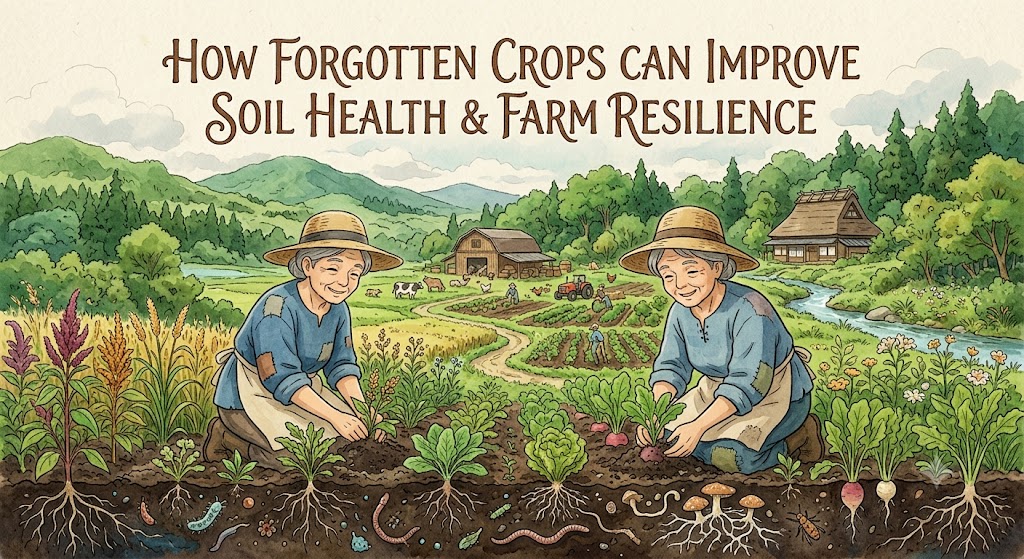
Modern agriculture has significantly increased food production, but it has also introduced new challenges for farmers. Continuous cultivation of the same crops, heavy dependence on chemical fertilizers, declining soil fertility, water shortages, and unpredictable weather have made farming more difficult in many regions. As these challenges continue to grow, researchers and farmers are rediscovering an important solution that has existed for generations—forgotten crops.
Forgotten crops, also known as traditional, indigenous, or underutilized crops, were once widely cultivated before modern farming shifted toward a few major staple crops. These resilient plants have adapted naturally to local climates over centuries and often require fewer agricultural inputs while supporting healthier soils and more diverse farming systems.
Today, many farmers are bringing these crops back because they improve soil quality, strengthen farm resilience, reduce production costs, and contribute to more sustainable agriculture. This guide explores how forgotten crops can restore soil health and help farms adapt to changing environmental conditions.
Understanding Forgotten Crops
Forgotten crops are traditional plant species that gradually disappeared from commercial agriculture as farming became more focused on high-yield cereal crops.
Examples include:
- Millet
- Sorghum
- Cowpea
- Pigeon pea
- Amaranth
- Buckwheat
- Teff
- Sesame
Although many of these crops are no longer widely grown on large commercial farms, they continue to provide important environmental and nutritional benefits.
Why Soil Health Matters
Healthy soil is the foundation of productive agriculture.
Good soil supports:
- Strong root development
- Efficient water retention
- Healthy microorganisms
- Nutrient availability
- Disease resistance
- Stable crop yields
When soil health declines, farmers often face increasing fertilizer costs, lower productivity, and greater vulnerability to drought and erosion.
Improving soil naturally has become a priority for sustainable farming worldwide.
Challenges Facing Modern Agricultural Soils
Many farming systems today experience problems such as:
- Soil erosion
- Organic matter loss
- Nutrient depletion
- Soil compaction
- Reduced biodiversity
- Poor water infiltration
- Increased salinity in some regions
These issues often become worse when the same crops are grown repeatedly without sufficient crop rotation or soil restoration practices.
How Forgotten Crops Naturally Improve Soil Health
Traditional crops contribute to healthier soils in several important ways.
Instead of relying entirely on synthetic inputs, they work with natural ecological processes.
1. Increasing Organic Matter
Organic matter plays a vital role in maintaining fertile soil.
Forgotten crops contribute through:
- Leaf litter
- Root residues
- Crop residues after harvest
As these materials decompose, they enrich the soil with valuable organic matter.
Benefits include:
- Improved soil structure
- Better moisture retention
- Increased microbial activity
- Enhanced nutrient availability
Healthy organic matter creates a stronger foundation for future crops.
2. Supporting Beneficial Soil Microorganisms
Healthy soils contain billions of beneficial microorganisms.
These organisms help:
- Break down organic material
- Release plant nutrients
- Improve root growth
- Protect crops from certain soil-borne diseases
Growing diverse traditional crops encourages greater microbial diversity than continuous monoculture farming.
3. Natural Nitrogen Fixation
Several forgotten crops belong to the legume family.
Examples include:
- Cowpea
- Pigeon pea
These crops form beneficial relationships with nitrogen-fixing bacteria that naturally convert atmospheric nitrogen into forms plants can use.
Advantages include:
- Reduced fertilizer requirements
- Improved soil fertility
- Lower production costs
- Better crop growth for future planting seasons
Nitrogen-fixing crops are valuable components of sustainable crop rotation systems.
4. Preventing Soil Erosion
Strong root systems help stabilize the soil.
Traditional crops protect farmland by:
- Holding soil particles together
- Reducing surface runoff
- Slowing water movement
- Minimizing wind erosion
Maintaining soil cover is especially important during heavy rainfall and dry windy seasons.
5. Improving Water Retention
Water conservation has become increasingly important as drought conditions become more common.
Many forgotten crops improve soil’s ability to hold moisture by increasing:
- Organic matter
- Root channels
- Soil aggregation
Better water retention allows crops to survive longer during periods of limited rainfall.
Building Farm Resilience Through Crop Diversity
Growing only one crop year after year increases farming risks.
Diversified farming systems are generally better able to withstand:
- Climate extremes
- Pest outbreaks
- Market fluctuations
- Disease pressure
Forgotten crops play an important role in creating more balanced agricultural ecosystems.
Climate Change and Traditional Crops
Changing weather patterns have made farming less predictable.
Many traditional crops naturally tolerate:
- High temperatures
- Irregular rainfall
- Dry conditions
- Poor soils
Examples include:
Millet
Thrives under drought conditions.
Sorghum
Performs well during periods of extreme heat.
Cowpea
Produces reliable yields even with limited rainfall.
These characteristics help farmers maintain production despite environmental uncertainty.
Lower Dependence on Chemical Inputs
Many forgotten crops require fewer external inputs compared to some modern crop varieties.
Farmers may reduce:
- Synthetic fertilizers
- Certain pesticides
- Irrigation requirements
Lower input costs improve overall farm profitability while reducing environmental impacts.
Supporting Biodiversity
Agricultural biodiversity has declined significantly as global farming has concentrated on relatively few crop species.
Growing traditional crops helps restore biodiversity by:
- Supporting beneficial insects
- Providing habitat for pollinators
- Preserving valuable plant genetics
- Encouraging diverse farming systems
Greater biodiversity often leads to healthier and more resilient farms.
Better Crop Rotation Opportunities
Crop rotation remains one of the most effective soil management practices.
Traditional crops fit well into rotation systems by:
- Breaking pest cycles
- Improving nutrient balance
- Reducing disease pressure
- Restoring soil fertility
Alternating crop families reduces long-term production problems.
Economic Benefits for Farmers
Improving soil health also supports financial sustainability.
Healthier soils often result in:
- Lower fertilizer costs
- Better long-term yields
- Reduced irrigation expenses
- Improved crop quality
- Greater resistance to weather stress
In addition, many forgotten crops are entering premium markets where consumers seek nutritious and sustainably produced foods.
Practical Ways to Introduce Forgotten Crops
Farmers interested in trying traditional crops can begin gradually.
Recommended steps include:
Start Small
Use a small trial field before expanding production.
Select Suitable Varieties
Choose crops adapted to local climate and soil conditions.
Add Organic Matter
Compost and crop residues further improve soil health.
Rotate Crops
Alternate traditional crops with existing production systems.
Monitor Results
Record:
- Yield
- Soil condition
- Production costs
- Water use
- Pest pressure
Good records help evaluate long-term benefits.
Common Forgotten Crops and Their Soil Benefits
| Crop | Main Soil Benefit |
|---|---|
| Millet | Improves drought resilience |
| Sorghum | Protects soil during heat stress |
| Cowpea | Natural nitrogen fixation |
| Pigeon Pea | Deep root soil improvement |
| Buckwheat | Weed suppression and pollinator support |
| Sesame | Performs well in low-fertility soils |
| Amaranth | Adaptable to difficult conditions |
| Teff | Helps reduce soil erosion |
Each crop contributes differently depending on local farming conditions.
Mistakes to Avoid
When introducing forgotten crops, avoid these common mistakes:
- Growing unfamiliar crops without research.
- Ignoring market demand.
- Using poor-quality seed.
- Neglecting crop rotation.
- Expecting immediate results.
- Overlooking soil testing.
Successful adoption requires planning and continuous learning.
Future Role of Forgotten Crops
As sustainable agriculture becomes increasingly important, forgotten crops are expected to contribute to:
- Climate-smart farming
- Regenerative agriculture
- Organic food production
- Food security
- Soil restoration
- Sustainable farm management
Agricultural researchers continue developing improved cultivation methods while preserving the valuable genetic diversity of these traditional crops.
Conclusion
Forgotten crops offer much more than historical value—they provide practical solutions for some of agriculture’s biggest challenges. By improving soil health, increasing biodiversity, conserving water, reducing dependence on synthetic inputs, and strengthening farm resilience, these traditional crops help create farming systems that are both productive and environmentally sustainable.
Whether it’s cowpea enriching the soil with nitrogen, millet thriving during drought, or buckwheat supporting pollinators, forgotten crops demonstrate that many answers to modern agricultural problems can be found in the wisdom of traditional farming. Farmers who integrate these resilient crops into their operations can build healthier soils, reduce production risks, and create more sustainable farms for future generations.
Frequently Asked Questions (FAQs)
1. What are forgotten crops?
Forgotten crops are traditional or underutilized plant species that were once widely cultivated but became less common as modern agriculture focused on a small number of staple crops.
2. How do forgotten crops improve soil health?
They increase organic matter, support beneficial microorganisms, reduce erosion, improve water retention, and, in the case of legumes, naturally add nitrogen to the soil.
3. Why are forgotten crops important for climate resilience?
Many traditional crops are naturally tolerant of drought, heat, and poor soil conditions, making them valuable for adapting to changing climate patterns.
4. Can forgotten crops reduce farming costs?
Yes. Many require less irrigation, fewer chemical fertilizers, and lower pesticide inputs, which can help reduce overall production expenses.
5. How can farmers begin using forgotten crops?
Start with small trial plots, choose locally adapted varieties, practice crop rotation, improve soil with organic matter, monitor results, and gradually expand cultivation based on performance and market demand.