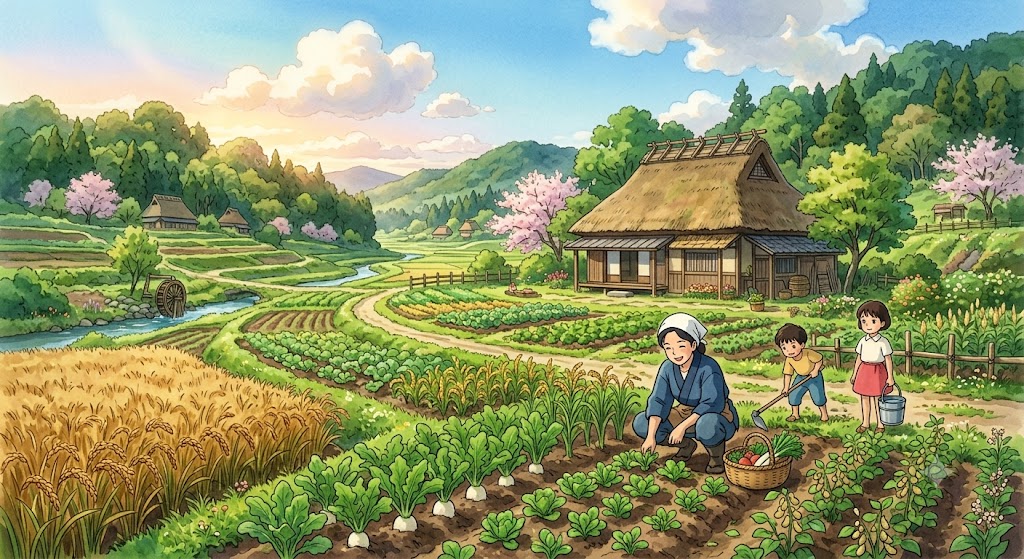
Modern agriculture has achieved remarkable productivity through improved crop varieties and advanced farming technologies. However, many farmers are now facing new challenges such as rising production costs, unpredictable weather, declining soil fertility, and increasing pressure to adopt environmentally responsible farming practices. These challenges have encouraged many growers to look beyond conventional crops and rediscover traditional varieties that have been cultivated successfully for generations.
Traditional crops have stood the test of time because they naturally adapt to local climates, require fewer external inputs, and often provide excellent nutritional value. In addition to supporting sustainable agriculture, many of these crops are experiencing renewed market demand from consumers interested in healthy, organic, and locally produced food.
This guide explores some of the best traditional crops that can improve farm profitability while supporting long-term environmental sustainability.
Why Traditional Crops Still Matter
Traditional crops are more than just part of agricultural history—they remain valuable for modern farming systems.
Many heritage varieties have naturally developed resistance to harsh environmental conditions and continue producing reliable harvests with fewer resources.
Growing traditional crops can help farmers:
- Reduce production costs
- Improve soil health
- Diversify farm income
- Conserve water
- Support biodiversity
- Access specialty food markets
- Increase climate resilience
These benefits make them an attractive option for both small-scale and commercial farmers.
Characteristics of a Profitable Traditional Crop
Before selecting any crop, farmers should evaluate several important factors.
A good traditional crop should offer:
- Strong market demand
- Adaptability to local climate
- Reasonable production costs
- Stable yields
- Pest and disease tolerance
- Multiple commercial uses
- Good storage life
Choosing crops that meet both environmental and economic goals increases the chances of long-term success.
1. Millet
Millet has been cultivated for thousands of years and remains one of the most resilient cereal crops.
Popular varieties include:
- Pearl millet
- Finger millet
- Foxtail millet
- Barnyard millet
Why It Is Profitable
Millet requires less irrigation than many major cereals and performs well under dry conditions.
Advantages include:
- Low water requirement
- Short growing season
- Strong drought resistance
- Increasing consumer demand
- High nutritional value
Millet products continue gaining popularity among health-conscious consumers.
2. Sorghum
Sorghum is widely recognized for its ability to thrive in challenging environments.
Farmers value sorghum because it:
- Tolerates heat
- Requires less water
- Produces reliable yields
- Can be used for food, livestock feed, and biofuel
Its versatility creates multiple income opportunities.
3. Cowpea
Cowpea is both a food crop and a soil-improving legume.
Major Benefits
- Rich source of protein
- Nitrogen fixation
- Excellent drought tolerance
- Suitable for crop rotation
- Valuable livestock fodder
Cowpea contributes to both farm productivity and soil fertility.
4. Pigeon Pea
Pigeon pea has long been an important crop in many tropical and subtropical farming systems.
Its advantages include:
- Deep root system
- Soil improvement
- High protein content
- Drought resistance
- Long harvesting period
It also helps reduce soil erosion.
5. Amaranth
Amaranth is valued for both its edible grain and nutritious leaves.
Benefits include:
- High protein levels
- Rich mineral content
- Fast growth
- Adaptability to dry conditions
- Strong market demand
Its versatility increases commercial opportunities.
6. Sesame
Sesame remains one of the oldest oilseed crops cultivated by humans.
Why Farmers Prefer Sesame
- Requires relatively little water
- High-value oilseed crop
- Good export demand
- Long storage life
- Suitable for dry regions
Sesame oil continues to enjoy strong global demand.
7. Groundnut (Peanut)
Groundnut is both a profitable cash crop and a valuable soil-enriching legume.
Advantages include:
- Nitrogen fixation
- Multiple food products
- Livestock feed value
- Cooking oil production
- High market demand
Its commercial versatility makes it attractive for many farming systems.
8. Moringa
Although technically a tree crop, moringa has become increasingly important in sustainable agriculture.
Commercial uses include:
- Leaf powder
- Fresh vegetables
- Animal feed
- Nutritional supplements
- Organic fertilizer
Its rapid growth supports continuous harvesting in suitable climates.
9. Teff
Teff is gaining international recognition because of its nutritional benefits.
Farmers appreciate:
- Adaptability
- High fiber content
- Gluten-free grain
- Specialty market demand
Its growing popularity creates opportunities in premium food markets.
10. Buckwheat
Buckwheat grows quickly and supports environmentally friendly farming.
Major advantages include:
- Short growing season
- Excellent pollinator support
- Good weed suppression
- Specialty food demand
It is frequently used both as a grain crop and as a cover crop.
How Traditional Crops Improve Soil Health
Healthy soil remains one of the most valuable resources on any farm.
Traditional crops contribute by:
Increasing Organic Matter
Crop residues improve soil structure over time.
Fixing Nitrogen
Legumes naturally enrich soil fertility.
Reducing Erosion
Strong root systems stabilize the soil.
Supporting Beneficial Microorganisms
Crop diversity encourages healthier soil biology.
Healthy soils reduce dependence on synthetic fertilizers.
Environmental Benefits of Traditional Crops
Traditional crops often require fewer external resources than modern intensive farming systems.
Environmental advantages include:
- Lower water consumption
- Reduced fertilizer use
- Less pesticide dependency
- Better biodiversity
- Improved carbon storage
- Increased climate resilience
These qualities support sustainable agricultural development.
Market Opportunities
Consumer preferences continue evolving toward healthier and more sustainable foods.
Growing demand exists for:
- Organic grains
- Ancient grains
- Plant-based proteins
- Gluten-free products
- Traditional foods
- Functional foods
Farmers who understand local and export market trends may benefit from these expanding opportunities.
Best Farming Practices
To maximize profitability, farmers should combine traditional crops with good agricultural management.
Recommended practices include:
- Select locally adapted varieties.
- Use certified seed where available.
- Rotate crops regularly.
- Apply organic matter to improve soil.
- Manage weeds early.
- Harvest at proper maturity.
- Store crops carefully.
Proper management often improves both yield and product quality.
Common Challenges
While traditional crops offer many advantages, farmers should also prepare for potential challenges.
Examples include:
- Limited processing facilities
- Lower public awareness
- Smaller supply chains
- Seed availability
- Price fluctuations
Careful planning helps reduce these risks.
Diversifying Farm Income
Growing multiple traditional crops reduces dependence on a single harvest.
Farm diversification may include:
- Grain production
- Oilseed crops
- Legumes
- Livestock feed
- Value-added processing
- Organic farming
Diversified farms are generally more resilient to market and weather fluctuations.
Comparing Traditional Crops
| Crop | Main Benefit | Sustainability Rating |
|---|---|---|
| Millet | Drought resistance | Excellent |
| Sorghum | Heat tolerance | Excellent |
| Cowpea | Soil improvement | Excellent |
| Pigeon Pea | Nitrogen fixation | Excellent |
| Amaranth | High nutrition | Very Good |
| Sesame | High-value oilseed | Very Good |
| Groundnut | Multiple commercial uses | Excellent |
| Moringa | Multi-purpose crop | Excellent |
| Teff | Specialty market | Very Good |
| Buckwheat | Pollinator support | Excellent |
Each crop offers unique advantages depending on climate, farming objectives, and market demand.
Future of Traditional Agriculture
Agriculture is gradually moving toward systems that balance productivity with environmental responsibility.
Traditional crops are expected to play an increasingly important role in:
- Climate-smart farming
- Organic agriculture
- Regenerative farming
- Food security
- Crop diversification
- Sustainable nutrition
Ongoing research continues improving production techniques while preserving valuable genetic diversity.
Conclusion
Traditional crops are proving that sustainable agriculture and profitable farming can work together. Their natural adaptability, lower input requirements, nutritional benefits, and growing market demand make them valuable options for modern farmers facing climate and economic challenges.
Whether you choose millet, sorghum, cowpea, sesame, pigeon pea, amaranth, or other heritage crops, integrating traditional varieties into your farming system can improve soil health, diversify farm income, reduce production costs, and strengthen long-term resilience. By combining time-tested crops with modern management practices, farmers can build productive and environmentally responsible agricultural businesses for the future.
Frequently Asked Questions (FAQs)
1. What are traditional crops?
Traditional crops are plant varieties that have been cultivated for generations within specific regions and are often well adapted to local environmental conditions.
2. Why are farmers growing traditional crops again?
Farmers are rediscovering these crops because they often require fewer inputs, tolerate climate stress, improve biodiversity, and meet growing demand for healthy and sustainable foods.
3. Which traditional crop is best for dry regions?
Millet, sorghum, cowpea, and pigeon pea are widely recognized for their drought tolerance and suitability for areas with limited rainfall.
4. Can traditional crops improve farm profits?
Yes. Many traditional crops reduce production costs while providing access to specialty, organic, and premium food markets, improving overall profitability.
5. How can farmers successfully introduce traditional crops?
Start with small trial plots, select locally adapted varieties, research market opportunities, follow good agronomic practices, and maintain detailed production records to evaluate performance over time.