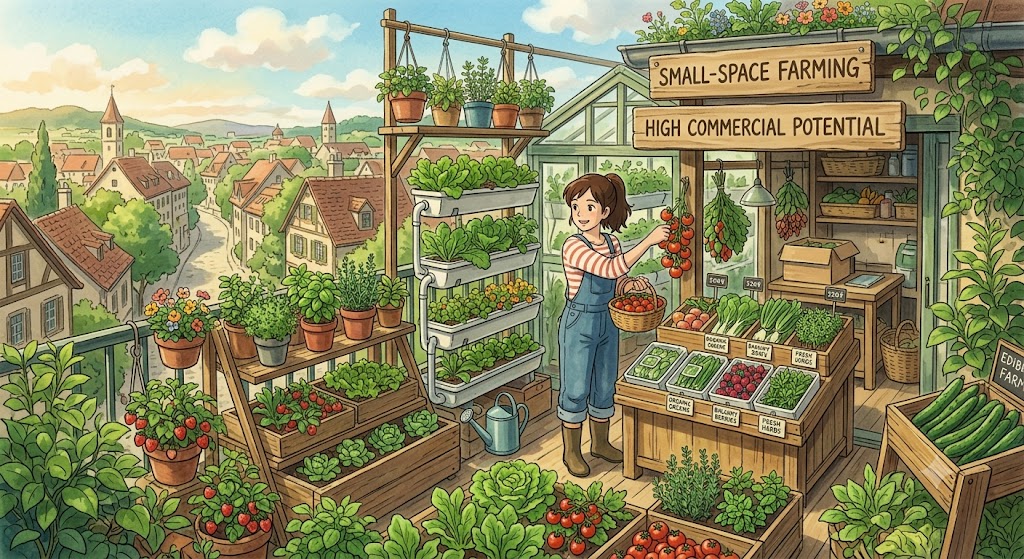
Agriculture is no longer limited to vast fields and large rural properties. As land prices increase and urban populations continue to grow, many farmers and entrepreneurs are discovering that profitable food production can be achieved on relatively small areas of land. Advances in technology, intensive cultivation methods, and high-value crop production have created opportunities for small-scale farming systems capable of generating impressive commercial returns.
Small-space farming focuses on maximizing productivity per square meter rather than simply expanding cultivated acreage. Through careful planning, efficient resource management, and strategic crop selection, growers can transform limited spaces into highly productive agricultural enterprises.
Whether operating in urban environments, suburban areas, or small rural properties, farmers can use modern production systems to generate sustainable income while meeting the growing demand for fresh, locally produced food.
Understanding Small-Space Commercial Farming
Small-space farming involves producing crops or agricultural products on limited land areas while maintaining commercial viability.
These systems often prioritize:
- High-value crops
- Intensive production methods
- Efficient resource utilization
- Continuous harvesting
- Direct marketing opportunities
Rather than focusing on large-scale commodity production, small-space farmers typically target niche markets and premium products.
The goal is to maximize profitability from every available growing area.
Why Small-Space Farming Is Growing
Several factors are driving interest in compact agricultural systems.
These include:
- Rising land costs
- Urbanization
- Increased demand for local food
- Advances in controlled-environment agriculture
- Growing interest in sustainable production
Consumers increasingly value:
- Fresh produce
- Locally grown food
- Specialty crops
- Sustainable farming practices
These trends create opportunities for small-scale producers to compete successfully in modern agricultural markets.
Benefits of Small-Space Farming Systems
Small-space farming offers numerous advantages.
Benefits include:
- Lower land requirements
- Reduced startup costs
- Efficient resource use
- Easier management
- Faster production cycles
- Greater crop diversity
Smaller operations often allow farmers to focus more closely on quality, consistency, and customer relationships.
This can create significant competitive advantages.
Intensive Vegetable Production
Vegetable farming remains one of the most profitable small-space agricultural systems.
Popular crops include:
- Lettuce
- Spinach
- Kale
- Tomatoes
- Peppers
- Cucumbers
Benefits include:
- High demand
- Multiple harvests
- Fast turnover
- Direct marketing opportunities
Intensive vegetable production can generate substantial income when managed efficiently.
Raised beds and succession planting further increase productivity.
Microgreens Production
Microgreens have become one of the most attractive small-space farming enterprises.
These young vegetable greens are harvested shortly after germination and are valued for:
- Nutritional content
- Flavor
- Culinary applications
Popular varieties include:
- Sunflower
- Radish
- Broccoli
- Pea shoots
- Mustard greens
Advantages include:
- Extremely short production cycles
- Minimal space requirements
- Premium pricing
Microgreens are commonly sold to restaurants, specialty retailers, and health-conscious consumers.
Herb Cultivation
Fresh herbs are highly profitable and well-suited to compact growing areas.
Common options include:
- Basil
- Mint
- Parsley
- Cilantro
- Rosemary
- Thyme
Benefits include:
- Strong market demand
- Multiple harvest opportunities
- Premium retail prices
Herb production works well in greenhouses, containers, vertical systems, and small field plots.
Specialty Mushroom Farming
Mushroom cultivation offers excellent commercial potential for small spaces.
Popular varieties include:
- Oyster mushrooms
- Shiitake mushrooms
- Lion’s Mane mushrooms
Advantages include:
- Indoor production capability
- Year-round cultivation
- High market value
- Efficient space utilization
Vertical shelving systems allow growers to maximize output from limited production areas.
Hydroponic Farming Systems
Hydroponics allows crops to grow without traditional soil.
Plants receive nutrients through water-based solutions.
Benefits include:
- Reduced water use
- Faster growth rates
- Efficient nutrient management
- Higher yields per square meter
Hydroponic systems are commonly used for:
- Leafy greens
- Herbs
- Tomatoes
- Strawberries
This technology is especially valuable where land availability is limited.
Vertical Farming
Vertical farming expands production by utilizing vertical space.
Crops are grown in stacked layers within controlled environments.
Advantages include:
- High productivity
- Reduced land requirements
- Efficient resource use
- Year-round production
Vertical systems are increasingly used in urban agriculture and commercial greenhouse operations.
They represent one of the most innovative approaches to small-space farming.
Container-Based Agriculture
Container farming allows production in areas with limited soil availability.
Containers can be used for:
- Vegetables
- Herbs
- Fruits
- Specialty crops
Benefits include:
- Flexibility
- Mobility
- Efficient space use
- Improved soil management
Container systems are particularly useful for urban and rooftop farming projects.
High-Tunnel and Greenhouse Production
Protected cultivation structures help maximize productivity in small areas.
Benefits include:
- Extended growing seasons
- Improved crop quality
- Weather protection
- Higher yields
Greenhouses and high tunnels support the production of premium crops throughout the year.
This often improves profitability and market access.
Strawberry Production Systems
Strawberries are among the most profitable fruit crops for small-scale farming.
Production methods include:
- Raised beds
- Vertical towers
- Hanging systems
- Greenhouse cultivation
Strong consumer demand and premium pricing make strawberries attractive for intensive production systems.
Cut Flower Farming
Cut flowers offer excellent commercial potential on small properties.
Popular varieties include:
- Sunflowers
- Zinnias
- Dahlias
- Marigolds
- Snapdragons
Benefits include:
- High value per square meter
- Direct sales opportunities
- Seasonal demand
Flower farming can provide strong returns when combined with local marketing strategies.
Aquaponics Systems
Aquaponics combines fish farming with hydroponic crop production.
Benefits include:
- Nutrient recycling
- Dual revenue streams
- Efficient water use
- Sustainable production
These integrated systems maximize productivity while minimizing waste.
Aquaponics is becoming increasingly popular among innovative small-scale growers.
Direct Marketing Advantages
Small-space farms often benefit from direct sales channels.
Examples include:
- Farmers markets
- Community-supported agriculture (CSA)
- Restaurant partnerships
- Local retailers
- Online sales
Direct marketing often allows growers to retain a larger portion of product value.
Strong customer relationships support long-term business success.
Efficient Resource Management
Commercial success depends on efficient use of:
- Water
- Nutrients
- Labor
- Growing space
Modern technologies such as:
- Drip irrigation
- Automated monitoring systems
- Precision agriculture tools
help improve productivity while reducing operating costs.
Resource efficiency is especially important in intensive farming systems.
Building a Profitable Small-Space Farm
Successful growers typically focus on:
- High-value crops
- Intensive production methods
- Efficient space utilization
- Direct marketing strategies
- Consistent product quality
- Resource conservation
- Market-driven production planning
Combining these factors helps maximize profitability.
Challenges to Consider
Small-space farming also presents challenges.
These may include:
- Labor intensity
- Market competition
- Initial infrastructure investments
- Technical management requirements
Proper planning and continuous learning help farmers overcome these obstacles successfully.
Future Opportunities in Small-Space Agriculture
Emerging trends include:
- Urban farming expansion
- Vertical agriculture growth
- Smart farming technologies
- Sustainable food systems
- Controlled-environment production
These developments are expected to create additional opportunities for small-scale agricultural entrepreneurs.
Conclusion
Small-space farming systems demonstrate that commercial agricultural success does not always require large landholdings. Through intensive production methods, high-value crops, controlled-environment technologies, and efficient resource management, farmers can generate impressive returns from limited spaces.
As demand for local, sustainable, and premium agricultural products continues to increase, small-space farming offers exciting opportunities for entrepreneurs, urban growers, and modern agricultural businesses. With careful planning and effective management, compact farming systems can become highly productive and profitable enterprises capable of supporting long-term business growth.