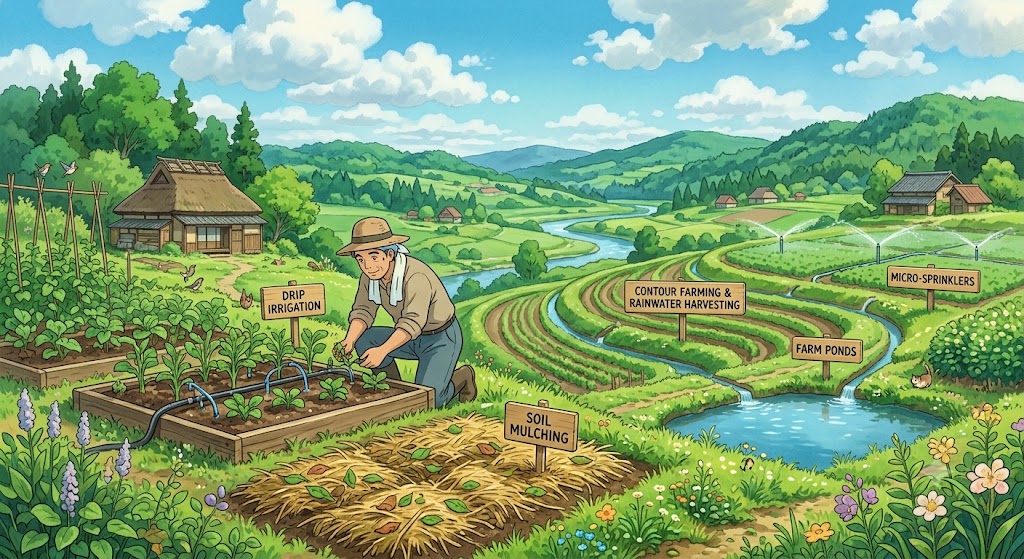
Water is one of the most valuable resources in agriculture. Every crop, livestock operation, and farming system depends on a reliable water supply to maintain productivity and profitability. However, increasing population growth, climate change, drought conditions, and rising competition for water resources are making efficient water management more important than ever before.
For modern farmers, conserving water is not simply an environmental responsibility—it is a practical business strategy. Efficient water use can reduce production costs, improve crop performance, strengthen drought resilience, and support long-term farm sustainability. By implementing proven water conservation techniques, farmers can maximize productivity while protecting one of agriculture’s most critical resources.
This guide explores essential agricultural water conservation practices that every farmer should understand and consider implementing.
Why Water Conservation Matters in Agriculture
Agriculture is one of the largest users of freshwater worldwide.
Water is essential for:
- Crop growth
- Livestock production
- Soil health
- Nutrient transport
- Farm operations
As water resources become increasingly limited in many regions, efficient management is critical for maintaining agricultural productivity.
Conserving water helps ensure long-term availability while reducing operational expenses.
Understanding Water Loss in Farming
Before improving efficiency, farmers must understand where water losses occur.
Common sources of water loss include:
- Evaporation
- Runoff
- Deep percolation
- Leaking irrigation systems
- Poor scheduling practices
Reducing unnecessary losses can significantly improve overall water-use efficiency.
Small improvements often lead to substantial savings over time.
Implement Drip Irrigation Systems
Drip irrigation is one of the most effective water conservation technologies available.
The system delivers water directly to the plant root zone through a network of pipes and emitters.
Benefits include:
- Reduced evaporation
- Improved water-use efficiency
- Better crop growth
- Lower weed pressure
Drip systems often use considerably less water than traditional irrigation methods while maintaining strong yields.
Use Soil Moisture Monitoring Tools
Applying water only when necessary is a key conservation strategy.
Soil moisture monitoring systems help farmers determine:
- When irrigation is needed
- How much water should be applied
Common tools include:
- Moisture sensors
- Soil probes
- Digital monitoring systems
Accurate information supports more efficient irrigation decisions.
Schedule Irrigation Properly
Timing significantly affects water efficiency.
The best irrigation periods are typically:
- Early morning
- Late evening
Benefits include:
- Reduced evaporation losses
- Improved water absorption
- Better crop utilization
Avoiding irrigation during the hottest part of the day helps conserve valuable water resources.
Improve Soil Organic Matter
Healthy soils store water more effectively than degraded soils.
Practices that increase organic matter include:
- Compost application
- Cover cropping
- Crop residue retention
- Reduced tillage
Benefits include:
- Improved water retention
- Enhanced soil structure
- Better drought resistance
Soil improvement is one of the most cost-effective long-term water conservation strategies.
Utilize Mulching Techniques
Mulch helps reduce moisture loss from the soil surface.
Common mulch materials include:
- Straw
- Crop residues
- Compost
- Organic plant materials
Benefits include:
- Reduced evaporation
- Weed suppression
- Improved soil temperature regulation
Mulching helps maintain moisture levels while supporting healthier crop growth.
Adopt Conservation Tillage Practices
Excessive tillage can increase moisture loss and soil degradation.
Conservation tillage minimizes soil disturbance while preserving crop residues.
Benefits include:
- Improved water infiltration
- Reduced evaporation
- Better soil health
Conservation tillage supports both water conservation and sustainable farming.
Harvest Rainwater
Rainwater harvesting helps capture and store water for future agricultural use.
Methods may include:
- Farm ponds
- Water storage tanks
- Reservoir systems
- Collection structures
Benefits include:
- Supplemental irrigation supplies
- Reduced dependence on external water sources
- Improved drought preparedness
Harvesting rainfall helps maximize available water resources.
Improve Irrigation System Maintenance
Poorly maintained systems often waste significant amounts of water.
Regular maintenance should include:
- Leak detection
- Pipe inspections
- Equipment calibration
- System cleaning
Well-maintained irrigation systems operate more efficiently and reduce unnecessary losses.
Preventive maintenance supports long-term water conservation.
Select Drought-Tolerant Crop Varieties
Crop selection plays an important role in water management.
Drought-tolerant varieties often require:
- Less irrigation
- Reduced water inputs
- Greater resilience during dry periods
Benefits include:
- Improved productivity under limited water conditions
- Greater production stability
Choosing appropriate crop varieties helps reduce overall water demand.
Practice Crop Rotation
Crop rotation contributes to improved soil structure and water management.
Benefits include:
- Enhanced soil health
- Better moisture retention
- Improved nutrient cycling
Diverse rotations often create more resilient farming systems that use water more efficiently.
Healthy soils support stronger crop performance during dry periods.
Reduce Runoff Through Field Design
Water runoff represents a significant source of resource loss.
Conservation practices include:
- Contour farming
- Terracing
- Vegetative barriers
- Buffer strips
Benefits include:
- Increased water infiltration
- Reduced erosion
- Improved soil moisture conservation
Keeping water in the field improves both productivity and sustainability.
Use Cover Crops
Cover crops provide several water conservation benefits.
Advantages include:
- Reduced evaporation
- Improved infiltration
- Increased organic matter
- Better soil structure
Popular cover crops include:
- Rye
- Clover
- Oats
- Vetch
Cover cropping helps create more water-efficient agricultural systems.
Manage Weeds Effectively
Weeds compete with crops for available water.
Uncontrolled weed growth can significantly increase water demand.
Effective weed management helps:
- Reduce competition
- Improve crop access to moisture
- Increase water-use efficiency
Maintaining clean fields supports better resource utilization.
Utilize Precision Agriculture Technologies
Modern technologies improve water management accuracy.
Examples include:
- GPS-guided systems
- Variable-rate irrigation
- Automated controllers
- Remote monitoring platforms
Benefits include:
- Improved efficiency
- Reduced waste
- Better decision-making
Precision agriculture helps farmers apply water where and when it is needed most.
Improve Water Storage Capacity
Increasing on-farm water storage helps farmers prepare for dry periods.
Storage solutions may include:
- Reservoirs
- Retention ponds
- Storage tanks
Benefits include:
- Improved water security
- Greater operational flexibility
- Enhanced drought resilience
Reliable storage systems support consistent agricultural production.
Protect Water Quality
Water conservation should also include water quality protection.
Best practices include:
- Proper nutrient management
- Buffer zones
- Reduced runoff
- Responsible chemical use
Clean water resources are essential for both current and future agricultural production.
Protecting water quality supports environmental sustainability.
Develop a Farm Water Management Plan
A comprehensive water strategy may include:
- Irrigation efficiency improvements
- Soil health management
- Rainwater harvesting
- Crop selection strategies
- Moisture monitoring
- Water storage development
- Precision technology adoption
Integrated planning improves overall resource management.
Economic Benefits of Water Conservation
Efficient water management often results in:
- Lower irrigation costs
- Reduced energy expenses
- Improved crop performance
- Greater drought resilience
- Enhanced profitability
Water conservation benefits both the environment and farm finances.
Resource efficiency contributes directly to long-term business success.
Conclusion
Agricultural water conservation is becoming increasingly important as farmers face growing pressure to produce more food with limited resources. Techniques such as drip irrigation, soil moisture monitoring, mulching, conservation tillage, rainwater harvesting, precision agriculture, and soil health improvement help farmers use water more efficiently while maintaining strong productivity.
By adopting practical water conservation strategies, farmers can reduce costs, improve resilience, protect natural resources, and strengthen long-term profitability. Efficient water management is not only a key component of sustainable agriculture but also one of the smartest investments farmers can make for the future of their operations.