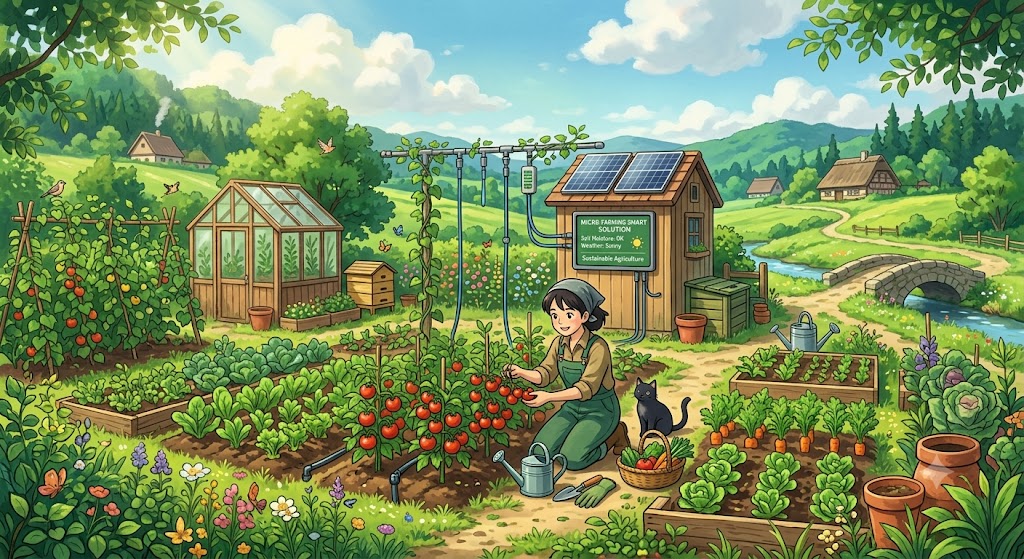
Introduction
As urban populations grow and agricultural land becomes more limited, farmers and gardening enthusiasts are searching for innovative ways to produce fresh food in smaller spaces. Micro Farming has emerged as an efficient and sustainable agricultural practice that allows people to grow vegetables, fruits, herbs, and other crops on small plots of land while achieving high productivity.
Micro farming focuses on maximizing the use of limited space through careful planning, efficient resource management, and modern farming techniques. Whether practiced in backyards, rooftops, balconies, greenhouses, or compact rural farms, micro farming enables individuals to produce nutritious food for personal consumption or local markets.
With the support of modern technologies such as drip irrigation, hydroponics, vertical farming, Artificial Intelligence (AI), and Internet of Things (IoT) sensors, micro farming has become an attractive option for urban farmers, entrepreneurs, and families looking to embrace sustainable agriculture. It not only helps improve food security but also reduces transportation costs, conserves natural resources, and creates additional income opportunities.
What is Micro Farming?
Micro farming is the practice of cultivating crops and sometimes raising small livestock on a limited area of land while maximizing productivity through efficient farming methods. Unlike large commercial farms, micro farms focus on intensive production using modern techniques and careful resource management.
Micro farming may include:
- Vegetable cultivation
- Herb gardening
- Fruit production
- Mushroom farming
- Hydroponics
- Vertical farming
- Beekeeping
- Poultry farming
- Compost production
The goal is to obtain the highest possible yield from a small space while maintaining environmental sustainability.
Why Micro Farming Is Becoming Popular
Micro farming is gaining attention worldwide due to several social and environmental factors.
Key reasons include:
- Limited farmland availability
- Increasing urbanization
- Rising food prices
- Demand for fresh organic produce
- Water conservation
- Sustainable food production
- Home-based farming opportunities
This farming method allows individuals to grow healthy food close to where it is consumed.
Benefits of Micro Farming
Efficient Use of Space
Micro farming makes productive use of rooftops, balconies, backyards, vacant lots, and small fields.
Even limited spaces can produce significant quantities of vegetables and herbs.
Lower Water Consumption
Modern irrigation systems help reduce water waste.
Popular methods include:
- Drip irrigation
- Hydroponic irrigation
- Rainwater harvesting
- Mulching
These techniques conserve water while maintaining healthy crop growth.
Fresh and Nutritious Food
Locally grown produce reaches consumers quickly, preserving freshness, flavor, and nutritional value.
Additional Income
Many micro farmers sell vegetables, herbs, mushrooms, honey, eggs, and other products at local markets or directly to consumers.
This creates valuable supplementary income.
Environmental Sustainability
Micro farming reduces transportation emissions, encourages composting, supports biodiversity, and promotes responsible resource use.
Popular Crops for Micro Farming
Small farms can successfully produce many high-value crops.
Popular choices include:
- Lettuce
- Spinach
- Tomatoes
- Chilies
- Bell peppers
- Coriander
- Mint
- Basil
- Strawberries
- Mushrooms
- Microgreens
These crops often have short growing cycles and strong local demand.
Modern Techniques Used in Micro Farming
Vertical Farming
Plants are grown in stacked layers, allowing farmers to increase production without expanding land.
Vertical farming is especially useful in urban environments.
Hydroponics
Hydroponic systems grow plants without soil using nutrient-rich water.
Advantages include:
- Faster growth
- Less water use
- Higher yields
- Cleaner production
Raised Garden Beds
Raised beds improve drainage, reduce soil compaction, and make crop management easier.
Container Farming
Containers allow crops to be grown in small outdoor or indoor spaces.
This method is ideal for balconies, rooftops, and patios.
Technology in Micro Farming
Technology has significantly improved the efficiency of small-scale farming.
Artificial Intelligence (AI)
AI helps farmers:
- Predict crop growth
- Detect plant diseases
- Optimize irrigation
- Improve nutrient management
Internet of Things (IoT)
Smart sensors monitor:
- Soil moisture
- Temperature
- Humidity
- Light intensity
- Water levels
Real-time monitoring allows farmers to make informed decisions.
Smart Irrigation
Automated irrigation systems deliver water only when needed, reducing waste and supporting healthy plant growth.
Mobile Farm Management Apps
Farmers can use mobile applications to track planting schedules, irrigation, harvest dates, expenses, and crop performance.
Essential Requirements for Micro Farming
A successful micro farm requires careful planning.
Important requirements include:
- Quality seeds or seedlings
- Healthy soil or hydroponic system
- Reliable water supply
- Organic compost
- Sunlight or grow lights
- Pest management strategy
- Proper drainage
Choosing suitable crops for the local climate is also essential.
Challenges of Micro Farming
Although micro farming offers many advantages, it also presents certain challenges.
Limited Growing Space
Farmers must carefully plan crop placement to maximize productivity.
Initial Investment
Some systems, such as hydroponics and vertical farming, require equipment purchases.
Pest Management
Small farms still require regular monitoring to prevent pest infestations.
Weather Conditions
Outdoor micro farms remain vulnerable to heavy rainfall, extreme heat, and strong winds.
Market Competition
Farmers should focus on producing high-quality products to attract customers.
Best Practices for Successful Micro Farming
Farmers can improve success by following these recommendations:
- Choose crops with high local demand.
- Use compost to improve soil fertility.
- Install drip irrigation systems.
- Rotate crops regularly.
- Monitor plants every day.
- Control pests using environmentally friendly methods.
- Keep detailed production records.
- Harvest crops at the proper stage.
- Market produce directly to consumers when possible.
- Continue learning modern farming techniques.
Future of Micro Farming
Micro farming is expected to play an increasingly important role in future food production. As cities expand and climate change places pressure on traditional agriculture, compact farming systems will become more valuable.
Future developments may include AI-powered crop monitoring, robotic harvesting, automated irrigation, solar-powered greenhouses, advanced hydroponic systems, and smart vertical farms. These technologies will help farmers produce more food with fewer resources while reducing environmental impact.
Governments and agricultural organizations are also promoting urban agriculture and small-scale farming initiatives to improve local food security and encourage sustainable development.
Micro Farming and Food Security
Micro farming contributes significantly to local food production by allowing families and communities to grow fresh produce close to home. It reduces dependence on long-distance transportation, lowers food waste, and improves access to nutritious vegetables and herbs.
By encouraging sustainable farming practices, efficient water use, and local food systems, micro farming strengthens community resilience while supporting healthier diets and environmental conservation.
Conclusion
Micro farming is transforming the way people produce food by making agriculture possible even in limited spaces. Through efficient resource management, modern technologies, and sustainable farming practices, small-scale farms can achieve impressive productivity while conserving water and protecting the environment.
Whether practiced in urban neighborhoods, rural communities, rooftops, or home gardens, micro farming offers opportunities for fresh food production, additional income, and greater food security. As innovation continues to shape agriculture, micro farming will remain an essential solution for building resilient, sustainable, and productive food systems for the future.