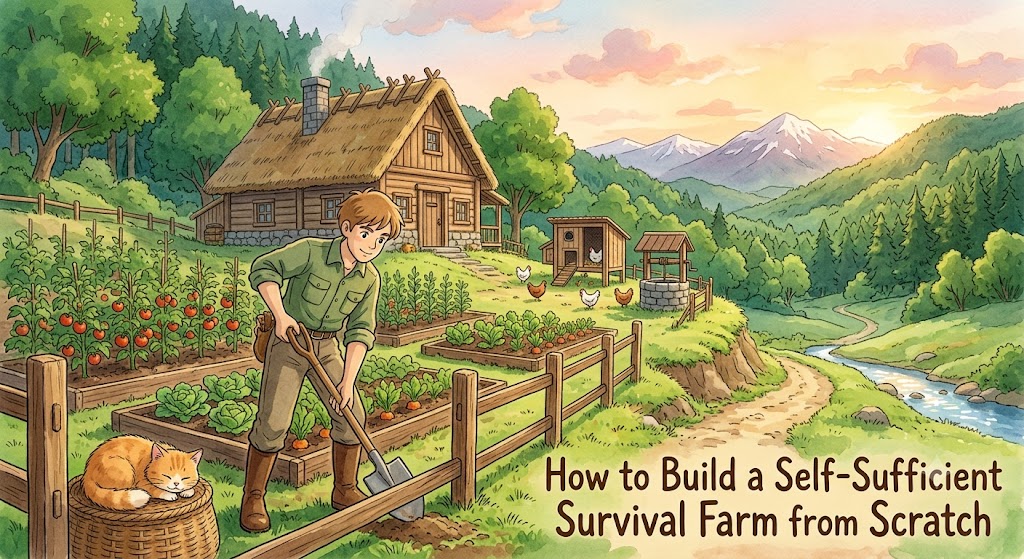
Building a self-sufficient survival farm is one of the most rewarding ways to achieve long-term food security and reduce dependence on outside resources. Whether your goal is to prepare for uncertain times, lower household expenses, or embrace a sustainable lifestyle, a well-designed survival farm can provide fresh food, clean water, renewable resources, and even additional income. Unlike commercial farming, which focuses mainly on profit, survival farming emphasizes resilience, diversity, and the ability to produce essential needs year after year.
The idea of creating a survival farm may seem overwhelming at first, but it doesn’t require hundreds of acres or expensive equipment. With careful planning, healthy soil, efficient water management, and a combination of crops and livestock, even a modest property can become highly productive. Starting small and expanding gradually allows beginners to gain experience while building a system that becomes stronger over time.
This guide explains the essential steps to building a self-sufficient survival farm from scratch.
What Is a Self-Sufficient Survival Farm?
A survival farm is designed to produce enough food and basic resources to support a household with minimal dependence on outside supplies. Instead of focusing on one crop, survival farms combine vegetables, fruits, grains, legumes, herbs, livestock, composting, and water conservation into one balanced system.
A complete survival farm often includes:
- Vegetable gardens
- Fruit trees
- Grain crops
- Protein-rich legumes
- Medicinal and culinary herbs
- Chickens or other small livestock
- Compost systems
- Rainwater collection
- Seed-saving areas
This diversity improves resilience and reduces the risk of food shortages.
Benefits of Building a Survival Farm
A well-managed survival farm offers several long-term advantages.
Some of the most important benefits include:
- Greater food security
- Lower grocery expenses
- Fresh and nutritious produce
- Improved soil health
- Reduced dependence on supply chains
- Better environmental sustainability
- Opportunity to generate extra income from surplus produce
These benefits make survival farming valuable for both rural and suburban households.
Step 1: Assess Your Land
Before planting anything, carefully evaluate your property.
Consider:
- Available growing space
- Sunlight exposure
- Soil quality
- Water sources
- Drainage
- Local climate
- Wind protection
Even small plots, backyards, or unused land can become productive with proper planning.
Step 2: Create a Farm Plan
Planning prevents costly mistakes and helps you use available space efficiently.
Divide your land into functional areas such as:
- Vegetable garden
- Orchard
- Compost area
- Livestock shelter
- Water storage
- Tool storage
- Walking paths
Leave room for future expansion as your experience grows.
Step 3: Build Healthy Soil
Healthy soil is the foundation of productive farming.
Improve soil naturally by adding:
- Compost
- Well-rotted manure
- Leaf mulch
- Crop residues
- Vermicompost
- Green manure crops
Healthy soil supports stronger plants, better water retention, and higher yields while reducing the need for synthetic fertilizers.
Step 4: Grow a Variety of Crops
Diversification is one of the most important principles of survival farming.
Include several crop groups.
Root Crops
- Potatoes
- Sweet potatoes
- Carrots
- Beets
- Turnips
These crops provide calories and store well.
Leafy Vegetables
- Spinach
- Kale
- Lettuce
- Swiss chard
Leafy greens supply essential vitamins and minerals.
Legumes
- Beans
- Peas
- Lentils
- Cowpeas
Legumes add protein to the diet and improve soil fertility.
Fruit Crops
- Tomatoes
- Cucumbers
- Pumpkins
- Squash
- Peppers
Growing seasonal fruits and vegetables increases dietary variety.
Herbs
- Basil
- Mint
- Rosemary
- Thyme
- Coriander
Herbs require little space and are useful for cooking, preservation, and traditional home remedies.
Step 5: Plant Perennial Food Sources
Perennial crops continue producing for many years with relatively little maintenance.
Examples include:
- Apple trees
- Citrus trees
- Berry bushes
- Grapevines
- Asparagus
- Rhubarb
Although they take time to mature, they become valuable long-term food sources.
Step 6: Include Small Livestock
Where local regulations and available space allow, livestock can increase farm productivity.
Good options include:
- Chickens for eggs
- Ducks
- Rabbits
- Goats for milk
- Honey bees
Livestock provide food while producing manure that improves soil fertility.
Step 7: Secure a Reliable Water Supply
Water is one of the most valuable farm resources.
Useful water-saving methods include:
- Rainwater harvesting
- Drip irrigation
- Mulching
- Water storage tanks
- Swales and contour planting where appropriate
Efficient water management protects crops during dry periods and reduces waste.
Step 8: Start Composting
Compost transforms organic waste into nutrient-rich fertilizer.
Suitable compost materials include:
- Vegetable scraps
- Dry leaves
- Grass clippings
- Crop residues
- Coffee grounds
Using homemade compost improves soil fertility while reducing household waste.
Step 9: Save Seeds
Saving seeds helps reduce future costs and increases independence.
Choose healthy plants and collect seeds from suitable open-pollinated varieties. Store them in cool, dry, and airtight containers to maintain viability.
A well-organized seed collection ensures planting material is available every growing season.
Step 10: Practice Crop Rotation
Growing different crops in the same area each season improves long-term soil health.
Crop rotation helps:
- Reduce pests
- Lower disease pressure
- Improve nutrient balance
- Control weeds
- Increase overall productivity
Combining legumes with heavy-feeding crops creates a more balanced farming system.
Preserve Your Harvest
A productive survival farm should provide food beyond the harvest season.
Useful preservation methods include:
- Air drying herbs
- Freezing vegetables
- Fermenting cabbage and other vegetables
- Dehydrating fruits
- Storing root crops in cool conditions
Proper storage reduces waste and extends food availability.
Keep Farm Records
Maintaining records helps improve future planning.
Track information such as:
- Planting dates
- Harvest yields
- Seed varieties
- Weather conditions
- Pest problems
- Fertilizer applications
- Expenses and savings
Good records make it easier to identify successful crops and improve efficiency.
Common Mistakes to Avoid
Many beginners face challenges because of preventable mistakes.
Avoid:
- Planting too much during the first year
- Ignoring soil health
- Growing unsuitable crops
- Poor water management
- Neglecting pest monitoring
- Depending on only one crop
- Failing to preserve surplus harvests
Learning gradually often produces better long-term results than expanding too quickly.
Tips for Long-Term Success
To build a productive self-sufficient farm:
- Start small and improve each season.
- Focus on reliable crops.
- Maintain healthy soil through composting.
- Diversify food production.
- Save seeds whenever possible.
- Build efficient water systems.
- Learn from each growing season.
- Expand only after mastering the basics.
Consistent improvements over several years create a farm that becomes increasingly productive and resilient.
Conclusion
Building a self-sufficient survival farm from scratch is a long-term investment in food security, sustainability, and independence. By combining healthy soil, diverse crops, perennial plants, efficient water management, composting, seed saving, and small livestock, you can create a resilient farming system capable of producing nutritious food year after year.
Success does not depend on owning a large property but on thoughtful planning, consistent care, and continuous learning. Whether you begin with a small backyard or a larger piece of land, each improvement brings you closer to a productive survival farm that supports your family while protecting natural resources for future generations.