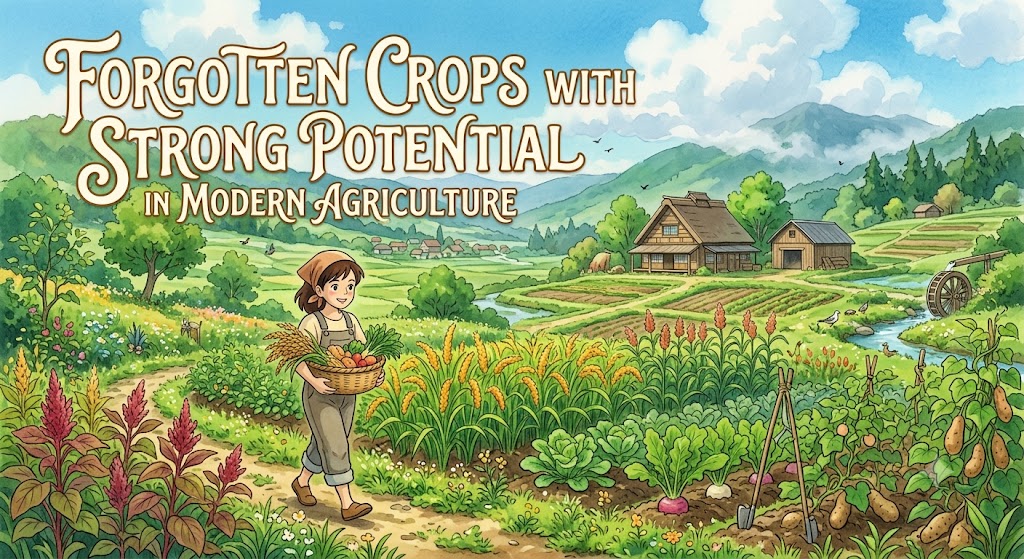
Modern agriculture often focuses on a relatively small number of major crops such as wheat, rice, corn, and soybeans. While these staple crops play a critical role in global food production, many traditional and lesser-known crops that once supported local communities have gradually disappeared from mainstream farming systems. These “forgotten crops” were often abandoned due to changing consumer preferences, industrial farming practices, market shifts, or the expansion of large-scale commodity agriculture.
Today, however, interest in forgotten crops is growing once again. Farmers, researchers, and consumers are increasingly recognizing the value of these resilient and nutritious plants. Many forgotten crops possess characteristics that make them highly suitable for modern agricultural challenges, including drought tolerance, climate resilience, nutritional richness, and adaptability to marginal growing conditions.
This guide explores the potential of forgotten crops and why they may play an important role in the future of sustainable agriculture.
What Are Forgotten Crops?
Forgotten crops, sometimes called underutilized or neglected crops, are plant species that were historically cultivated but are no longer widely grown on a commercial scale.
These crops often remain important within specific regions or traditional farming systems but receive far less attention than major commodity crops.
Characteristics commonly include:
- Unique nutritional profiles
- Adaptability to challenging environments
- Cultural significance
- Limited commercial development
Many forgotten crops offer opportunities for both agricultural diversification and market innovation.
Why Interest in Forgotten Crops Is Growing
Several factors are contributing to renewed interest in these crops.
These include:
- Climate change concerns
- Growing demand for sustainable agriculture
- Interest in food diversity
- Nutritional awareness
- Specialty market opportunities
As farming systems seek greater resilience, forgotten crops are attracting attention as valuable alternatives to conventional production models.
Climate Resilience Advantages
Many forgotten crops evolved in challenging environments and have naturally developed strong adaptation mechanisms.
Common traits include:
- Drought tolerance
- Heat resistance
- Pest resilience
- Ability to grow in poor soils
These characteristics can help farmers manage increasingly unpredictable weather conditions.
Climate resilience is becoming an important factor in crop selection worldwide.
Improved Agricultural Diversity
Overreliance on a limited number of crops can increase vulnerability to pests, diseases, and environmental changes.
Introducing forgotten crops helps:
- Diversify production systems
- Improve ecosystem resilience
- Reduce agricultural risks
Greater diversity often supports more sustainable and stable farming operations.
Diversification remains one of the strongest tools for long-term agricultural resilience.
Millet: A Resilient Grain Crop
Millets were once widely cultivated across many regions of the world.
Advantages include:
- Excellent drought tolerance
- Low water requirements
- Adaptability to poor soils
- Strong nutritional value
Millets are rich in:
- Fiber
- Minerals
- Protein
As water scarcity becomes a growing concern, millet production is attracting renewed interest.
Amaranth: A Highly Nutritious Crop
Amaranth has a long history of cultivation in several regions.
Benefits include:
- High protein content
- Rich mineral profile
- Adaptability to hot climates
Amaranth can be grown for both grain and leafy vegetables, creating multiple market opportunities.
Its nutritional qualities make it increasingly attractive to health-conscious consumers.
Sorghum: A Drought-Tolerant Alternative
Sorghum remains an important crop in some regions but remains underutilized in many modern farming systems.
Advantages include:
- Heat tolerance
- Efficient water use
- Strong performance in dry environments
Potential uses include:
- Food production
- Animal feed
- Bioenergy applications
Sorghum’s versatility supports a wide range of agricultural opportunities.
Bambara Groundnut
Bambara groundnut is a legume known for its resilience and nutritional value.
Benefits include:
- Ability to grow in poor soils
- Drought tolerance
- Nitrogen-fixing capabilities
The crop contributes to soil fertility while providing a nutritious food source.
Its adaptability makes it promising for sustainable farming systems.
Teff: Small Grain, Big Potential
Teff is a tiny grain with growing international recognition.
Advantages include:
- High nutritional value
- Drought tolerance
- Adaptability to diverse environments
Teff is increasingly popular among consumers seeking alternative grains.
Growing market demand creates opportunities for producers.
Fonio: An Ancient African Grain
Fonio is one of the oldest cultivated grains in Africa.
Benefits include:
- Fast growth cycles
- Adaptability to poor soils
- Low input requirements
Its resilience and nutritional qualities make it an attractive option for climate-smart agriculture.
Fonio continues to gain attention in specialty food markets.
Cowpea: Multipurpose Agricultural Value
Cowpea offers multiple benefits for farming systems.
Advantages include:
- Drought resistance
- Nitrogen fixation
- Food and feed applications
Cowpeas improve soil fertility while providing valuable protein-rich food products.
Their versatility supports diversified farming operations.
Moringa: A High-Value Tree Crop
Moringa is known for its exceptional nutritional profile.
Potential products include:
- Leaves
- Seeds
- Oils
- Nutritional supplements
Benefits include:
- Rapid growth
- Drought tolerance
- Multiple income opportunities
Moringa continues to gain popularity in health and wellness markets.
Traditional Root and Tuber Crops
Several traditional root crops remain underutilized despite their agricultural value.
Examples include:
- Yams
- Taro
- Cassava varieties
- Indigenous root crops
Benefits often include:
- Adaptability
- Food security contributions
- Strong local market potential
Root crops can play important roles in diversified agricultural systems.
Nutritional Advantages of Forgotten Crops
Many forgotten crops provide exceptional nutritional benefits.
Common qualities include:
- High protein levels
- Rich mineral content
- Dietary fiber
- Essential vitamins
Consumers increasingly seek nutrient-dense foods, creating opportunities for producers.
Nutrition-driven markets continue to expand globally.
Opportunities for Specialty Markets
Forgotten crops often appeal to niche consumer groups.
Potential markets include:
- Health food sectors
- Organic products
- Specialty food retailers
- Local food movements
Premium pricing opportunities may exist due to limited supply and unique characteristics.
Market differentiation can improve farm profitability.
Supporting Sustainable Agriculture
Many forgotten crops align well with sustainability goals.
Benefits may include:
- Reduced water requirements
- Lower input needs
- Improved biodiversity
- Enhanced soil health
These characteristics support environmentally responsible farming practices.
Sustainability is becoming increasingly important in agricultural decision-making.
Challenges to Commercial Adoption
Despite their potential, forgotten crops face certain obstacles.
Common challenges include:
- Limited market awareness
- Insufficient processing infrastructure
- Restricted seed availability
- Lack of technical knowledge
Addressing these barriers will be important for expanding production and market acceptance.
Education and research continue to play important roles.
Integrating Forgotten Crops Into Modern Farms
Farmers interested in diversification can begin by:
- Conducting market research
- Testing small production areas
- Evaluating local demand
- Learning crop-specific management practices
Gradual adoption helps reduce risk while building experience.
Careful planning improves the likelihood of successful integration.
Economic Benefits for Farmers
Forgotten crops may offer:
- New market opportunities
- Diversified income streams
- Reduced production risks
- Improved resource efficiency
Specialty products often command higher prices than commodity crops.
Diversification strengthens overall farm resilience.
The Future of Forgotten Crops
As agriculture adapts to environmental and economic challenges, forgotten crops may become increasingly important.
Growing interest in:
- Climate resilience
- Sustainable farming
- Nutritional diversity
- Alternative food systems
is creating new opportunities for these traditional species.
Their role in future agricultural systems may continue expanding.
Conclusion
Forgotten crops represent an important opportunity for modern agriculture. With their resilience, nutritional value, adaptability, and potential market appeal, these underutilized species offer valuable solutions to many of the challenges facing contemporary farming systems.
By reintroducing crops such as millet, amaranth, sorghum, teff, fonio, Bambara groundnut, cowpea, and moringa into agricultural production, farmers can diversify income sources, improve sustainability, and build more resilient farming operations. As consumer demand for nutritious and environmentally responsible food continues to grow, forgotten crops may play a significant role in shaping the future of agriculture.