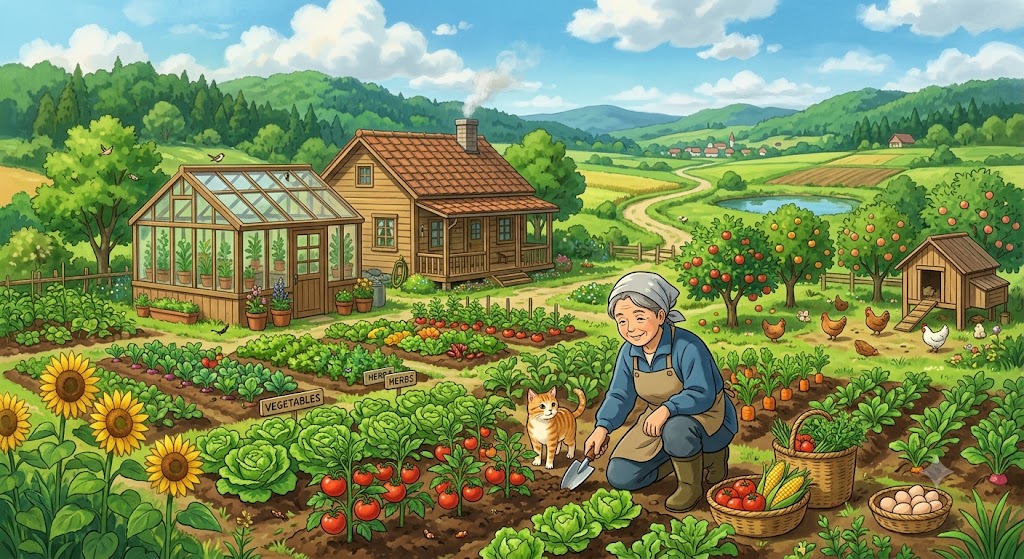
Small-scale farming continues to attract entrepreneurs, families, and agricultural enthusiasts seeking profitable business opportunities without the need for large amounts of land. Advances in farming techniques, growing consumer demand for specialty products, and the rise of direct-to-consumer marketing have created numerous opportunities for farmers to generate strong income from relatively small production areas.
Contrary to popular belief, profitability in agriculture is not always determined by farm size. Many successful agricultural enterprises focus on high-value products, efficient production systems, and niche markets that allow farmers to maximize returns per acre. With careful planning, market research, and effective management, small-scale farming can become a sustainable and rewarding business.
This guide explores profitable small-scale farming ideas that offer strong income potential while requiring relatively limited land resources.
Why Small-Scale Farming Can Be Profitable
Modern consumers increasingly value:
- Fresh produce
- Locally grown food
- Organic products
- Specialty crops
- Sustainable farming practices
These trends create opportunities for smaller farms to compete effectively by focusing on quality, uniqueness, and direct customer relationships.
Small farms often benefit from:
- Lower startup costs
- Greater flexibility
- Easier management
- Faster adaptation to market changes
Profitability often depends more on efficiency and market selection than on farm size.
Specialty Vegetable Production
Growing specialty vegetables is one of the most popular small-scale farming opportunities.
Examples include:
- Heirloom tomatoes
- Colored peppers
- Baby vegetables
- Gourmet lettuce varieties
- Asian vegetables
Benefits include:
- Premium market prices
- Strong consumer demand
- Multiple harvest opportunities
Specialty vegetables often generate higher returns than conventional commodity crops.
Microgreens Farming
Microgreens are young vegetable greens harvested shortly after germination.
Popular varieties include:
- Sunflower
- Radish
- Pea shoots
- Broccoli
- Mustard greens
Advantages include:
- Short production cycles
- Minimal land requirements
- High market value
- Year-round growing potential
Restaurants, health-conscious consumers, and specialty retailers often provide reliable markets.
Mushroom Farming
Commercial mushroom cultivation is highly suitable for small-scale operations.
Popular varieties include:
- Oyster mushrooms
- Shiitake mushrooms
- Lion’s Mane mushrooms
Benefits include:
- Indoor production capability
- Efficient space utilization
- Strong market demand
- High-value products
Mushrooms can often be produced successfully in relatively small facilities.
Herb Farming
Fresh culinary herbs remain in high demand throughout the year.
Examples include:
- Basil
- Mint
- Cilantro
- Parsley
- Oregano
- Thyme
Advantages include:
- Multiple harvests
- Premium pricing
- Small space requirements
Herb production can be highly profitable when marketed directly to restaurants and consumers.
Beekeeping and Honey Production
Beekeeping offers a unique combination of low land requirements and multiple revenue opportunities.
Potential products include:
- Honey
- Beeswax
- Pollen
- Propolis
Additional benefits include:
- Pollination services
- Improved crop productivity
Beekeeping can complement many other farming enterprises.
Organic Vegetable Farming
Consumer demand for organic products continues to grow.
Benefits include:
- Premium market prices
- Strong customer interest
- Opportunities for direct marketing
Organic vegetable production often works particularly well on smaller farms where intensive management is possible.
Certification requirements should be researched before entering the market.
Berry Production
Berries are among the highest-value fruit crops available to small-scale farmers.
Popular options include:
- Strawberries
- Raspberries
- Blackberries
- Blueberries
Benefits include:
- High consumer demand
- Premium pricing opportunities
- Value-added product potential
Berry production can generate significant returns when managed effectively.
Cut Flower Farming
Cut flowers have become increasingly popular in local food and agricultural markets.
Popular flowers include:
- Sunflowers
- Dahlias
- Zinnias
- Snapdragons
- Marigolds
Advantages include:
- High value per square foot
- Strong seasonal demand
- Direct sales opportunities
Flower farming often performs well on limited acreage.
Poultry Farming
Small-scale poultry enterprises can provide steady income opportunities.
Options include:
Egg Production
Supplying fresh eggs to local markets.
Broiler Production
Raising poultry for meat sales.
Benefits include:
- Relatively quick production cycles
- Consistent demand
- Flexible scaling options
Poultry can be integrated into diversified farming systems.
Fish Farming
Small-scale aquaculture continues to expand globally.
Suitable species may include:
- Tilapia
- Catfish
- Carp
Benefits include:
- Efficient protein production
- Growing market demand
- Diversification opportunities
Fish farming can be combined with other enterprises for improved resource efficiency.
Hydroponic Farming
Hydroponics allows crops to be grown without soil using nutrient-rich water systems.
Common crops include:
- Lettuce
- Herbs
- Tomatoes
- Strawberries
Benefits include:
- Efficient water use
- High productivity
- Year-round production
Hydroponic systems are especially useful where land availability is limited.
Medicinal and Aromatic Plants
Growing medicinal plants offers opportunities to serve expanding wellness markets.
Examples include:
- Lavender
- Chamomile
- Lemongrass
- Rosemary
- Peppermint
Benefits include:
- Specialty market demand
- Value-added processing opportunities
These crops can be sold fresh, dried, or processed into oils and herbal products.
Nursery Plant Production
Nursery businesses focus on producing plants for gardeners, landscapers, and farmers.
Products may include:
- Vegetable seedlings
- Fruit trees
- Ornamental plants
- Herbs
Benefits include:
- Strong seasonal demand
- Relatively small space requirements
Plant propagation can provide attractive profit margins.
Value-Added Agricultural Products
Processing farm products often increases profitability.
Examples include:
- Jams
- Dried herbs
- Honey products
- Herbal teas
- Pickled vegetables
Value addition allows farmers to capture more of the final product value.
Processed products often have longer shelf lives and broader market opportunities.
Agritourism Opportunities
Many small farms supplement income through visitor experiences.
Examples include:
- Farm tours
- Educational workshops
- Pick-your-own operations
- Seasonal events
Benefits include:
- Additional revenue streams
- Customer engagement
- Brand development
Agritourism can complement traditional agricultural production effectively.
Direct-to-Consumer Marketing
Small farms often benefit from selling directly to customers.
Popular channels include:
- Farmers markets
- Community-supported agriculture programs
- Farm stores
- Online sales
Benefits include:
- Better pricing
- Stronger customer relationships
- Increased profitability
Direct marketing often improves financial performance significantly.
Diversification for Greater Stability
Combining multiple enterprises can improve profitability and reduce risk.
Examples include:
- Vegetables and poultry
- Beekeeping and berry production
- Mushrooms and herbs
- Aquaculture and hydroponics
Diversification helps create multiple income streams throughout the year.
Balanced operations often achieve greater long-term resilience.
Factors to Consider Before Starting
Before choosing a farming enterprise, evaluate:
- Market demand
- Climate conditions
- Available resources
- Startup costs
- Labor requirements
Careful planning helps improve the chances of success.
Market research remains one of the most important steps in selecting profitable opportunities.
Building a Profitable Small Farm
Successful small-scale farms often focus on:
- High-value products
- Efficient production systems
- Strong customer relationships
- Diversified income streams
- Effective resource management
- Continuous learning
Combining these elements supports long-term profitability and sustainability.
Conclusion
Small-scale farming offers numerous opportunities for generating strong income from limited land resources. Enterprises such as specialty vegetables, microgreens, mushrooms, herbs, berries, flowers, poultry, aquaculture, hydroponics, medicinal plants, and value-added products demonstrate that farm profitability is often determined more by strategy and market selection than by acreage.
Farmers who focus on high-value products, efficient production methods, direct marketing, and diversified income streams can build successful agricultural businesses with excellent profit potential. With proper planning and dedication, small-scale farming can provide both financial rewards and long-term business growth.