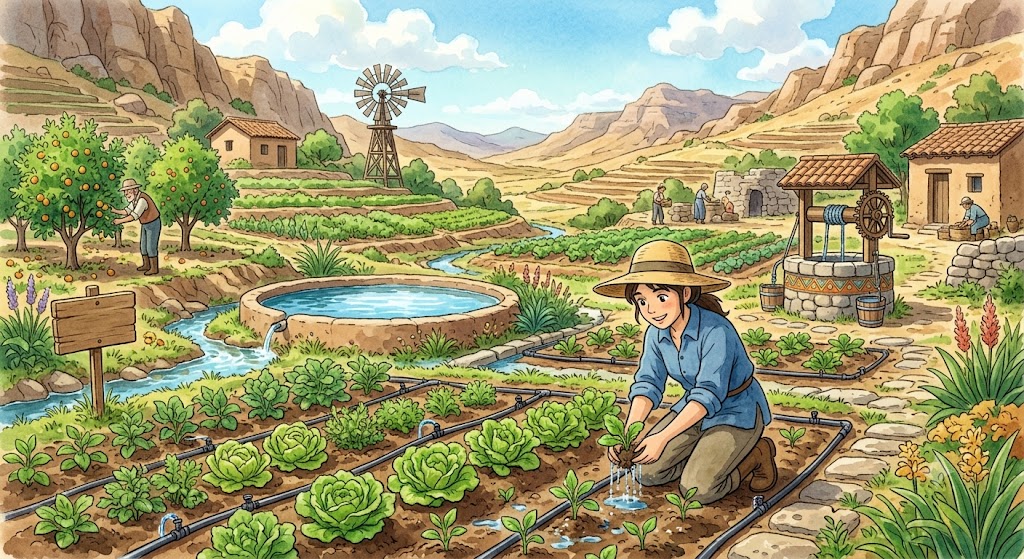
Water is one of the most critical resources in agriculture, yet it is becoming increasingly scarce in many regions around the world. Farmers operating in arid, semi-arid, and drought-prone environments face growing challenges as rainfall patterns become less predictable and water supplies become more limited. These conditions can significantly affect crop productivity, farm profitability, and long-term agricultural sustainability.
Fortunately, modern farming practices and innovative water-management strategies allow producers to maintain productive agricultural systems even in challenging climates. By improving water-use efficiency, conserving soil moisture, and selecting suitable crops and technologies, farmers can achieve reliable yields while reducing pressure on limited water resources.
This guide explores practical water-efficient farming solutions that support successful crop production in dry and challenging environments.
Understanding Water Challenges in Agriculture
Agriculture accounts for a significant portion of global freshwater use.
Farmers in dry climates often face challenges such as:
- Limited rainfall
- High evaporation rates
- Drought conditions
- Groundwater depletion
- Rising irrigation costs
- Soil moisture loss
These factors can reduce crop growth, increase production expenses, and threaten long-term farm viability.
Efficient water management is essential for overcoming these challenges and maintaining agricultural productivity.
Why Water Efficiency Matters
Water-efficient farming focuses on maximizing crop production while minimizing water use.
Benefits include:
- Reduced irrigation costs
- Improved crop resilience
- Better resource conservation
- Increased farm sustainability
- Enhanced drought preparedness
- Greater long-term profitability
Every drop of water saved contributes to both economic and environmental benefits.
Efficient systems help farmers remain productive even when water supplies are limited.
Improve Soil Health for Better Water Retention
Healthy soil serves as a natural water reservoir.
Soils rich in organic matter can store significantly more moisture than degraded soils.
Practices that improve soil health include:
- Compost application
- Cover cropping
- Organic matter incorporation
- Reduced tillage
- Crop residue retention
Benefits include:
- Improved water infiltration
- Greater moisture retention
- Reduced runoff
- Enhanced root development
Building healthy soil is one of the most effective long-term water conservation strategies.
Adopt Drip Irrigation Systems
Drip irrigation is among the most efficient irrigation methods available.
Unlike traditional flood irrigation, drip systems deliver water directly to the plant root zone.
Advantages include:
- Reduced evaporation losses
- Improved water-use efficiency
- Lower weed growth
- Better nutrient management
- Increased crop productivity
Drip irrigation is particularly valuable in water-scarce regions where every unit of water matters.
Utilize Soil Moisture Monitoring
Many farmers apply water based on fixed schedules rather than actual crop needs.
Soil moisture monitoring helps determine:
- When irrigation is necessary
- How much water should be applied
Tools may include:
- Soil moisture sensors
- Monitoring probes
- Digital tracking systems
Benefits include:
- Reduced overwatering
- Improved efficiency
- Lower water costs
Accurate information supports better irrigation decisions.
Practice Mulching for Moisture Conservation
Mulching helps reduce water loss from the soil surface.
Common mulch materials include:
- Straw
- Dry leaves
- Grass clippings
- Crop residues
- Compost
Benefits include:
- Reduced evaporation
- Lower soil temperatures
- Improved moisture retention
- Weed suppression
Mulching is a simple yet highly effective water-conservation technique.
Select Drought-Tolerant Crops
Crop selection plays an important role in water management.
Certain crops naturally perform better under limited moisture conditions.
Examples include:
- Sorghum
- Millet
- Chickpeas
- Cowpeas
- Sunflowers
- Certain forage crops
Drought-tolerant varieties often maintain productivity while requiring less irrigation.
Matching crops to local environmental conditions improves long-term sustainability.
Implement Rainwater Harvesting Systems
Rainwater harvesting captures and stores precipitation for future agricultural use.
Collection methods may include:
- Farm ponds
- Storage tanks
- Reservoirs
- Water catchment systems
Benefits include:
- Supplemental irrigation supplies
- Reduced groundwater dependence
- Improved drought resilience
Stored rainwater can become an important resource during dry periods.
Reduce Evaporation Losses
In hot climates, significant amounts of water may be lost through evaporation.
Strategies to reduce losses include:
- Mulching
- Windbreak establishment
- Drip irrigation
- Irrigation during cooler hours
Reducing evaporation helps ensure more water reaches plant roots.
Improved efficiency supports better crop performance and resource conservation.
Use Conservation Tillage Practices
Excessive tillage can increase soil moisture loss.
Conservation tillage helps:
- Preserve soil structure
- Reduce evaporation
- Improve water infiltration
- Increase organic matter retention
Minimizing soil disturbance supports long-term water efficiency and soil health.
These practices are especially valuable in drought-prone regions.
Improve Irrigation Scheduling
Applying water at the correct time is just as important as applying the correct amount.
Effective irrigation scheduling considers:
- Crop growth stages
- Weather forecasts
- Soil moisture conditions
- Evapotranspiration rates
Benefits include:
- Reduced water waste
- Improved crop growth
- Better resource management
Smart scheduling improves irrigation performance and crop productivity.
Utilize Precision Agriculture Technologies
Modern technologies allow farmers to manage water resources more accurately.
Examples include:
- GPS-guided irrigation systems
- Remote sensing technologies
- Drone monitoring
- Smart irrigation controllers
Precision agriculture helps identify areas where water is needed most.
Targeted applications improve efficiency while reducing unnecessary water use.
Establish Windbreaks and Shelterbelts
Strong winds can increase evaporation and dry out soils more quickly.
Windbreaks help:
- Reduce wind speed
- Protect crops
- Conserve soil moisture
- Improve microclimates
Trees and shrubs planted strategically around fields can significantly improve water conservation.
Wind protection becomes increasingly important in dry environments.
Integrate Cover Crops
Cover crops provide numerous moisture-related benefits.
Advantages include:
- Improved soil structure
- Reduced erosion
- Increased organic matter
- Enhanced water infiltration
Popular cover crops include:
- Clover
- Rye
- Vetch
- Oats
Cover cropping supports long-term soil and water management goals.
Reuse and Recycle Water Responsibly
In some agricultural systems, treated water can be reused for irrigation.
Water recycling strategies may include:
- Capturing runoff
- Recycling greenhouse water
- Utilizing treated wastewater where permitted
Responsible reuse reduces pressure on freshwater resources.
Proper management is essential to ensure environmental safety.
Agroforestry for Water Conservation
Agroforestry combines trees with crops or livestock systems.
Benefits include:
- Reduced evaporation
- Improved soil structure
- Better water infiltration
- Enhanced biodiversity
Trees help stabilize agricultural ecosystems and improve resilience to drought.
Agroforestry is increasingly recognized as a valuable climate-smart farming practice.
Develop Drought Preparedness Plans
Farmers operating in dry climates should prepare for water shortages before they occur.
A drought plan may include:
- Emergency water reserves
- Alternative crop options
- Irrigation prioritization strategies
- Risk management measures
Preparation helps reduce disruptions during periods of limited rainfall.
Proactive planning improves long-term farm stability.
Economic Benefits of Water-Efficient Farming
Efficient water management often results in:
- Lower operating costs
- Improved yields
- Better resource utilization
- Reduced drought risks
- Increased profitability
Investments in water efficiency frequently generate substantial long-term returns.
Conserving water benefits both farmers and surrounding communities.
Building a Water-Efficient Farming Strategy
A successful strategy may include:
- Soil health improvement
- Drip irrigation systems
- Mulching practices
- Drought-tolerant crop selection
- Precision irrigation management
- Rainwater harvesting
- Conservation tillage
Combining multiple approaches produces the greatest benefits.
Conclusion
Water-efficient farming solutions are essential for maintaining agricultural productivity in dry and challenging climates. Through practices such as drip irrigation, soil health improvement, moisture conservation, drought-tolerant crop selection, rainwater harvesting, and precision agriculture, farmers can use limited water resources more effectively while protecting long-term farm sustainability.
As water scarcity becomes an increasingly important global issue, adopting efficient farming strategies will be critical for ensuring food security and agricultural resilience. Farmers who prioritize water conservation today are better prepared to achieve reliable harvests, improved profitability, and sustainable success in the future.