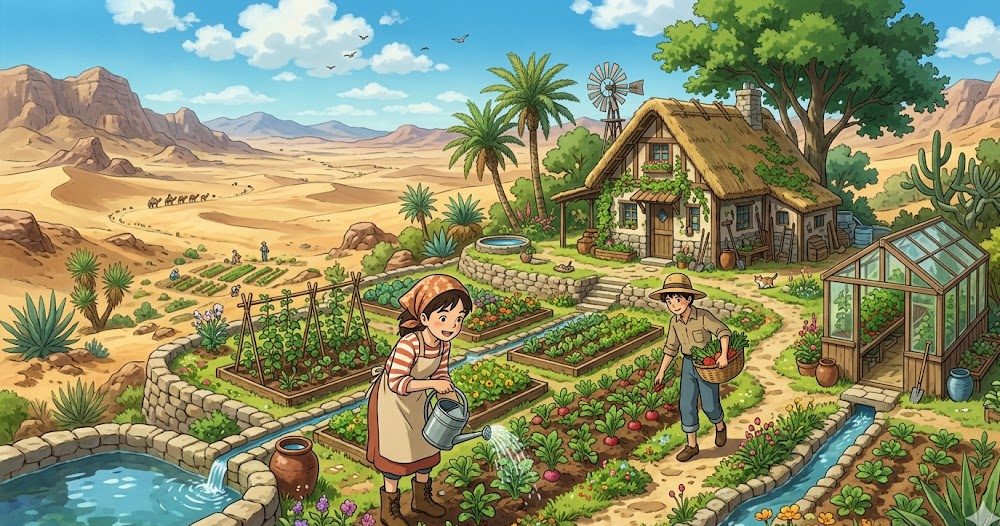
As global environmental shifts pose new challenges to food security, the importance of resilient farming methods has never been higher. Whether operating in extreme desert climates, preparing for survival-focused self-sufficiency, or optimizing small-scale micro-agriculture, the goal remains the same: to produce a consistent, nutrient-dense food supply with minimal resource waste.
This guide delves into the innovative strategies that empower modern farmers to thrive in even the most demanding conditions.
1. Desert Agriculture: Thriving in Scarcity
Farming in arid or desert regions is a testament to human ingenuity. The primary constraints—intense heat and water scarcity—require a fundamental shift in how we manage the soil-plant relationship.
Precision Water Conservation
In desert environments, every drop of water counts. Drip irrigation is the industry standard for these regions, delivering precise amounts of water directly to the root zone, thereby eliminating the massive evaporation losses associated with traditional flood irrigation.
Soil Engineering and Moisture Retention
Desert soil is often sandy and lacks organic matter. To improve its water-holding capacity:
- Organic Amendment: Incorporate compost, aged manure, or biochar to build soil structure.
- Deep Mulching: Cover the soil with organic matter to shield it from direct sunlight, which significantly lowers soil temperature and prevents moisture loss.
Heat-Resilient Varieties
Select drought-tolerant and heat-resistant cultivars. Many traditional varieties of millets, certain legumes, and specialized vegetable breeds have evolved to require less water and can withstand extreme thermal stress, making them ideal candidates for desert farming.
2. Survival Gardening: Building Self-Reliance
Survival-focused agriculture emphasizes autonomy, speed of harvest, and caloric efficiency. The objective is to establish a food system that can function independently of complex supply chains.
The Focus on Caloric Density
When planning for survival, prioritize “powerhouse” crops. Potatoes, sweet potatoes, beans, and squashes provide the necessary calories and macronutrients required for human sustenance.
Seed Sovereignty
One of the most important aspects of survival farming is the ability to save seeds. By cultivating heirloom (open-pollinated) varieties, you ensure that you can harvest, store, and replant seeds year after year without depending on commercial seed suppliers.
Polyculture and Biodiversity
Avoid monocropping. A survival garden should mirror the complexity of a natural ecosystem. Intercropping different plant species maximizes vertical space and creates a natural defense against pests and diseases, ensuring that if one crop fails, others remain to provide sustenance.
3. Micro-Agriculture: High Output, Low Footprint
Micro-agriculture, or intensive small-plot farming, proves that you do not need acres of land to make a significant impact. It is the art of maximizing “yield per square foot.”
Vertical Gardening
In small spaces, look upward. Vertical structures, trellises, and hydroponic towers allow for the cultivation of climbing plants like cucumbers, peas, and vertical-growing lettuces. This triples the effective growing area of a small plot.
Intensive Succession Planting
Do not leave your soil idle. The moment one crop is harvested, the next should be ready for planting. By using fast-growing leafy greens (like spinach or arugula) between larger crops, you can squeeze multiple harvests out of a single season.
Controlled Environment Agriculture (CEA)
Using techniques like small-scale greenhouses or high tunnels, you can extend your growing season. CEA allows you to regulate temperature and humidity, enabling you to grow high-value crops outside of their traditional season, which is a major advantage for local market profitability.
The Resilient Toolkit: Universal Principles
Regardless of your specific environment, three principles define the resilient farmer:
- Soil First: Healthy soil is a living ecosystem. Focus on feeding the soil with organic matter rather than feeding the plant with synthetic fertilizers. A robust soil food web provides plants with natural immunity against disease.
- Water Management: Implement rainwater harvesting systems. In almost any climate, collecting seasonal rainfall to use during dry periods is the single most effective way to build farm resilience.
- Data-Driven Adaptation: Keep detailed records of your planting dates, yields, and weather conditions. Over time, these records become your greatest asset, allowing you to fine-tune your methods to the specific micro-climate of your land.
Conclusion
Resilient farming is not about fighting the environment; it is about working in harmony with it. Whether you are transforming a desert patch into a garden, securing your family’s food supply for the future, or maximizing the potential of a small backyard plot, the combination of organic soil management, efficient water usage, and strategic crop selection creates a path to success.
By focusing on these sustainable and adaptable techniques, you can build a farming system that not only survives the challenges of today but thrives in the face of tomorrow’s uncertainties.
Disclaimer: This guide is for informational purposes only. Local environmental conditions, soil types, and regional regulations vary significantly. Always conduct localized research and consult with agricultural specialists to tailor these strategies to your specific area.