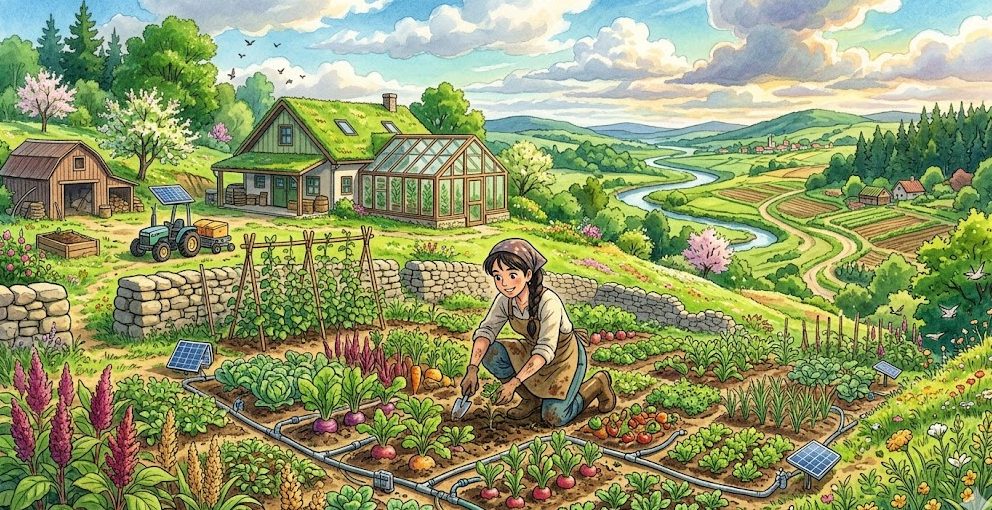
In the pursuit of agricultural efficiency, the 20th century saw a massive consolidation of global food production. Today, over 40% of the world’s caloric intake comes from just three crops: maize, rice, and wheat. This focus on monoculture has left thousands of highly nutritious, climate-resilient “orphan” or “forgotten” crops on the sidelines.
However, for the modern agricultural entrepreneur, these forgotten crops represent a significant niche farming opportunity. By combining the resilience of ancient varieties with the precision of modern agricultural technology, farmers can tap into high-value markets, improve soil health, and build a farm that is uniquely resistant to climate volatility.
1. Defining “Forgotten” Crops
Forgotten or “underutilized” crops are plants that were once staples of local diets and regional economies but were displaced by globally traded commodities. These include:
- Ancient Grains: Millet, sorghum, teff, and amaranth.
- Nutrient-Dense Vegetables: Spiny gourd, amaranth greens, and various wild-edible yams.
- Climate-Resilient Legumes: Winged beans and various native pulses.
These crops are “treasures from the past” because they have spent centuries adapting to specific local micro-climates, soil conditions, and rainfall patterns. Consequently, they often require significantly fewer chemical inputs—such as synthetic fertilizers and pesticides—than modern hybrid staples.
2. Why Niche Farming? The Economic and Ecological Edge
The transition to niche farming is not merely a nostalgic exercise; it is a strategic business decision.
Ecological Resilience
Forgotten crops are often hardier than commercial hybrids. They possess natural resistance to local pests and diseases and can thrive in drought-prone or saline soils where traditional crops fail. This reduces the need for expensive inputs, lowering your overall cost of production.
Higher Market Value
As consumers become more health-conscious and interested in the origins of their food, demand for “ancient” and “superfood” ingredients is skyrocketing. Products that are nutrient-dense, gluten-free, or traditionally grown often command premium pricing in health food stores, farmer’s markets, and direct-to-consumer digital channels.
Soil Health and Biodiversity
Monoculture depletes soil nutrients. By integrating diverse, forgotten crops into your rotation, you disrupt the life cycles of pests and improve soil structure. Many of these crops are highly efficient at nutrient absorption, leaving the land healthier for future seasons.
3. Modern Methods for Reviving Ancient Crops
The key to making niche farming profitable is applying modern precision to traditional species. You don’t have to farm like it’s the 1800s just because you are growing an ancient crop.
Precision Agriculture
Use sensor-based technology to monitor soil moisture, pH, and nutrient levels. Even if a crop is “wild” by nature, providing it with the optimal environment at the right growth stage can significantly boost yields.
Controlled Environment Agriculture (CEA)
For high-value, small-batch niche crops (like rare herbs or specific medicinal plants), vertical farming or hydroponics can provide an ideal environment. This allows you to scale production regardless of the external climate, ensuring a consistent supply for your customers.
Smart Natural Farming
Many niche crops thrive under Zero Budget Natural Farming (ZBNF) principles. By utilizing fermented microbial cultures (like Jiwamrita) and focusing on soil microbiology rather than synthetic additives, you can brand your produce as “100% natural” or “beyond organic,” which is a massive selling point in modern premium markets.
4. The Strategy for Niche Market Success
Entering a niche market requires a different approach than selling mass-market grain.
| Strategy | Execution |
|---|---|
| Market Research | Don’t just grow; find the buyers first. Connect with local chefs, health food stores, and health-focused digital platforms. |
| Direct Sales | Selling directly to consumers allows you to capture the full retail value rather than just the commodity price. |
| Storytelling | Market the system and the history. Consumers today pay for the narrative of sustainability, heritage, and health. |
| Contract Farming | For grains like millet or amaranth, try to secure forward contracts with processors to guarantee a price and a buyer before you even plant. |
5. Overcoming Challenges
Transitioning to forgotten crops comes with hurdles:
- Seed Sourcing: Finding high-quality, viable seeds for orphan crops can be difficult. Build relationships with regional agricultural universities or specialized heritage seed banks.
- Limited Infrastructure: You may need to invest in or adapt your own cleaning, processing, and packaging equipment, as large commercial facilities are optimized for mass-market crops.
- Consumer Education: You will likely need to spend time educating your customers on how to cook or use these ingredients. Providing recipes or nutritional content alongside your product is an excellent way to add value.
The Path Forward
The future of sustainable agriculture lies in biodiversity. By moving away from the narrow list of global commodities and embracing forgotten crops, you create an agricultural operation that is not only more resilient and environmentally sound but also more profitable.
In a world where consumers are looking for authenticity, health, and environmental responsibility, your farm can become a vital link in a more diverse and stable food system. Start small, research your niche, and bridge the gap between ancient resilience and modern profitability.