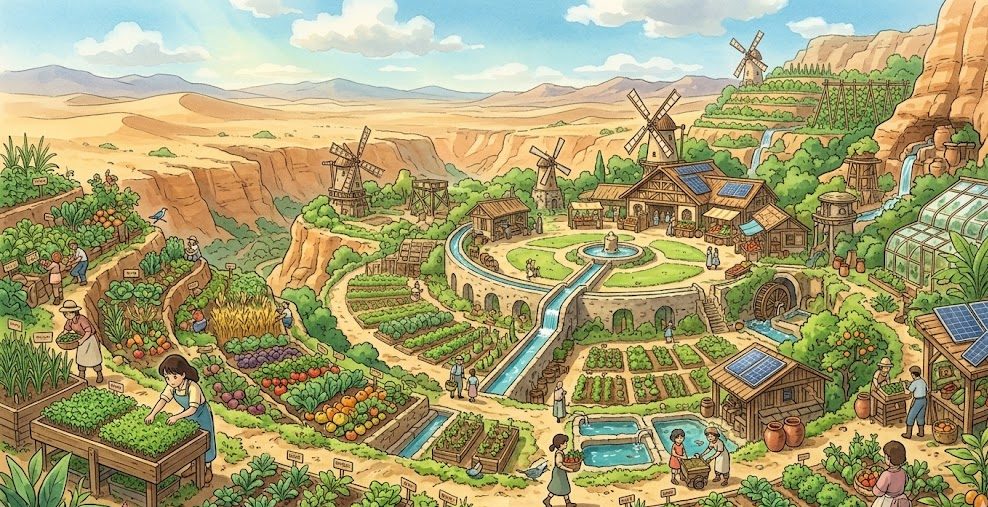
In the race for agricultural efficiency, the world has become obsessed with a handful of high-yield commodities. However, a new wave of forward-thinking farmers is looking backward and inward—rediscovering “forgotten” crops and mastering extreme environments. By creating a Unique Farming Hub, you can turn unconventional plots into highly profitable, sustainable operations.
Whether you are working with arid desert land or limited micro-spaces, the principles of innovation and resilience remain the same. This guide explores how to integrate rare crop varieties with cutting-edge micro-techniques to build a modern farming powerhouse.
The Resurgence of Forgotten Crops
“Forgotten” crops—often referred to as orphan or heirloom crops—are varieties that have been sidelined by modern industrial monoculture. These include ancient grains like amaranth, hardy legumes, and rare varieties of root vegetables.
Why Focus on Forgotten Crops?
- Climate Resilience: Many ancient crops evolved in harsh environments. They are often more drought-tolerant and pest-resistant than modern, lab-bred counterparts.
- Market Niche: There is a growing demand from health-conscious consumers and high-end culinary establishments for nutrient-dense, rare ingredients. By growing these, you are not competing in the crowded “commodity” market; you are creating a specialty brand.
- Biodiversity: Reintroducing these crops improves soil health and supports local pollinators, creating a more stable and robust farm ecosystem.
Desert Farming: Turning Aridity into Opportunity
Desert farming is no longer limited to large-scale irrigation projects. Modern “Smart Hubs” use technology to turn harsh, arid landscapes into productive gardens.
Key Desert Techniques:
- Sandponics: A specialized form of hydroponics where nutrient-rich water is cycled through inert sand beds. This mimics natural soil conditions while minimizing water loss through evaporation.
- Atmospheric Water Generation: In areas with high humidity but low rainfall, harvesting water directly from the air using mesh nets or mechanical extractors can provide a consistent supply for irrigation.
- Xeriscaping for Agriculture: By planting drought-tolerant “forgotten” crops that have deep root systems, you reduce the need for constant hydration. Mulching with organic material is essential here to keep soil temperatures low and moisture locked in.
Micro-Techniques: Maximizing Small Spaces
You don’t need hundreds of acres to build a successful farming hub. Micro-farming is the art of maximizing yield per square inch.
1. Vertical Stacking
When space is limited, grow upward. Using modular vertical towers allows you to cultivate leafy greens, herbs, and micro-crops in a footprint as small as a single square meter. By using a closed-loop nutrient system, you ensure that every drop of water is utilized effectively.
2. High-Density Intercropping
Instead of planting one crop in a row, use intercropping. Pair taller plants that provide shade with smaller, ground-level crops that prefer filtered light. This maximizes solar energy usage and creates a mini-climate near the soil surface, preventing moisture evaporation.
3. Containerized Smart Modules
Build your “hub” using mobile, containerized units. These are climate-controlled boxes that allow you to grow crops year-round, regardless of external weather conditions. They are perfect for high-value herbs, mushrooms, or edible flowers that command high prices in local markets.
Building Your Unique Farming Hub: A Strategic Blueprint
To succeed, you must combine these techniques into a cohesive, data-backed system.
| Strategy Component | Purpose |
| Soil Analysis | Understanding the mineral deficiencies of your plot. |
| Micro-Climate Mapping | Identifying sun and wind patterns to optimize plant placement. |
| Water Recycling | Capturing and reusing every drop via graywater filtration. |
| Direct-to-Consumer Marketing | Selling rare produce directly to local restaurants. |
The Role of Data in Niche Farming
While forgotten crops and desert techniques sound traditional, your management must be modern. Use simple IoT sensors to monitor soil pH and moisture levels.
In a unique farm hub, the margin for error is often smaller because you are working with specialized conditions. Data provides a “safety net.” If your desert crop shows signs of stress, real-time sensor data will tell you whether it is a nutrient deficiency, heat stress, or water-related issue, allowing you to react within hours rather than days.
Ethical and Sustainable Growth
A unique farming hub serves a higher purpose than just profit. It acts as a seed bank and a community knowledge center. By preserving heirloom seeds and sharing desert-farming expertise, you become a leader in local food security.
Modern consumers are increasingly looking for stories behind their food. Promoting your farm as a hub for “Forgotten Traditions and Modern Innovation” allows you to command premium pricing. When you sell a product, you aren’t just selling vegetables; you are selling a narrative of sustainability and heritage.
Conclusion: Start Small, Think Big
The future of agriculture is not just about doing more of what we have always done. It is about exploring the forgotten corners of our agricultural past and applying the best of our technological present.
Whether you are reclaiming a desert plot or setting up a vertical unit in a backyard, the journey to a Unique Farming Hub begins with selecting one forgotten crop and testing it in a controlled environment. Once you prove your method, you can scale your operation, replicate your success, and contribute to a more diverse and resilient food system.
The soil is waiting, and the technology is ready. Which forgotten crop will you plant first?