Introduction
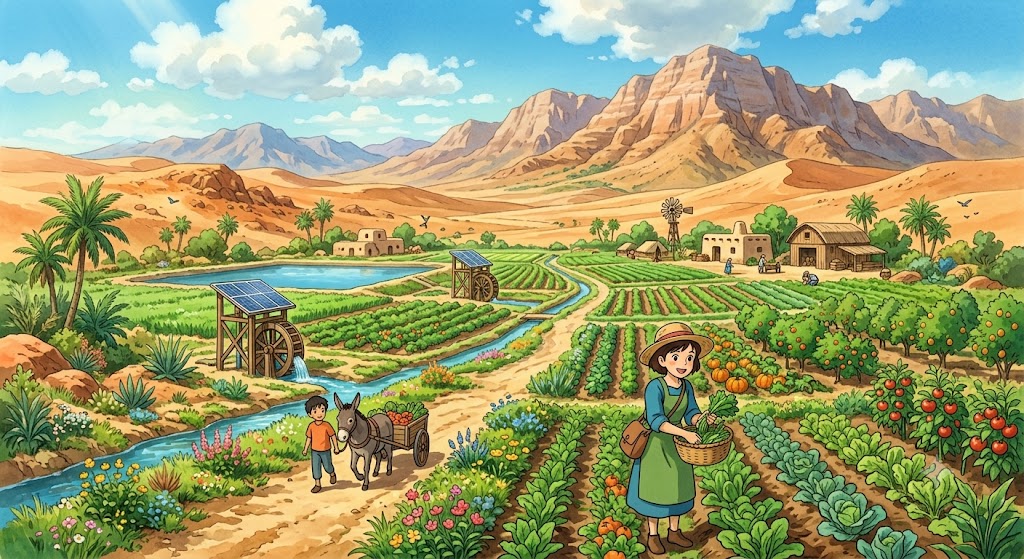
Desert farming is one of the most innovative approaches in modern agriculture, demonstrating that food can be successfully grown even in some of the world’s driest and harshest environments. Traditionally, deserts have been considered unsuitable for farming due to extreme temperatures, limited rainfall, poor soil quality, and water scarcity. However, advances in agricultural technology, irrigation systems, and climate-smart farming practices have made it possible to cultivate crops in arid regions while conserving precious natural resources.
Today, countries in the Middle East, North Africa, Australia, and parts of the United States are investing heavily in desert agriculture to improve food security and reduce dependence on imported food. Farmers use techniques such as drip irrigation, greenhouse cultivation, hydroponics, desalinated water, and renewable energy to produce vegetables, fruits, grains, and forage crops in desert landscapes.
As climate change increases the pressure on traditional farming areas, desert farming is becoming an important solution for expanding agricultural production while promoting sustainability and efficient resource management.
What is Desert Farming?
Desert farming is the practice of growing crops and raising livestock in dry and semi-arid regions using specialized agricultural methods designed to overcome water shortages, poor soil conditions, and extreme temperatures.
Unlike conventional farming, desert agriculture depends on advanced technologies and efficient water management to create suitable growing conditions.
Common activities include:
- Vegetable cultivation
- Fruit orchards
- Greenhouse farming
- Hydroponic farming
- Date palm cultivation
- Forage production
- Livestock farming
- Solar-powered irrigation
These practices help transform barren land into productive agricultural systems.
Why Desert Farming is Important
The global population continues to grow while fertile agricultural land becomes increasingly limited. Desert farming provides new opportunities for food production in regions where conventional farming is difficult.
Its importance includes:
- Expands agricultural land
- Improves food security
- Conserves water resources
- Supports rural employment
- Reduces food imports
- Encourages sustainable farming
- Promotes climate adaptation
Many countries now consider desert agriculture an important part of their long-term food production strategy.
Challenges of Farming in Desert Regions
Desert agriculture faces several natural obstacles.
Water Scarcity
Limited rainfall makes irrigation essential for crop production.
High Temperatures
Extreme heat increases water evaporation and plant stress.
Poor Soil Quality
Desert soils often contain low organic matter and limited nutrients.
Strong Winds
Wind erosion can damage crops and remove fertile topsoil.
Salinity
High salt levels in soil and irrigation water can reduce crop growth.
Farmers must carefully manage these challenges to achieve successful harvests.
Modern Techniques Used in Desert Farming
Drip Irrigation
Drip irrigation delivers water directly to plant roots, minimizing evaporation and conserving water.
Benefits include:
- Higher water efficiency
- Healthier plants
- Lower weed growth
- Reduced water waste
Greenhouse Farming
Greenhouses protect crops from extreme temperatures while allowing farmers to control humidity, ventilation, and irrigation.
This method supports year-round production.
Hydroponics
Hydroponic systems grow plants without soil by supplying nutrients through water.
Advantages include:
- Less water use
- Faster plant growth
- Higher yields
- Reduced soil-related diseases
Mulching
Organic or plastic mulch reduces evaporation, maintains soil moisture, and controls weed growth.
Soil Improvement
Farmers improve desert soil using:
- Compost
- Organic manure
- Biochar
- Cover crops
These materials increase fertility and improve water retention.
Suitable Crops for Desert Farming
Many crops adapt well to dry climates when proper irrigation is available.
Popular desert crops include:
- Dates
- Tomatoes
- Cucumbers
- Watermelons
- Melons
- Onions
- Garlic
- Peppers
- Olives
- Grapes
- Barley
- Sorghum
Selecting drought-tolerant varieties improves productivity.
Livestock in Desert Agriculture
Livestock also play an important role in desert farming.
Common animals include:
- Camels
- Goats
- Sheep
- Poultry
These animals are generally well adapted to dry environments and provide:
- Milk
- Meat
- Wool
- Organic manure
Integrated farming systems combine livestock with crop production for greater sustainability.
Technology in Desert Farming
Technology has made desert agriculture more productive and resource-efficient.
Artificial Intelligence (AI)
AI helps farmers analyze weather data, monitor crop health, and optimize irrigation schedules.
Applications include:
- Disease detection
- Yield prediction
- Water management
- Crop monitoring
Internet of Things (IoT)
Smart sensors monitor:
- Soil moisture
- Temperature
- Humidity
- Nutrient levels
- Water usage
Real-time information helps farmers make accurate management decisions.
Solar-Powered Irrigation
Solar energy powers irrigation pumps, reducing dependence on fossil fuels and lowering operating costs.
This is especially useful in sunny desert regions.
Drone Technology
Agricultural drones assist with:
- Crop monitoring
- Field mapping
- Plant health assessment
- Irrigation inspection
Drones improve farm efficiency while reducing labor requirements.
Benefits of Desert Farming
Improved Food Security
Desert farming increases food production in regions with limited fertile land.
Efficient Water Use
Modern irrigation systems significantly reduce water consumption.
Land Utilization
Previously unused desert land becomes productive farmland.
Employment Opportunities
Agricultural development creates jobs in farming, processing, transportation, and research.
Environmental Sustainability
Sustainable farming practices help reduce soil degradation and improve resource conservation.
Economic Growth
Successful desert agriculture strengthens local economies and reduces dependence on imported food.
Challenges Facing Desert Farmers
Despite technological advances, desert farming continues to face several difficulties.
High Initial Investment
Greenhouses, irrigation systems, and water infrastructure require significant financial investment.
Water Availability
Long-term access to sustainable water sources remains essential.
Energy Requirements
Pumping water and operating climate-controlled systems require reliable energy supplies.
Climate Extremes
Heatwaves and sandstorms may still affect crop production.
Soil Salinity
Managing salt accumulation requires careful irrigation planning.
Best Practices for Successful Desert Farming
Farmers can improve productivity by following these recommendations:
- Install efficient drip irrigation systems.
- Grow drought-resistant crops.
- Apply compost to improve soil fertility.
- Use mulch to reduce evaporation.
- Monitor soil moisture regularly.
- Protect fields with windbreak trees.
- Harvest rainwater whenever possible.
- Use renewable energy for irrigation.
- Rotate crops to maintain soil health.
- Adopt smart farming technologies for better decision-making.
Future of Desert Farming
The future of desert farming is highly promising as countries continue investing in sustainable agricultural technologies. Artificial Intelligence, precision irrigation, vertical farming, hydroponics, desalination, renewable energy, and climate-controlled greenhouses are expected to make desert agriculture even more efficient.
Researchers are also developing drought-resistant crop varieties and advanced water-saving techniques that will help farmers produce more food with fewer resources. As climate change places increasing pressure on traditional farming regions, desert farming will become an important strategy for ensuring global food security.
Conclusion
Desert farming demonstrates that innovation and technology can overcome some of agriculture’s greatest challenges. By combining efficient irrigation, greenhouse cultivation, hydroponics, renewable energy, and smart farming technologies, farmers are transforming dry, barren landscapes into productive agricultural systems.
Although challenges such as water scarcity, high temperatures, and soil salinity require careful management, desert farming offers enormous potential for sustainable food production, economic development, and environmental conservation. As agricultural technology continues to advance, desert farming will play a vital role in feeding growing populations while making better use of the world’s arid regions.