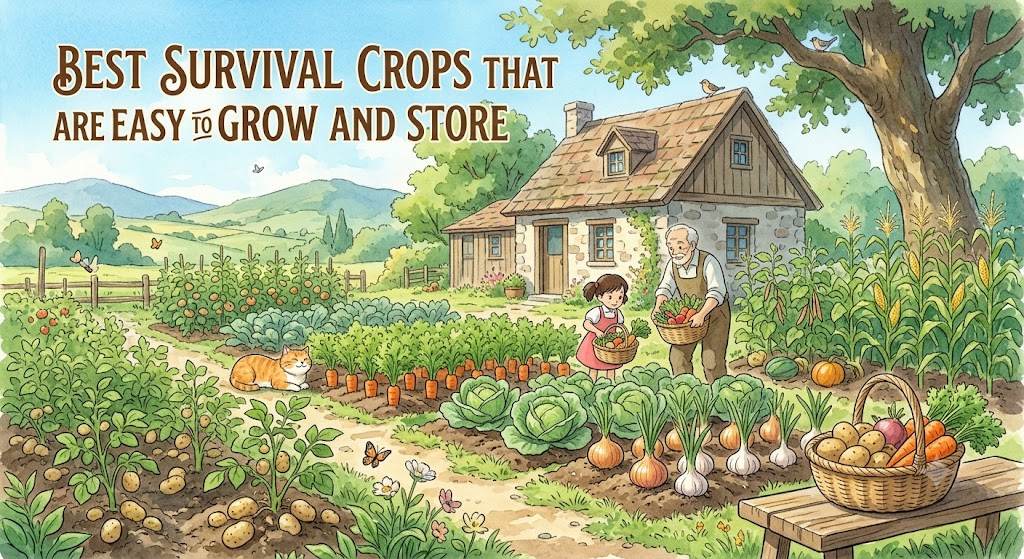
Growing your own food is one of the most practical ways to improve long-term food security and reduce dependence on grocery stores. Whether you’re preparing for emergencies, aiming for a self-sufficient lifestyle, or simply looking to lower household food costs, choosing the right survival crops is essential. The best survival crops are easy to grow, produce reliable harvests, store well for months, and provide good nutritional value.
Unlike ornamental plants or specialty vegetables, survival crops are selected for their ability to supply calories, vitamins, minerals, and protein while requiring relatively simple care. Many of these crops can be grown in home gardens, small farms, or larger homesteads using sustainable farming methods. By growing a mix of root vegetables, grains, legumes, and perennial plants, you can create a dependable food supply throughout the year.
This guide explores the best survival crops that are easy to grow and store, along with practical tips for maximizing harvests and reducing waste.
What Makes a Good Survival Crop?
Not every crop is suitable for long-term food security. The most reliable survival crops share several important characteristics.
Look for crops that offer:
- High nutritional value
- Reliable yields
- Easy cultivation
- Long storage life
- Adaptability to different climates
- Resistance to pests and diseases
- Multiple culinary uses
Growing a variety of crops also reduces the risk of losing your entire harvest to weather or disease.
1. Potatoes
Potatoes are one of the world’s most dependable survival crops because they produce high yields and contain valuable carbohydrates.
Why Potatoes Are Ideal
- High calorie content
- Easy to grow
- Suitable for many climates
- Good storage life
- Multiple cooking options
Store potatoes in a cool, dark, and well-ventilated place to extend their shelf life.
2. Sweet Potatoes
Sweet potatoes are another excellent crop for long-term food production.
Benefits
- Rich in vitamin A
- Drought tolerant
- Productive in warm climates
- Long storage potential
- Nutritious leaves can also be eaten
Their ability to thrive in relatively poor soils makes them valuable for many home gardens.
3. Beans
Beans provide an excellent source of plant-based protein and are among the easiest crops to preserve.
Popular varieties include:
- Kidney beans
- Pinto beans
- Black beans
- Navy beans
- Green beans
Advantages
- High protein content
- Nitrogen-fixing ability
- Easy drying and storage
- Excellent for crop rotation
Properly dried beans can remain usable for long periods when stored in airtight containers.
4. Corn
Corn is one of the most versatile survival crops.
It can be used for:
- Fresh consumption
- Dry grain
- Flour
- Livestock feed
- Popcorn (depending on the variety)
Dried corn stores well and provides an important source of carbohydrates.
5. Winter Squash
Winter squash varieties are known for their exceptional storage life.
Examples include:
- Butternut squash
- Acorn squash
- Hubbard squash
Benefits
- Long shelf life
- Rich in vitamins
- Productive plants
- Good calorie source
When cured and stored correctly, many winter squash varieties remain edible for several months.
6. Carrots
Carrots are nutritious root vegetables that perform well in many climates.
Why Grow Carrots?
- Easy cultivation
- Rich in beta-carotene
- Good storage ability
- Suitable for fresh and cooked meals
Carrots can be stored in cool, humid conditions for extended periods.
7. Onions
Onions are essential in many kitchens and are relatively simple to grow.
Advantages include:
- Long storage life
- Strong market demand
- Low maintenance
- Multiple culinary uses
Proper curing after harvest helps extend storage life significantly.
8. Garlic
Garlic is valued for both its culinary and traditional health uses.
Benefits
- Easy to grow
- Stores for several months
- Natural pest-repelling properties
- Requires little maintenance
Garlic also fits well into crop rotation systems.
9. Cabbage
Cabbage is a hardy vegetable that provides excellent nutrition.
Benefits include:
- Rich in vitamins C and K
- Good productivity
- Suitable for fermentation
- Performs well in cooler seasons
Cabbage can be preserved through fermentation, extending its usefulness well beyond harvest.
10. Millet
Millet is one of the oldest cultivated grains and remains highly valuable for survival farming.
Advantages
- Drought tolerant
- Fast-growing
- High nutritional value
- Long storage life
- Suitable for poor soils
Its resilience makes it a dependable crop in areas with limited rainfall.
11. Sorghum
Sorghum is another climate-resilient grain that performs well under challenging conditions.
It offers:
- Efficient water use
- Reliable harvests
- Multiple food and feed uses
- Good storage characteristics
Farmers in hot and dry regions often rely on sorghum because of its adaptability.
12. Peas
Peas provide valuable protein while improving soil fertility through nitrogen fixation.
Benefits include:
- Easy cultivation
- Fast growth
- High nutritional value
- Suitable for drying or freezing
They also work well as part of crop rotation programs.
Why Crop Diversity Matters
Growing a variety of survival crops provides greater food security than relying on a single crop.
A diversified garden helps:
- Reduce pest and disease problems
- Improve nutrition
- Spread harvests across seasons
- Lower the risk of complete crop failure
- Improve soil health through crop rotation
A balanced combination of root vegetables, grains, legumes, and leafy crops creates a more resilient food system.
Tips for Growing Survival Crops Successfully
To improve productivity:
- Test your soil before planting.
- Add compost regularly.
- Practice crop rotation.
- Use mulch to conserve moisture.
- Water consistently during dry periods.
- Remove weeds early.
- Harvest crops at full maturity.
Healthy soil and consistent maintenance usually produce stronger harvests.
Best Storage Practices
Proper storage is just as important as successful cultivation.
Helpful methods include:
- Cure onions, garlic, and winter squash before storage.
- Store root crops in cool, dark locations.
- Dry beans and grains completely before storing.
- Use airtight containers to protect against moisture and pests.
- Inspect stored crops regularly for signs of spoilage.
Good storage practices reduce waste and help ensure food remains available throughout the year.
Common Mistakes to Avoid
Many beginners reduce their harvest or lose stored food because of avoidable errors.
Avoid:
- Growing only one type of crop
- Ignoring soil fertility
- Harvesting too early
- Improper curing before storage
- Storing crops in damp conditions
- Forgetting to monitor pests and diseases
- Planting varieties unsuited to the local climate
Correcting these mistakes can significantly improve both harvest quality and storage life.
Conclusion
The best survival crops combine reliable production, excellent nutritional value, and long storage potential. Potatoes, sweet potatoes, beans, corn, winter squash, carrots, onions, garlic, cabbage, millet, sorghum, and peas are all excellent choices for anyone interested in long-term self-sufficiency.
By growing a diverse selection of crops, maintaining healthy soil, practicing crop rotation, and using proper storage methods, you can create a dependable food supply that supports your household throughout the year. Whether you have a backyard garden or a larger homestead, these survival crops provide a strong foundation for sustainable and resilient food production.