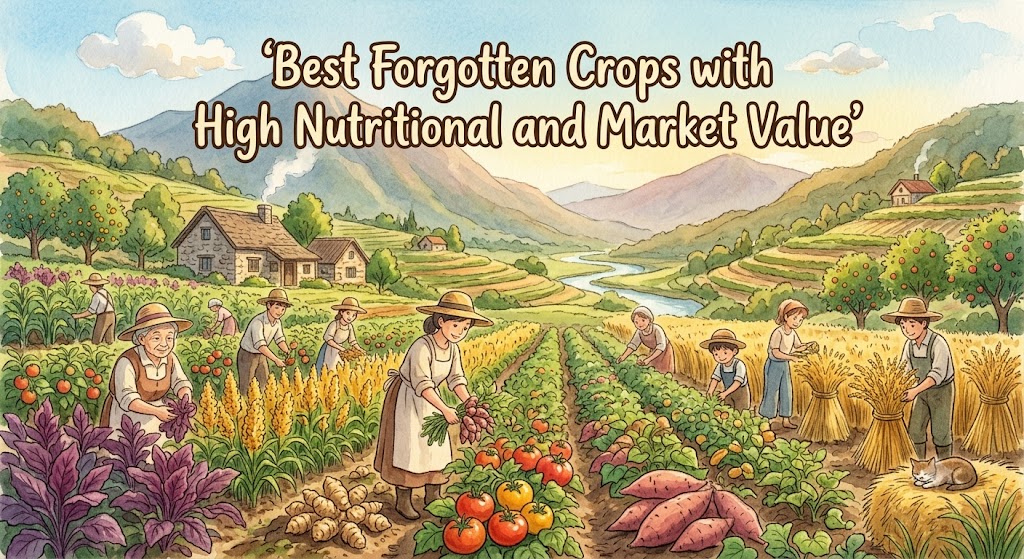
Modern agriculture relies heavily on a small number of staple crops such as wheat, rice, and maize. While these crops are essential for global food production, many traditional or forgotten crops have gradually disappeared from commercial farming despite offering exceptional nutritional benefits and strong market potential. These ancient crops were cultivated for centuries because they adapted well to local climates, required fewer external inputs, and provided healthy, nutrient-rich food for communities.
Today, rising consumer interest in healthy eating, organic produce, climate-resilient farming, and sustainable agriculture has renewed attention toward these neglected crops. Farmers who diversify with forgotten crops can reduce production risks, improve soil health, and access specialty markets that often pay premium prices.
This guide explores some of the best forgotten crops that deserve renewed attention because of their high nutritional value and growing commercial demand.
Why Forgotten Crops Are Making a Comeback
Traditional crops are becoming popular again for several important reasons.
Their key advantages include:
- Excellent nutritional value
- Better tolerance to drought and heat
- Lower fertilizer requirements
- Improved resistance to pests and diseases
- Support for biodiversity
- Reduced production costs
- Growing demand in health food markets
These benefits make forgotten crops attractive for both small-scale and commercial farming.
1. Millet
Millet was once a staple grain across many parts of Asia and Africa but declined as rice and wheat became more common.
Nutritional Benefits
Millet is naturally rich in:
- Dietary fiber
- Iron
- Magnesium
- Calcium
- Protein
- Antioxidants
It is also gluten-free, making it suitable for people with gluten intolerance.
Market Potential
Growing demand for nutritious grains has increased millet’s popularity in:
- Health food stores
- Organic markets
- Gluten-free food products
- Breakfast cereals
- Flour production
Its drought tolerance also makes it valuable in regions facing water shortages.
2. Sorghum
Sorghum is one of the world’s most climate-resilient cereal crops.
Nutritional Benefits
Sorghum contains:
- Protein
- Fiber
- B vitamins
- Iron
- Potassium
- Antioxidants
It provides steady energy and supports healthy digestion.
Commercial Opportunities
Sorghum is used for:
- Human food
- Livestock feed
- Flour
- Syrup
- Biofuel production
Its versatility creates multiple income opportunities for farmers.
3. Amaranth
Amaranth has been cultivated for thousands of years and is valued for both its edible seeds and nutritious leaves.
Health Benefits
Amaranth is rich in:
- High-quality protein
- Calcium
- Iron
- Magnesium
- Vitamin C
- Dietary fiber
It contains essential amino acids that are uncommon in many cereal grains.
Market Value
Demand continues to grow for:
- Organic grains
- Health foods
- Gluten-free products
- Functional food ingredients
Its leaves are also sold as nutritious vegetables in many regions.
4. Quinoa
Although quinoa has gained international recognition, it remains underutilized in many agricultural areas.
Nutritional Advantages
Quinoa provides:
- Complete protein
- Fiber
- Iron
- Magnesium
- Zinc
- Essential amino acids
It is widely appreciated for its balanced nutritional profile.
Business Potential
Quinoa is commonly marketed through:
- Premium grocery stores
- Organic retailers
- Health-conscious consumers
- Export markets
- Value-added food products
Farmers can often receive higher prices compared to traditional grains.
5. Buckwheat
Buckwheat is a fast-growing crop that performs well in cooler climates.
Nutritional Benefits
Buckwheat contains:
- High-quality protein
- Fiber
- Magnesium
- Manganese
- Antioxidants
It is naturally gluten-free and increasingly used in healthy food products.
Market Demand
Buckwheat is processed into:
- Flour
- Noodles
- Breakfast foods
- Snack products
- Bakery ingredients
Its popularity continues to increase among health-conscious consumers.
6. Cowpea
Cowpea has been cultivated for centuries and remains one of the most valuable traditional legumes.
Nutritional Value
Cowpea provides:
- Protein
- Fiber
- Folate
- Iron
- Potassium
Its leaves are also consumed as nutritious vegetables in many regions.
Agricultural Benefits
Cowpea naturally fixes nitrogen, improving soil fertility while reducing fertilizer costs.
Growing demand for plant-based protein has strengthened its commercial value.
7. Pigeon Pea
Pigeon pea is another highly nutritious legume that supports sustainable farming.
Health Benefits
It contains:
- Protein
- Fiber
- Calcium
- Iron
- B vitamins
Farming Advantages
Pigeon pea:
- Improves soil fertility
- Tolerates drought
- Requires relatively few inputs
- Supports crop rotation systems
Its dual value as food and soil-improving crop makes it attractive for diversified farms.
8. Sesame
Sesame has been cultivated for thousands of years but is still undergrown in many farming regions.
Nutritional Benefits
Sesame seeds are rich in:
- Healthy fats
- Protein
- Calcium
- Iron
- Zinc
- Vitamin E
Commercial Potential
Sesame is widely used for:
- Cooking oil
- Bakery products
- Snack foods
- Tahini
- Confectionery
Demand remains strong in both domestic and international markets.
9. Taro
Taro is an ancient root crop valued for both its edible roots and leaves.
Nutritional Profile
Taro supplies:
- Complex carbohydrates
- Fiber
- Potassium
- Vitamin C
- Magnesium
Market Opportunities
It is sold through:
- Fresh produce markets
- Food processing industries
- Restaurants
- Traditional food retailers
Taro performs especially well in tropical and subtropical farming systems.
10. Barley
Barley is one of the oldest cultivated cereal crops and continues to provide significant nutritional and economic value.
Health Benefits
Barley contains:
- Soluble fiber
- Protein
- Selenium
- B vitamins
- Iron
Its fiber content supports heart health and digestive wellness.
Commercial Uses
Barley is grown for:
- Food products
- Animal feed
- Malt production
- Health foods
Its versatility helps farmers access multiple markets.
How Forgotten Crops Support Sustainable Farming
Adding traditional crops to modern farming systems provides several environmental benefits.
These crops help:
- Improve biodiversity
- Reduce dependence on chemical fertilizers
- Increase climate resilience
- Protect soil health
- Improve crop rotation
- Reduce production risks
Diversifying crop production also makes farms more resilient to changing weather conditions.
Tips for Growing Forgotten Crops Successfully
Before introducing these crops, farmers should:
- Choose varieties suited to local climate conditions.
- Test soil before planting.
- Start with small trial plots.
- Learn recommended cultivation practices.
- Identify buyers before expanding production.
- Keep production records.
- Combine forgotten crops with existing farming systems.
A gradual approach allows farmers to evaluate performance while minimizing financial risk.
Challenges to Consider
Although forgotten crops offer many benefits, some challenges remain.
Common obstacles include:
- Limited availability of certified seed
- Lower consumer awareness
- Smaller processing industries
- Limited technical guidance
- Developing market infrastructure
As demand for sustainable and nutritious foods continues to grow, many of these challenges are gradually becoming easier to overcome.
Conclusion
Forgotten crops represent an important opportunity for the future of agriculture. Millet, sorghum, amaranth, quinoa, buckwheat, cowpea, pigeon pea, sesame, taro, and barley combine excellent nutritional value with growing commercial demand. Their ability to tolerate difficult growing conditions, improve soil health, and support biodiversity makes them valuable additions to modern farming systems.
For farmers seeking to diversify production and reach premium markets, these traditional crops offer both economic and environmental advantages. By bringing forgotten crops back into cultivation and combining them with modern farming practices, agriculture can become more resilient, profitable, and sustainable while preserving valuable agricultural heritage for future generations.