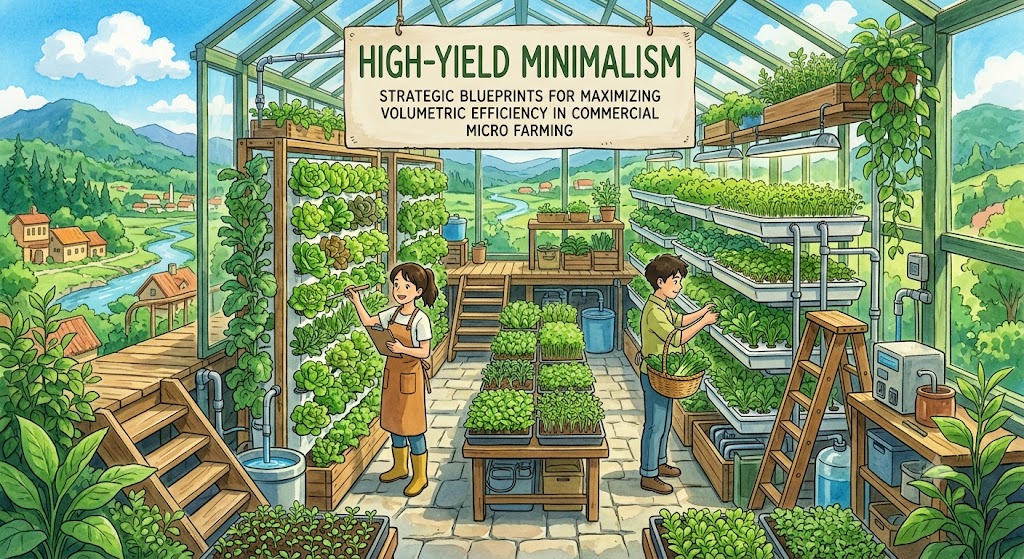
As agricultural land becomes increasingly expensive and urban populations continue to grow, farmers and entrepreneurs are exploring innovative ways to produce more food within limited spaces. One of the most promising approaches is commercial micro farming, a production model that focuses on maximizing output from small areas through efficient design, intensive cultivation techniques, and smart resource management.
Micro farming challenges the traditional assumption that larger farms automatically generate greater profitability. Instead, it emphasizes productivity per square foot, square meter, or cubic volume. By optimizing every available resource, micro farmers can achieve impressive yields, reduce waste, and create highly profitable operations even on small plots of land.
Whether located in urban environments, suburban areas, greenhouses, rooftops, or compact rural properties, commercial micro farms demonstrate that strategic planning and efficient systems can often outperform scale alone. This guide explores practical blueprints for maximizing volumetric efficiency and building successful high-yield micro farming enterprises.
Understanding Commercial Micro Farming
Micro farming refers to intensive agricultural production conducted on relatively small areas of land while focusing on maximizing productivity and profitability.
Unlike traditional farming models that prioritize expansion, micro farming emphasizes:
- Space optimization
- Resource efficiency
- High-value crops
- Intensive production systems
- Sustainable practices
The objective is to generate the highest possible output from the smallest practical footprint.
Why Micro Farming Is Growing in Popularity
Several factors are driving increased interest in micro farming.
Key Drivers
- Rising land prices
- Urbanization
- Local food demand
- Technological innovation
- Sustainability concerns
- Resource limitations
As available farmland becomes more constrained, efficient production systems are becoming increasingly valuable.
The Concept of Volumetric Efficiency
Traditional agriculture often measures productivity based on land area.
Micro farming introduces a broader perspective by considering volumetric efficiency, which focuses on maximizing production within three-dimensional growing spaces.
Goals of Volumetric Efficiency
- Increase production density
- Optimize vertical space
- Improve resource utilization
- Enhance profitability
Every cubic foot or cubic meter becomes a valuable production asset.
Start with Strategic Farm Design
Efficient farm layout is one of the most important foundations of successful micro farming.
Design Priorities
- Minimize wasted space
- Improve workflow efficiency
- Simplify maintenance
- Maximize growing areas
A carefully planned layout often increases productivity without requiring additional land.
Prioritize High-Value Crops
Crop selection plays a major role in profitability.
Micro farms typically focus on crops that offer strong returns relative to space requirements.
Popular High-Value Crops
- Microgreens
- Herbs
- Lettuce
- Specialty greens
- Strawberries
- Cherry tomatoes
- Edible flowers
These crops often provide higher revenue potential than many traditional field crops.
Utilize Vertical Farming Systems
Vertical farming is one of the most effective methods for increasing volumetric efficiency.
Instead of expanding horizontally, growers stack production layers vertically.
Benefits of Vertical Farming
- Increased production density
- Better space utilization
- Reduced land requirements
- Higher overall yields
Vertical systems are especially valuable in urban and indoor farming environments.
Implement Hydroponic Production
Hydroponics allows plants to grow without soil using nutrient-rich water solutions.
Advantages for Micro Farms
- Faster growth rates
- Efficient water use
- Higher planting density
- Reduced weed pressure
Hydroponic systems often achieve greater productivity than traditional soil-based methods.
Consider Aeroponic Technologies
Aeroponic systems suspend plant roots in the air and deliver nutrients through fine mist applications.
Benefits
- Exceptional oxygen availability
- Efficient nutrient delivery
- Reduced water consumption
- Rapid plant growth
Aeroponics can significantly improve productivity in space-constrained environments.
Optimize Crop Rotation and Succession Planting
Productive micro farms rarely leave growing space unused.
Succession Planting Strategies
- Stagger planting schedules
- Replace harvested crops quickly
- Maintain continuous production cycles
These practices maximize annual output while improving profitability.
Focus on Fast-Growing Crops
Rapid production cycles allow multiple harvests throughout the year.
Examples
- Microgreens
- Baby leaf vegetables
- Radishes
- Herbs
- Asian greens
Short production periods increase turnover and improve space efficiency.
Improve Environmental Control
Controlled environments help optimize growing conditions year-round.
Key Environmental Factors
- Temperature
- Humidity
- Lighting
- Air circulation
- Carbon dioxide levels
Maintaining optimal conditions often results in higher yields and better product quality.
Use LED Grow Lighting
LED technology has become increasingly important in intensive farming systems.
Advantages of LED Lighting
- Energy efficiency
- Long operational lifespan
- Adjustable light spectrums
- Reduced heat output
Efficient lighting supports year-round production and improved crop performance.
Implement Precision Irrigation
Water management is essential for maximizing productivity.
Smart Irrigation Techniques
- Drip irrigation
- Automated watering systems
- Soil moisture monitoring
- Recirculating water systems
Precision irrigation reduces waste while supporting healthy crop growth.
Build Healthy Growing Media
For soil-based systems, growing media quality significantly affects performance.
Important Characteristics
- Good drainage
- Adequate aeration
- Nutrient availability
- Water retention
Healthy growing environments support stronger root development and higher yields.
Leverage Data and Monitoring Tools
Technology helps micro farmers make informed decisions.
Useful tools include:
- Environmental sensors
- Crop monitoring systems
- Farm management software
- Production tracking platforms
Benefits
- Improved decision-making
- Better resource management
- Increased efficiency
Data-driven management supports consistent productivity improvements.
Reduce Resource Waste
Efficient resource use is a key principle of successful micro farming.
Areas for Optimization
- Water usage
- Energy consumption
- Nutrient management
- Labor efficiency
Reducing waste improves profitability while supporting sustainability goals.
Develop Direct Marketing Channels
High-value crops often perform best when sold directly to consumers or specialty buyers.
Potential Markets
- Farmers’ markets
- Restaurants
- Grocery stores
- Subscription boxes
- Online sales platforms
Direct marketing can significantly increase profit margins.
Automate Repetitive Tasks
Automation allows micro farmers to manage intensive production systems more efficiently.
Examples include:
- Irrigation automation
- Climate control systems
- Nutrient dosing systems
- Lighting schedules
Automation reduces labor demands while improving consistency.
Focus on Quality Over Quantity
Micro farms often succeed by producing premium products rather than competing solely on volume.
Premium Market Opportunities
- Organic produce
- Specialty vegetables
- Fresh herbs
- Gourmet ingredients
- Local food products
Higher quality often supports stronger pricing and customer loyalty.
Common Challenges in Commercial Micro Farming
Despite its advantages, micro farming presents certain challenges.
Potential Obstacles
- Initial infrastructure costs
- Limited expansion space
- Intensive management requirements
- Market competition
- Environmental control expenses
Careful planning helps minimize these challenges.
Long-Term Benefits of High-Efficiency Micro Farming
Successful micro farms often achieve:
- Higher productivity per area
- Better resource efficiency
- Reduced environmental impact
- Strong local market connections
- Improved profitability
These benefits make micro farming an attractive option for modern agricultural entrepreneurs.
Frequently Asked Questions
1. What is commercial micro farming?
Commercial micro farming is intensive agricultural production conducted on small areas while maximizing productivity and profitability.
2. Which crops are best for micro farming?
Microgreens, herbs, leafy greens, strawberries, cherry tomatoes, and specialty vegetables are among the most profitable options.
3. How does vertical farming improve efficiency?
Vertical farming uses multiple growing layers, allowing significantly more production within the same footprint.
4. Is hydroponics suitable for micro farms?
Yes. Hydroponics increases productivity, conserves water, and supports higher planting densities.
5. Can micro farming be profitable?
Yes. When managed effectively, micro farms can generate substantial income by focusing on high-value crops and efficient production systems.
Conclusion
Commercial micro farming demonstrates that agricultural success is not always determined by land size. Through strategic design, vertical production systems, hydroponics, precision resource management, and high-value crop selection, farmers can achieve remarkable productivity within limited spaces. By maximizing volumetric efficiency and embracing innovative growing methods, micro farms can generate strong yields, improve profitability, and contribute to local food production.
As urbanization, land constraints, and sustainability concerns continue to influence agriculture, high-efficiency micro farming is likely to play an increasingly important role in future food systems. With proper planning, technology adoption, and market development, even small growing spaces can become highly productive and profitable agricultural enterprises.
Explore more helpful articles on our website for additional farming guides, agricultural innovations, and sustainable production strategies.