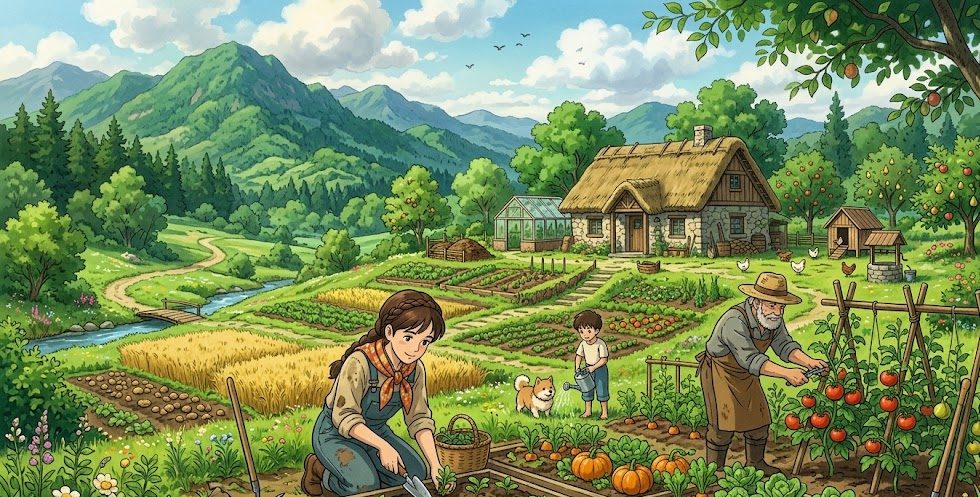
In an era of unpredictable supply chains, fluctuating economic markets, and rising food costs, the concept of survival farming has evolved from a niche homesteading hobby into a practical necessity for many. Survival farming—often referred to as subsistence farming or self-reliant agriculture—is about much more than planting a simple backyard garden for summer salads. It is a calculated, strategic approach to producing enough food to sustain yourself and your family through difficult times, regardless of external circumstances.
Whether you are preparing for a completely off-grid lifestyle, looking to dramatically reduce your grocery bills, or simply seeking the profound peace of mind that comes with true food security, mastering the art of survival agriculture is critical. However, growing food for survival requires a vastly different approach than growing a few tomatoes for leisure. In this comprehensive guide, we will explore the essential skills you need to master and the most effective crop strategies to ensure a continuous, reliable food supply year-round.
The Core Philosophy of Survival Farming
Unlike commercial farming, which focuses heavily on cash crops and maximum financial yield for the marketplace, survival farming prioritizes calorie density, nutritional completeness, and long-term sustainability. The primary goal is to minimize your reliance on external inputs—such as chemical fertilizers, grid-dependent water systems, and purchased seeds—while maximizing your nutritional output.
To achieve this, a survival farmer must develop a deep understanding of their local ecosystem, soil health, and seasonal cycles. Resilience is the ultimate objective. If one crop fails due to an unexpected drought or a sudden pest infestation, your entire food supply cannot collapse with it. Diversification and skill-building are your best insurance policies.
Essential Skills for the Survival Farmer
Before you plant a single seed, you must develop the foundational skills that make sustainable, closed-loop farming possible. Without these core competencies, even the highest-quality seeds will struggle to thrive.
1. Soil Health and Fertility Management
In survival farming, your soil is your most valuable asset. Relying on store-bought, synthetic fertilizers is not a viable option in a true self-reliance scenario. You must know how to build and maintain fertile soil using natural inputs available on your property. This involves mastering the art of composting—turning kitchen scraps, yard waste, and livestock manure into nutrient-rich humus. Furthermore, understanding how to balance carbon-to-nitrogen ratios, utilizing cover crops (like winter rye or clover) to fix nitrogen naturally, and practicing no-till agriculture to preserve the soil’s delicate microbial biome are non-negotiable skills for long-term success.
2. Water Harvesting and Conservation
Water is the lifeblood of any farm. In a survival situation, you cannot assume that the municipal water supply will always be flowing or affordable. Setting up passive rainwater harvesting systems, such as interconnected rain barrels or landscape swales, is a crucial first step. Additionally, learning how to implement aggressive water-conserving irrigation methods—like utilizing heavy woodchip mulch to reduce ground evaporation and understanding the natural topography of your land to direct runoff—will ensure your crops survive during extended periods of drought.
3. Seed Saving and Plant Propagation
If you have to purchase new seeds from a catalog every spring, you are not truly self-reliant. Seed saving is a traditional skill that every modern survival farmer must reclaim. You need to know how to properly harvest, dry, and store open-pollinated, heirloom seeds from your most robust plants to ensure a viable crop for the following year. Furthermore, understanding basic plant propagation techniques—such as taking hardwood cuttings, dividing perennial roots, and grafting fruit trees—allows you to exponentially multiply your food sources without spending a dime.
4. Natural Pest and Weed Management
When commercial pesticides and herbicides are unavailable or prohibitively expensive, you must rely on ecological balance to protect your crops. This requires a strong working knowledge of Integrated Pest Management (IPM). You should learn how to attract beneficial insects (like ladybugs, lacewings, and predatory wasps) to naturally control aphid populations. Utilizing physical barriers like floating row covers and implementing strong companion planting strategies will help naturally deter pests and suppress weeds without chemicals.
Strategic Crop Selection for Maximum Survival Value
When farming for survival, space, time, and physical energy are limited resources. You cannot afford to waste real estate on crops that offer low nutritional value. Your planting strategy should focus heavily on the “Three C’s”: Calories, Complete nutrition, and Cellar-ability (long-term storage potential).
High-Calorie Staple Crops
Vegetables like iceberg lettuce and celery are great for crunch and hydration, but they will not keep you alive in a survival scenario. You need calorie-dense carbohydrate staples to provide sustainable physical energy.
- Potatoes and Sweet Potatoes: These are the undisputed champions of the survival garden. They produce massive yields in remarkably small spaces, are highly caloric, and can be stored for months in a cool, dark root cellar without requiring any canning or processing.
- Dry Beans and Legumes: Beans (such as pinto, black, and kidney beans) are absolutely crucial for dietary protein. When combined with grains like corn, they provide a complete amino acid profile. They are also incredibly easy to dry on the vine and can be stored for years in airtight containers.
- Winter Squash: Varieties like butternut, acorn, and Hubbard squash are packed with vitamins and complex carbohydrates. Their thick, waxy skins allow them to last straight through the winter without refrigeration.
- Grain Corn (Maize): Specifically, dent or flint corn varieties meant for drying and grinding into cornmeal. Corn is a high-yield staple that has formed the backbone of subsistence diets for centuries.
Nutrient-Dense Greens and Vegetables
To prevent malnutrition and maintain a strong immune system, your survival farm must also include highly nutritious, fast-growing vegetables.
- Kale and Collard Greens: These leafy greens are incredibly hardy, often surviving hard frosts, and are packed with iron, calcium, and essential vitamins.
- Carrots and Beets: Root crops offer vital nutrients and have the added benefit of being able to be left in the ground during early winter or stored efficiently in damp sand for months.
- Cabbage: A heavy-yielding crop that can be easily preserved through fermentation (making sauerkraut), providing essential probiotics and vitamin C during the barren winter months.
Perennial Food Sources
The smartest survival strategy involves planting crops that you only have to sow once. Perennials come back year after year, providing food security while saving you immense amounts of annual labor.
- Fruit and Nut Trees: Apples, pears, walnuts, and chestnuts provide massive seasonal calorie boosts with very little ongoing maintenance once the trees are established.
- Berry Bushes: Raspberries, blackberries, and blueberries are hardy, prolific, and highly nutritious.
- Asparagus and Rhubarb: These early spring producers offer fresh food at a critical time when winter stores are running low and summer crops haven’t yet matured.
Advanced Strategies for Farm Resilience
Companion Planting and Polyculture
Monoculture—the practice of planting massive blocks of a single crop—is highly susceptible to total crop failure from targeted pests or blights. Survival farmers use polyculture by mixing different plants together to create a mutually supportive ecosystem. The classic example is the Native American “Three Sisters” method: planting corn, beans, and squash together. The tall corn provides a natural trellis for the beans to climb, the beans fix vital nitrogen in the soil to feed the heavy-feeding corn, and the broad leaves of the squash act as a living mulch to suppress weeds and retain soil moisture.
Strategic Crop Rotation
Planting the exact same crop in the exact same spot year after year rapidly depletes the soil of specific nutrients and invites pests to set up permanent residence. A strategic crop rotation plan (for example, rotating heavy-feeding crops like tomatoes with soil-building legumes like peas, followed by light-feeding root vegetables) naturally breaks pest life cycles and maintains long-term soil fertility.
Integration of Small Livestock
While not strictly a plant crop, integrating small livestock completes the survival farming ecosystem and drastically reduces waste. Chickens, ducks, and rabbits are relatively low-maintenance additions to a homestead. They consume agricultural waste and insect pests, provide a high-value source of protein in the form of eggs and meat, and produce incredibly nutrient-rich manure to fertilize your crops, effectively closing the loop of your self-sustaining system.
Conclusion
Building a survival farm is not an overnight project; it is an ongoing journey of learning, adapting, and working in harmony with nature. By focusing your efforts on mastering foundational skills like soil building, water conservation, and seed saving, you lay the groundwork for lasting success. When paired with a strategic crop plan that prioritizes calorie-dense staples, resilient perennials, and nutrient-rich vegetables, you create a robust safety net for your family. Start small, master one skill at a time, and gradually expand your operations. True self-reliance is built season by season, and there is no better time to plant the seeds of your independence than today.