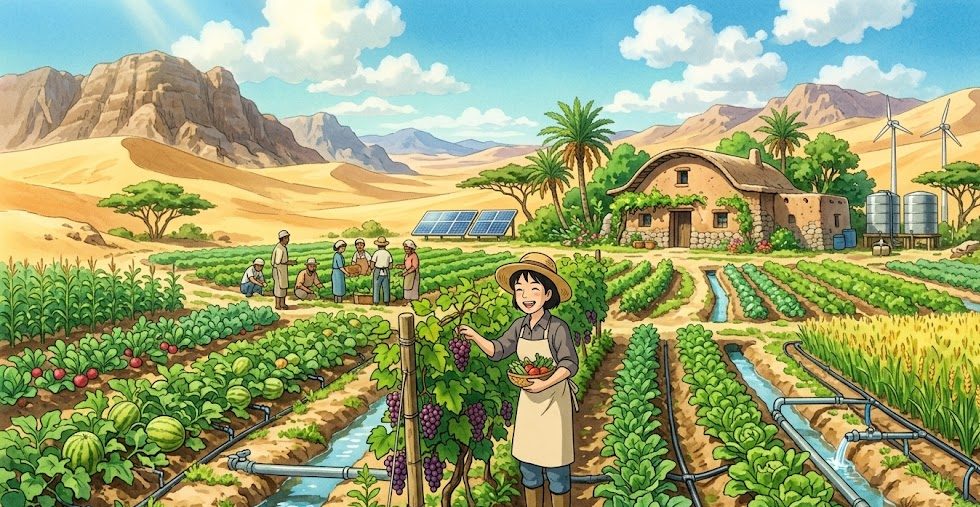
To most people, a desert looks like a barren wasteland. But to a skilled grower, it is simply a canvas waiting for the right techniques. Farming in arid regions is not about fighting the harsh environment; it is about working intelligently with limited resources.
With the right approach, dry, sandy landscapes can produce rich, high-value harvests. As global temperatures rise and fresh water becomes increasingly scarce, learning how to grow food in arid environments is no longer just a niche skill. It is a necessary evolution of agriculture. Desert farming requires careful planning, smart water management, and a deep understanding of soil mechanics.
Selecting Drought-Tolerant Crops
You cannot force water-heavy crops to thrive in the desert without spending a fortune on irrigation. The absolute foundation of arid farming is selecting crops that are genetically adapted to survive intense heat and low moisture.
For fruit production, trees with deep taproots are your best option. Date palms, figs, pomegranates, and olives have evolved over thousands of years to thrive in the desert sun. They are incredibly resilient and produce high-value yields.
If you want to grow annual crops or vegetables, look for drought-resistant varieties. Cowpeas, sorghum, pearl millet, and specific varieties of melons and squash perform remarkably well in hot climates. Many seed companies now offer hybrid vegetable seeds specifically bred to tolerate high heat and require less water.
Drip Irrigation and Micro-Sprinklers
Traditional flood irrigation in a desert is a fast recipe for failure. The intense sun and dry air will evaporate the water long before it ever reaches the plant roots. If you want to farm in the desert, you must invest in modern water delivery systems.
Drip irrigation is the undisputed champion of arid farming. It involves laying small plastic tubes along your crop rows with tiny emitters placed directly next to the base of each plant. This system delivers slow, precise drops of water straight to the root zone.
Because the water does not sit on the soil surface, evaporation is reduced to almost zero. Furthermore, you can mix liquid fertilizers directly into the water supply (a process called fertigation), ensuring your crops get the exact nutrients they need without any waste.
Building Soil Structure with Organic Matter
Desert sand is essentially tiny pieces of crushed rock. It drains water instantly and contains almost no biological life or nutrients. To grow crops successfully, you have to transform that sand into living soil.
The key to fixing sandy soil is organic matter. You need to mix large amounts of high-quality compost, aged animal manure, and biochar into the top layers of your planting beds. Organic matter acts like a massive sponge. It captures the water from your drip irrigation lines and holds it in place so the plant roots can slowly drink it.
Additionally, laying a thick layer of organic mulch—such as straw, dried leaves, or wood chips—over the top of your soil provides a protective shield. This mulch blanket prevents the harsh sun from baking the ground, keeping the root zone cool and locking in precious moisture.
Utilizing Windbreaks and Shade Netting
The desert sun will burn your plants, but the desert wind will destroy them. Strong, hot winds strip moisture directly from the leaves faster than the roots can pull it from the soil. Protecting your crops from the elements is critical.
Planting a perimeter of tall, hardy, native trees around your farm creates a natural windbreak. This disrupts the harsh winds, creating a calmer, more humid microclimate inside your field.
For high-value crops like vegetables or berries, shade netting is a game-changer. Erecting simple structures covered with 30% to 50% agricultural shade cloth blocks the most intense midday sun. This drastically lowers the ambient temperature underneath the net, prevents the fruit from getting sunscald, and reduces the plants’ overall water requirements.
Practical Tips for Desert Growers
- Water at the Right Time: Never run your irrigation systems during the heat of the day. Always water your crops late in the evening or very early in the morning. This gives the water time to soak deeply into the soil without being lost to the sun.
- Monitor Soil Salinity: In dry areas, water evaporates quickly, often leaving natural salts behind in the soil. Over time, this salt buildup will kill your crops. Flush your soil periodically with deep watering to push the salts below the root zone.
- Plant in Trenches: Instead of planting in raised beds, plant your crops in shallow sunken trenches or basins. This simple trick naturally funnels any rare rainfall directly toward the plants and shields the young stems from ground-level wind.
A Real-Life Example of Desert Farming Success
Consider the story of a family farm located in a highly arid, sandy region that traditionally struggled to grow even basic fodder crops. They relied on pulling massive amounts of groundwater to flood their fields, which eventually caused their well to dry up.
Facing ruin, the farmer changed his entire approach. He stopped trying to grow thirsty crops and planted five acres of high-density pomegranate trees. He installed a solar-powered drip irrigation system and covered the ground around the trees with a thick layer of organic mulch and crushed coconut coir to hold moisture.
He also planted a dense row of native, drought-resistant acacia trees around the border to block the dry summer winds. Within three years, the farm was using 70% less water than before. The pomegranates thrived in the heat, producing premium, export-quality fruit that sold for a massive profit compared to his old crops.
Common Mistakes to Avoid
- Ignoring the Microclimate: Do not assume all desert land is the same. Pay attention to natural dips in the land where cold air settles at night or ridges that catch the worst wind. Plant accordingly.
- Overwatering to Compensate for Heat: Beginners often panic when they see plants wilting slightly in the afternoon sun and immediately turn on the water. Many plants naturally droop in extreme heat to conserve energy and recover by evening. Overwatering will drown the roots and cause rot.
- Using Chemical Fertilizers Solely: Synthetic fertilizers do nothing to improve sandy soil structure. In fact, they can easily burn plant roots in dry conditions. Always prioritize organic compost to build the soil first.
Step-by-Step Guide to Starting a Desert Farm
- Test Your Soil and Water: Before planting anything, test your well water and soil for heavy salinity. If your water is heavily salted, you will need to invest in a reverse osmosis filter or choose highly salt-tolerant crops.
- Establish Your Windbreaks: Do not wait to plant your perimeter trees. Get your hardy, native windbreaks in the ground months before you start planting your cash crops.
- Amend the Planting Zones: Do not try to fertilize the entire desert. Dig specific trenches or holes where your crops will go, and fill only those exact areas with rich compost and water-holding organic matter.
- Install the Irrigation System: Lay out your drip lines and test them thoroughly. Ensure every single emitter is working and the water pressure is even across the field.
- Transplant Carefully: Plant your seedlings in the late afternoon so they have the entire cool night to recover from the shock of being moved. Mulch them heavily immediately after planting.
Conclusion
Desert farming is undoubtedly challenging, but it is also highly rewarding. The bright, endless sunshine and lack of cloud cover mean that if you can control the water and soil conditions, your plants will photosynthesize and grow at incredible rates. By leaning into smart technology like drip irrigation, building organic soil structure, and choosing the right crops, you can build an oasis of productivity. The desert is not empty; it is simply waiting for a grower who knows how to unlock its potential.
Frequently Asked Questions
1. Can I grow leafy greens like lettuce and spinach in the desert?
Yes, but it requires protection. Leafy greens will quickly bolt (go to seed) or burn in direct desert sunlight. To grow them successfully, you must cultivate them under heavy shade netting or inside a climate-controlled greenhouse, usually during the cooler winter months.
2. How do I fix salty soil in an arid climate?
The most effective way to manage saline soil is through heavy leaching. This means applying a large volume of fresh, clean water to dissolve the salts and push them deep into the earth, well below the root zone of your crops. Improving drainage by adding organic matter also helps prevent salt from rising back to the surface.
3. What is the most profitable crop to grow in a desert?
Date palms are widely considered one of the most reliable and profitable desert crops. They thrive in extreme heat, tolerate salty water better than most plants, and produce a high-value fruit with a long shelf life. Pomegranates and certain varieties of figs are also highly profitable.
4. Does hydroponic farming work well in the desert?
Absolutely. Hydroponics and aquaponics are excellent for desert environments because they are enclosed systems. They use up to 90% less water than traditional soil farming since the water is constantly recirculated instead of evaporating into the dry air.
5. Why do desert farmers use white shade nets instead of black ones?
While black nets provide excellent shade, they absorb the heat of the sun and can make the area underneath quite warm. White or reflective aluminum shade nets bounce the harsh solar radiation away from the crop area, significantly lowering the temperature around the plants while still allowing enough light for photosynthesis.