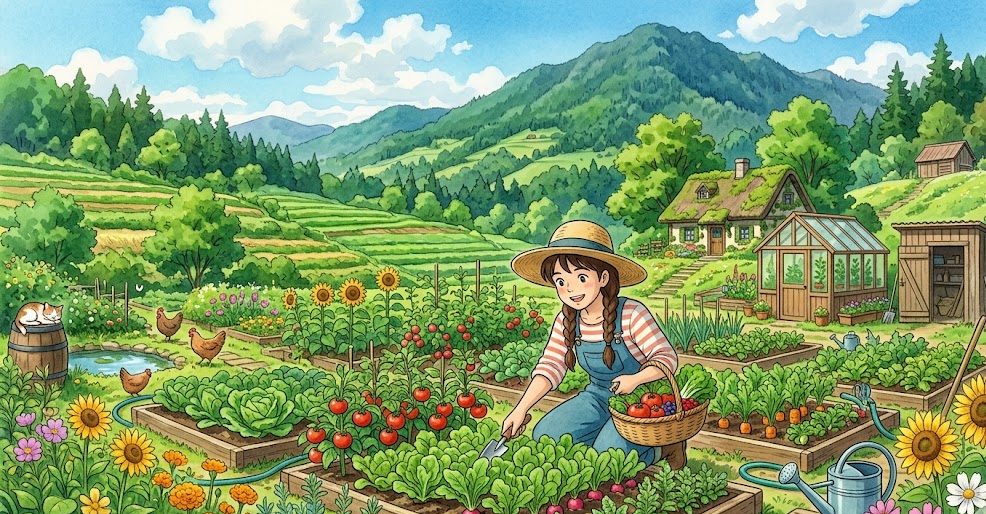
The agricultural landscape is undergoing a quiet, powerful transformation. Gone are the days when farming required hundreds of acres and heavy industrial machinery to be profitable. Today, the most successful new-age agriculturalists are finding that “less is more.” Micro-farming—the practice of intensive, high-yield food production on a tiny footprint—is changing the game for small-scale growers. Whether you have a suburban backyard, a small plot of land, or even a converted urban space, you can generate a significant income by focusing on high-value crops and efficient systems. For many, this is more than just a hobby; it is a scalable business model that taps into the growing consumer demand for fresh, local, and sustainably grown produce. If you are ready to trade traditional methods for precision, profit, and productivity, this guide will show you how to turn your small space into a high-yield powerhouse.
1. Defining Your Micro-Farm Identity
The first mistake many aspiring micro-farmers make is trying to grow “a little bit of everything.” In a small space, diversification is good, but specialization is profitable.
Identify High-Demand, Fast-Turnover Crops
You need crops that provide the highest return on investment (ROI) per square foot and have a short harvest cycle.
- Microgreens and Herbs: These are the “cash kings” of micro-farming. Crops like arugula, radish shoots, and basil can be harvested in as little as 2–3 weeks. They command premium prices in urban markets and high-end restaurants.
- Specialty Vegetables: Consider heirloom varieties or “baby” versions of common vegetables. A bed of baby carrots or colorful heirloom tomatoes often fetches double the price of generic supermarket produce.
The Power of “Market-First” Planning
Before you plant a single seed, talk to your local chefs, farmers’ markets, and grocery store managers. Ask them what they struggle to source locally. By planting based on verified demand, you eliminate the risk of growing a crop that nobody wants to buy.
2. Infrastructure for Maximum Efficiency
In micro-farming, space is your most valuable asset. Every square inch must be optimized to contribute to your bottom line.
Intensive Bed Management
Abandon the wide-row planting methods used in traditional farming. Use intensive, raised-bed systems that allow for high-density planting. By using paths that are kept permanent and soil that is never tilled, you can plant crops much closer together. This natural “living mulch” effect suppresses weeds and helps the soil retain moisture, drastically reducing your labor and input costs.
Vertical Integration
If you are running out of horizontal space, look up. Use trellising systems for climbing crops like cucumbers, pole beans, and even certain varieties of squash. Vertical farming not only increases your yield per square foot but also makes harvesting significantly easier, as the produce is held at eye level rather than buried in the dirt.
3. Soil Health: The Secret Engine of Productivity
On a micro-farm, you aren’t just farming plants; you are farming biology. You need a soil system that can support constant production without exhaustion.
The No-Till Advantage
Tilling breaks the delicate fungal networks in your soil and brings weed seeds to the surface. By adopting a “no-till” approach—where you simply add a layer of high-quality compost to the surface of your beds before every planting—you build deep, nutrient-rich soil that feeds your plants naturally.
Bio-Fertilization
Because you are harvesting so frequently, your soil needs constant replenishment. Invest in high-quality worm castings (vermicompost) or liquid seaweed extracts. These provide a broad spectrum of micronutrients that synthetic fertilizers often miss. Remember: healthy soil creates resilient plants that naturally resist pests and diseases, saving you money on sprays.
4. Precision Irrigation and Resource Management
Water usage is a major operational cost. In a high-yield system, precision irrigation is mandatory.
Drip Irrigation is Non-Negotiable
Drip tapes or micro-sprinklers are essential. They deliver water directly to the root zone, where it is needed most. This prevents the surface-level leaf wetness that leads to fungal diseases like blight and mildew. Furthermore, drip systems can be automated with simple, low-cost timers, ensuring your crops are never thirsty or waterlogged.
Tracking and Record-Keeping
A micro-farm is a business. Keep a detailed ledger (or use a mobile app) that tracks:
- Seed-to-Harvest Time: How long does each crop actually take in your specific climate?
- Yield per Bed: Which varieties are outperforming others?
- Cost of Inputs: Are you spending too much on soil amendments or seeds? Analyzing this data at the end of each season allows you to “cull the losers” and double down on the crops that provide the best margin.
5. Marketing Your Harvest
High-yield farming is useless without high-value marketing. You need to distinguish your product from the generic produce found at grocery stores.
Focus on Storytelling and Quality
Customers are increasingly conscious of where their food comes from. Use social media to document your process. Show the fresh, vibrant colors of your harvested vegetables and the care you put into your soil. When you sell “a story” alongside your product, you are no longer a commodity; you become a premium local brand.
Direct-to-Consumer Channels
- Subscription Models (CSA): Offering a “Community Supported Agriculture” box allows customers to pay upfront for a weekly supply of your harvest. This guarantees your income early in the season.
- Boutique Wholesale: Focus on high-end local restaurants that prioritize “farm-to-table” sourcing. They are often willing to pay a premium for high-quality, freshly harvested produce that hasn’t sat in a warehouse for a week.
Conclusion
Starting a high-yield micro-farming business is a journey of precision and observation. It is not about how much land you have, but about how well you manage the space you are given. By choosing high-value crops, building a no-till soil system, and treating your operation with the discipline of a professional business, you can generate an impressive income from a very small footprint.
The market for high-quality, local food is not shrinking; it is expanding every year. Every bed you prepare and every seed you plant is an investment in your independence. Start small, focus on the details, and remember that in micro-farming, efficiency is your best friend. Your path to a profitable, sustainable future begins with the next harvest.