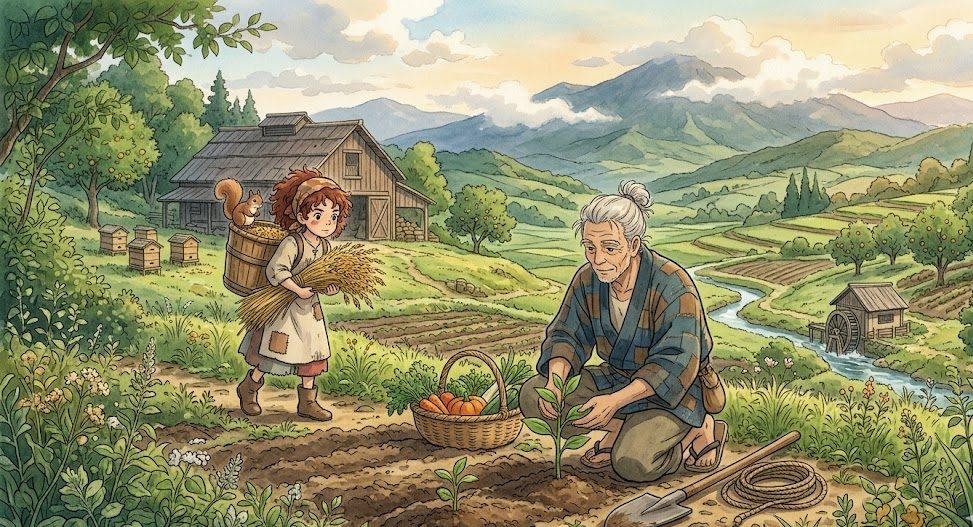
In an increasingly unpredictable world, the ability to produce your own food is more than just a hobby—it is the ultimate form of personal security. For generations, families lived with the quiet confidence that came from knowing exactly how to turn a patch of soil into a pantry full of nutrition. Today, we are seeing a powerful return to these foundational skills.
Survival farming is not about retreating from society; it is about building a resilient, self-reliant lifestyle that thrives regardless of external supply chains. Whether you have a small backyard or a larger plot of land, the path to food security starts with learning to work in harmony with the natural cycles of your environment. This guide is designed to help you build a productive agricultural foundation, prioritize long-term survival, and ensure your table stays full all year round.
The Core Philosophy of Survival Farming
Survival farming shifts the focus from “maximum profit” to “maximum reliability.” While a commercial farmer might choose a fragile crop because it sells for a high price, a survival farmer chooses crops based on their nutritional density, ease of storage, and resilience against local pests and weather.
Success in this field relies on three main pillars: soil fertility, crop diversity, and seed sovereignty. When you prioritize the health of your soil through organic composting and natural fertilization, you create a system that can sustain itself for decades. When you diversify your planting to include various root vegetables, grains, and greens, you build an insurance policy against a single crop failure. Finally, by learning to save your own seeds, you move from being a consumer of agriculture to an independent producer.
Essential Crops for Maximum Food Security
Not all plants provide the same level of security. To ensure you have enough calories to sustain your family during tougher times, prioritize crops that are dense in nutrients and easy to preserve.
- Potatoes and Sweet Potatoes: These are the gold standard for survival. They grow underground, protected from many pests, provide high caloric value, and can be stored for months in a cool, dark place without expensive processing.
- Legumes: Beans, lentils, and peas are essential. They store perfectly when dried, provide critical protein, and—perhaps most importantly—they naturally fix nitrogen into your soil, helping your other crops grow better.
- Winter Squash: Varieties like pumpkins, butternut, and acorn squash are incredibly hardy. They often have thick, protective skins that allow them to sit on a shelf for five to six months without refrigeration.
- Leafy Greens and Herbs: These provide the vital vitamins and minerals that are often missing from a calorie-heavy diet. Kale, Swiss chard, and garlic are easy to grow and can often be harvested long into the cooler seasons.
Practical Tips for Year-Round Harvests
To achieve true food security, you need to manage your land as a year-round engine of production.
- Master the Art of Soil Building: Stop throwing away organic waste. Your kitchen scraps, grass clippings, and fall leaves are “black gold.” Composting them creates the fertile soil that will support your survival crops without requiring store-bought fertilizers.
- Prioritize Water Harvesting: A farm without a reliable water source is just a desert waiting to happen. Use rain barrels, dig small swales, or set up catchment ponds to hold water on your property. Every drop of rain that hits your land should be put to work.
- Practice Multi-Layer Planting: Use the space in your garden wisely. For example, plant tall sunflowers to provide a natural trellis for climbing beans, while growing low-lying potatoes or squash underneath. This maximizes every square inch of your soil.
- Learn Natural Preservation: Growing food is only half the battle; the other half is keeping it. Learn how to pressure-can, dehydrate, ferment, and cold-store your harvests. A full garden in July is useless if it all goes to waste in August.
Real-Life Example: The Resilient Small-Plot Transformation
Consider the story of a small-plot farmer who lived on just one-fifth of an acre in a suburban area. Years ago, they spent most of their time mowing a useless grass lawn. After realizing they wanted more food security, they began tearing out the lawn in sections.
They started by building deep, raised beds for potatoes and beans—crops they knew were reliable. They installed a simple rain barrel system to catch runoff from their roof, ensuring they never had to worry about water restrictions. Within three years, that small plot was producing enough surplus vegetables that the family was able to start canning hundreds of jars of food every autumn.
By the fourth year, they were almost entirely independent of the grocery store for their vegetable needs. They proved that you do not need hundreds of acres to achieve food security; you only need a plan, consistent effort, and a focus on nutrient-dense, storage-friendly crops.
Common Mistakes to Avoid
The journey to self-reliance is rarely a straight line. Many beginners make mistakes that can be easily avoided with a little forethought.
One of the biggest errors is trying to grow only what you like to eat, rather than what grows best in your climate. If you try to grow delicate, tropical fruits in a region with short, cold growing seasons, you are setting yourself up for frustration. Study your local frost dates and soil conditions, and choose hardy varieties that are proven to thrive in your specific zone.
Another common mistake is neglecting the “invisible” work. Survival farming is about soil health and pest prevention, not just planting seeds. If you skip composting or ignore early signs of pests, you are inviting a disaster that could cost you your entire season’s harvest.
Finally, do not underestimate the importance of documentation. Beginners often forget when they planted a certain variety or how much water it needed. Keep a simple, physical farm journal. Writing down your successes and failures is the fastest way to become an expert grower.
Step-by-Step Guide to Establishing Your Survival Garden
Step 1: Assess Your Land and Climate. Spend a full cycle observing where the sun hits your property and how water drains during rainstorms. Know your local frost dates perfectly. Step 2: Build Your Foundation. Don’t jump to planting. Spend the first season building your soil health. Bring in organic compost, clear out invasive weeds, and install your water harvesting system. Step 3: Start with the “Staples.” Begin your first planting season with high-calorie, easy-to-store crops like potatoes, beans, and winter squash. These provide the best “bang for your buck” in terms of food security. Step 4: Practice Preservation. As you harvest your first small crops, immediately practice canning or drying them. Build your pantry alongside your garden. Step 5: Expand and Save Seeds. In your second year, keep the seeds from your healthiest, most productive plants. By doing this, you will slowly develop a line of seeds that are perfectly adapted to your specific garden soil and local weather patterns.
Conclusion
Survival farming is one of the most honest and rewarding ways to live. It connects you to the earth, guarantees your family a healthy, non-processed food source, and provides a level of peace of mind that no grocery store can offer.
It is not about being perfect from day one. It is about constant, incremental improvement—learning to build better soil, saving better seeds, and refining your preservation techniques every single year. Start where you are, with the resources you have, and remember that food security is a skill set that lasts a lifetime. By planting for the future, you are securing your own independence.
Frequently Asked Questions (FAQs)
Q: Is it possible to be 100% self-sufficient? A: True 100% self-sufficiency is extremely difficult because it requires mastery over dozens of complex skills—from animal husbandry to grain milling. Instead of aiming for 100%, aim for “significant self-reliance.” Even if you only produce 50% of your own food, you have drastically increased your family’s security and reduced your reliance on external systems.
Q: What is the most important skill for a survival farmer? A: Observation. A successful farmer spends more time watching the garden than working in it. Learning to recognize the early signs of plant stress, the arrival of specific pest insects, and the changing moisture levels of your soil will solve 90% of your farming problems before they become crises.
Q: How do I store food if I don’t have a basement or root cellar? A: You can build an inexpensive “in-ground” root cellar using a large, buried plastic drum with proper ventilation. Alternatively, many survival crops—like onions, garlic, and certain squash—can be stored in a cool, dark closet inside your home for several months if kept dry and away from direct sunlight.
Q: Should I use hybrid or heirloom seeds? A: For survival farming, heirloom or “open-pollinated” seeds are generally superior. They allow you to save seeds from your own harvest to plant the following year. Hybrid seeds often do not grow true-to-type, meaning you cannot reliably save them, which would make you dependent on buying new seeds every single season.
Q: How much space do I really need to get started? A: You can start significant survival production on as little as 100 square feet. By using high-density, vertical, and intensive bed-planting techniques, you can grow a surprising amount of food in a very small space. The key is not the size of the land, but the quality of the soil and your commitment to intensive management.