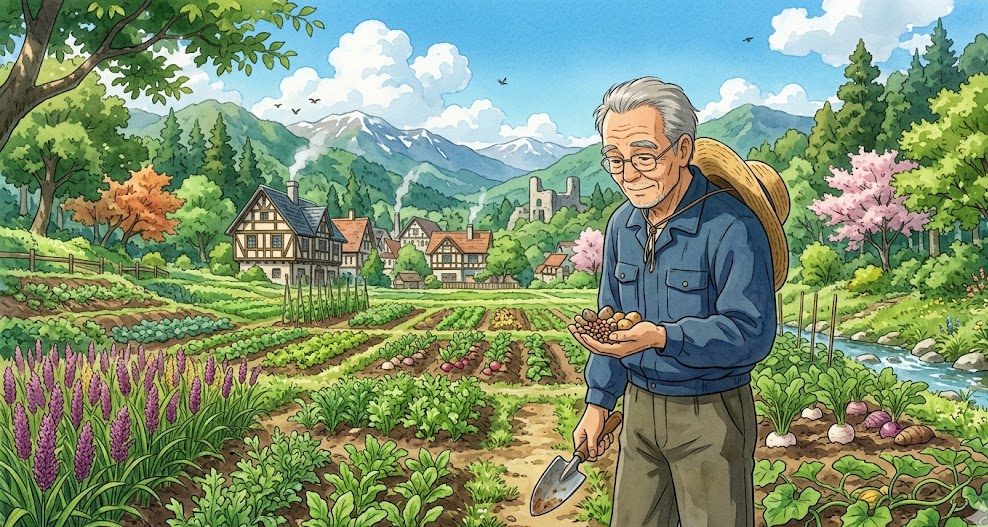
In an era of industrial-scale agriculture and global supply chain volatility, many modern growers are looking backward to move forward. By blending the resilience of “forgotten” heirloom crops with the efficiency of modern micro-farming and the security of survival-oriented homesteading, you can create a food system that is not only highly productive but also uniquely self-reliant.
This guide explores how to integrate these three pillars to build a farm that is climate-resilient, nutritionally dense, and economically sustainable.
1. The Power of Forgotten Crops (Opportunity Crops)
For decades, global agriculture has relied on a narrow “big three”—maize, rice, and wheat. This reliance leaves our food systems vulnerable. “Forgotten crops”—also known as underutilized or opportunity crops—are those that have been pushed to the margins despite their superior nutritional profiles and climate resilience.
Why Bring Them Back?
- Climate Resilience: Many forgotten crops, like sorghum, pearl millet, and certain varieties of pulses, are naturally drought-tolerant and heat-resistant.
- Nutritional Density: Crops like finger millet, amaranth, and buckwheat offer higher concentrations of protein, iron, zinc, and calcium compared to standard staples.
- Biodiversity: Reintroducing these crops disrupts pest cycles and improves soil health, acting as a natural defense against the diseases that plague monoculture fields.
Examples for Your Farm
- Legumes: Bambara peanuts and cowpeas are nitrogen-fixing powerhouses that thrive in poor soil.
- Grains: Teff, fonio, and amaranth provide gluten-free, nutrient-rich alternatives that are gaining popularity in health-conscious markets.
- Leafy Greens: Incorporating wild or “neglected” edible greens like sowthistle or amaranth leaves can provide a reliable harvest even during extreme weather.
2. Micro Farming: Maximizing Yield in Small Spaces
You do not need hundreds of acres to be a commercial farmer. Micro farming is the practice of intensive production on a small footprint (often less than half an acre). It is the most accessible entry point for urban and semi-urban entrepreneurs.
The Microgreen Model
Microgreens—the seedlings of herbs and vegetables harvested at the first true-leaf stage—are the gold standard for micro-farming.
- High Profitability: With a harvest cycle of just 7–21 days, you can achieve multiple turnovers per month.
- Minimal Investment: You don’t need tractors or heavy equipment. A simple vertical shelf system with LED lights or natural sunlight in a well-ventilated space is enough to start.
- Direct-to-Market: High-end restaurants and health-conscious consumers are willing to pay a premium for fresh, local, and nutritionally superior microgreens.
Techniques for Efficiency
- Vertical Stacking: Utilize vertical space to multiply your growing area four to five times.
- Succession Planting: Never leave a tray or a bed empty. As soon as one crop is harvested, another should be ready to sow.
- Controlled Environment: By growing in trays or containers, you maintain total control over soil quality and water inputs, drastically reducing the risk of pests.
3. Survival Farming: Building a Living Insurance Policy
While micro farming is about commercial efficiency, survival farming is about resilience. It is the practice of designing a landscape that provides long-term food security for your household.
Core Principles of Survival Farming
- Prioritize Staples: Dedicate your space to calorie-dense crops that store well. Potatoes, squash, sweetcorn, and beans should be the foundation of your survival garden.
- The Perennial Advantage: Unlike annuals that require replanting every season, perennials (fruit trees, berries, asparagus) provide a “set it and forget it” yield that becomes more productive every year.
- Soil as Capital: A survival garden is only as good as its soil. Prioritize no-dig gardening and heavy composting to build microbial life. Healthy soil holds water longer, making your farm more resistant to drought.
- Preservation Skills: Food security doesn’t stop at the harvest. Mastering canning, drying, and root cellaring ensures that your summer abundance feeds you through the winter.
4. The Integrated “Triple-System” Approach
The magic happens when you combine these three methods into one cohesive farm strategy:
- Use Micro Farming for Cash Flow: Grow high-value microgreens to fund your farm’s expansion. This provides the liquid capital needed for better tools, fencing, or irrigation.
- Use Forgotten Crops for Resilience: Introduce heirloom grains and pulses to ensure your farm remains productive during “bad” weather years when sensitive cash crops might fail.
- Use Survival Techniques for Security: Establish fruit trees and perennial beds around the perimeter of your micro-farm. This creates a permanent, low-maintenance food source that acts as a hedge against market instability.
Example Farm Layout
- Vertical Racks (Indoor/Porch): High-turnover microgreens for immediate weekly revenue.
- Raised Beds (Open Area): Rotating “forgotten” crops (e.g., amaranth or local beans) for soil health and personal consumption.
- Perimeter/Edges: Perennial fruit bushes and medicinal herbs that protect the inner beds from wind and pests.
Conclusion
Modern farming is not just about scale; it is about intelligence, diversity, and stewardship. By leveraging forgotten crops to combat climate uncertainty, micro farming to generate immediate profit, and survival farming to ensure long-term independence, you create an agricultural business model that is robust, profitable, and truly sustainable.
Start small, keep your records precise, and focus on crops that serve both your market and your soil. When you cultivate a diverse, intensive, and resilient ecosystem, you aren’t just growing food—you are building a future-proof lifestyle.