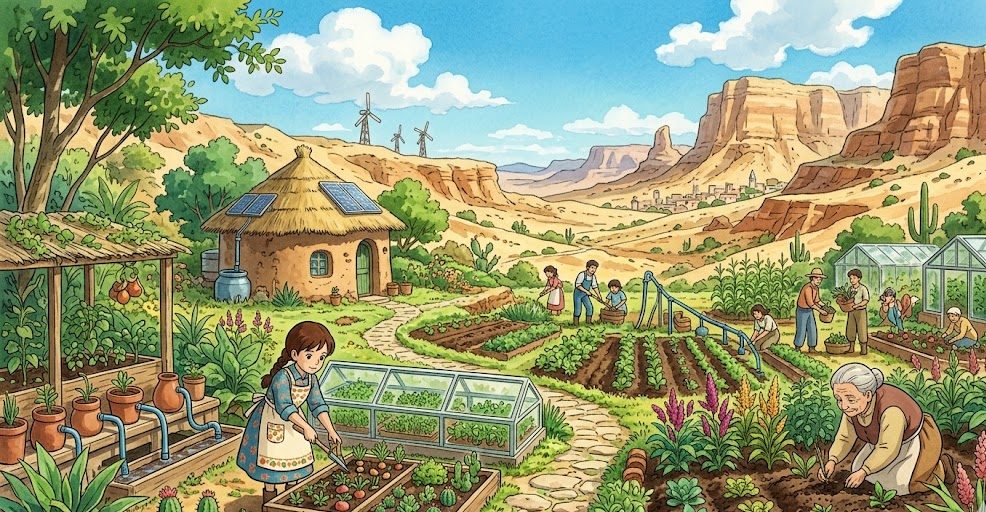
Modern agriculture is often dominated by a handful of high-yield commodity crops. However, for the innovative farmer, the future lies in “niche” agriculture. By focusing on specialized environments and unique crop varieties, you can tap into high-value markets, reduce competition, and build a farm that is resilient to climate change.
This guide explores the untapped potential of niche farming—from the arid landscapes of desert agriculture to the high-value output of micro-crops and the nutritional resilience of forgotten varieties.
1. Desert Farming: Turning Aridity into Opportunity
Contrary to popular belief, deserts are not wastelands; they are underutilized ecosystems with intense solar potential. With the right techniques, desert farming can be incredibly productive.
Strategic Techniques
- Xeriscaping and Drought-Resistant Crops: Focus on species like cactus (prickly pear), agave, and date palms. These plants have evolved to store water and thrive in high-heat, low-moisture environments.
- Precision Irrigation: In desert environments, every drop counts. Sub-surface drip irrigation is essential to deliver water directly to the root zone, preventing evaporation and reducing water waste by up to 50%.
- Shade Management: Use semi-transparent shade nets to reduce the intensity of UV radiation during peak hours, which helps prevent plant stress and heat-induced wilting.
2. Micro-Farming: High Value in Small Spaces
Micro-farming focuses on maximizing production per square foot. It is the ideal approach for urban farmers or those with limited land who want to generate significant income without needing hundreds of acres.
The Micro-Crop Advantage
- Microgreens: These are young vegetable greens harvested just after the cotyledon leaves have developed. They are prized by high-end restaurants and health-conscious consumers for their intense flavor and nutrient density. The best part? The cycle from seed to harvest is often as short as 7 to 14 days.
- Vertical Stacking: Utilize vertical hydroponic or aeroponic systems to grow multiple layers of crops in a single footprint. This significantly increases your output capacity.
- Market Targeting: Because micro-crops are perishable and fragile, they are not suited for long-distance transport. This gives local micro-farmers a distinct advantage by providing fresh, premium products directly to local chefs and specialty grocery stores.
3. Survival Crops: Resilience in Challenging Times
Survival crops are the “insurance policy” of the agricultural world. These are plants that are highly adaptable, nutritionally dense, and can survive neglect or adverse weather conditions, making them essential for food security.
Why Grow Survival Crops?
- Low Maintenance: These crops typically require fewer fertilizers and pesticides, making them ideal for organic or low-input farming models.
- Nutritional Stability: Crops like sweet potatoes, cassava, and amaranth provide consistent energy and essential nutrients even when other crops fail.
- Market Trends: As global awareness of food security rises, there is a growing niche market for “resilient foods.” Marketing your produce as sustainable, hardy, and chemical-free can attract a loyal customer base concerned about food supply stability.
4. Reviving Forgotten Crops: The Heirloom Renaissance
“Forgotten” or “underutilized” crops—such as finger millet (ragi), buckwheat, teff, or ancient varieties of legumes—are gaining popularity as consumers seek healthier, more diverse diets.
Strategies for Reintroduction
- Tapping into Health Trends: Many forgotten crops are naturally gluten-free, high in protein, or rich in antioxidants. Positioning these products as “superfoods” can help you command premium prices compared to standard grains.
- Storytelling and Marketing: When selling forgotten crops, you are selling a story. Highlight the history, the cultural significance, and the environmental benefits of growing these traditional varieties.
- Seed Preservation: By cultivating heirloom and forgotten varieties, you play a vital role in biodiversity. Join seed-sharing networks to ensure these valuable genetics remain available for future generations.
Integrating Niche Farming into Your Strategy
To be successful in niche farming, you must move away from the “one-size-fits-all” approach. Here is how to execute effectively:
- Start Small: Don’t overhaul your entire farm at once. Dedicate a small “test plot” to a specific niche crop. Measure your yields, track your costs, and identify your local demand before scaling up.
- Understand Your Local Market: Niche farming is highly location-dependent. Research what is missing in your local grocery stores or what local chefs are struggling to source.
- Prioritize Soil Health: Even in desert or vertical setups, the foundation is the medium. Whether you are using traditional soil or specialized nutrient solutions, invest in testing and quality to ensure the highest potential for your crops.
- Embrace Education: Niche crops often come with unique growing requirements. Stay updated on the latest research regarding specific varieties—join agricultural forums, read academic papers, and connect with other specialty farmers.
Conclusion
Niche farming offers a pathway to profitability that is less susceptible to the volatility of large-scale commodity markets. By focusing on the unique advantages of desert environments, the space-efficiency of micro-farming, the resilience of survival crops, and the growing demand for forgotten traditional varieties, you position your farm as a specialized, high-value player in the agricultural sector.
Success in this field requires patience, curiosity, and a willingness to try what others haven’t. Whether you are aiming to increase your per-acre profit or create a more sustainable farming model, the future of agriculture belongs to those willing to cultivate the extraordinary.
Are you ready to experiment with a niche crop? Choose one variety this season that is underrepresented in your area, and focus your efforts on producing the highest quality harvest possible.