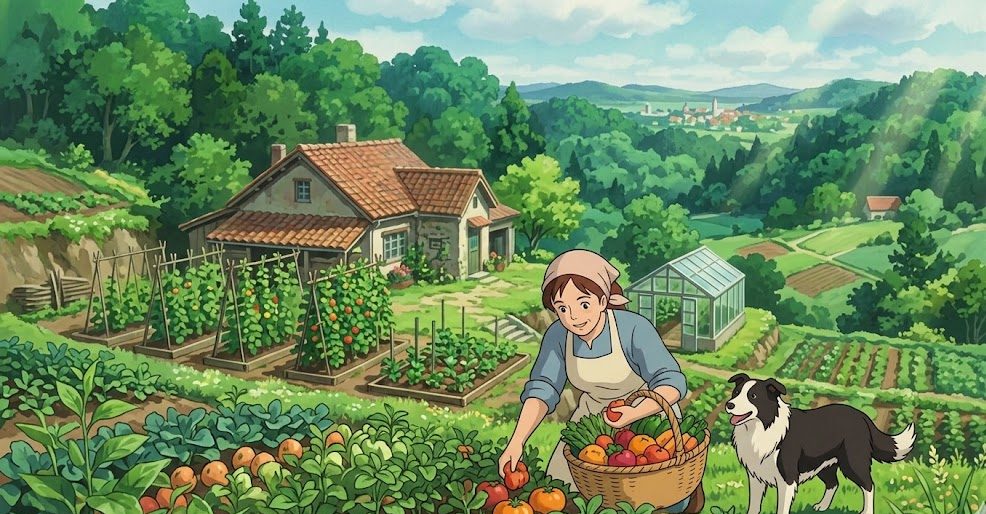
The long-held belief that “bigger is better” in agriculture is being dismantled by a new generation of growers. As land prices soar and the demand for locally grown, organic produce skyrockets, micro farming has emerged as a powerhouse of productivity. By focusing on every square inch of soil, a micro-farmer can often generate more net profit on two acres than a conventional farmer does on fifty.
The secret isn’t just hard work; it’s strategic intensification. Here is an in-depth guide to the strategies that turn small plots into high-revenue engines.
1. High-Value Crop Selection
On a small plot, you cannot afford to grow low-margin commodities like corn or wheat. Space is your most precious resource, so you must prioritize crops with a high “price-per-pound” and a short “days-to-maturity” cycle.
The “Quick-Turn” Strategy
Focus on crops that can be harvested within 30 to 60 days. This allows for succession planting, where you harvest one crop and immediately plant another in the same bed.
- Microgreens: The undisputed king of micro-farming. They grow in trays, can be stacked vertically, and are ready in 7–14 days.
- Salad Greens: High-quality arugula, spinach, and “cut-and-come-again” lettuce mixes have high turnover and consistent demand.
- Gourmet Mushrooms: Using vertical bags of substrate, oyster and lion’s mane mushrooms produce incredible yields in tiny, climate-controlled footprints.
Specialty and Heirloom Varieties
Don’t compete with supermarkets on price; compete on flavor and variety. Rare heirloom tomatoes, purple carrots, or edible flowers command premium prices from local chefs and health-conscious consumers.
2. Vertical Integration and Stacking
When you run out of horizontal space, look up. Vertical farming isn’t just for high-tech indoor labs; it’s a vital strategy for the outdoor micro-farmer as well.
- Trellising: Use “A-frames” or string trellises for cucumbers, pole beans, and indeterminate tomatoes. This keeps the fruit off the ground (reducing rot) and frees up the soil below for shade-loving crops like radishes or lettuce.
- Multi-Story Cropping: This involves mimicking a natural forest. You might have fruit trees (overstory), berry bushes (mid-story), and herbs/vegetables (ground cover) all occupying the same vertical column of space.
- Shelving Systems: For indoor or greenhouse setups, using LED-lit racks for microgreens or starts can increase your growing area by 400% to 500%.
3. Bio-Intensive Soil Management
In large-scale farming, soil is often treated as a medium to hold plants while chemicals do the work. In micro-farming, the soil is your primary asset.
The “No-Till” Method
By avoiding heavy plowing, you preserve the soil’s natural structure and the complex network of beneficial fungi and bacteria.
- Permanent Beds: Design fixed-width beds (usually 30 inches wide) that you never walk on. This prevents soil compaction, meaning roots can grow deeper and faster without resistance.
- Compost-Centric Fertility: Instead of synthetic fertilizers, use high-quality compost. It acts as a slow-release nutrient source and improves water retention, which is critical during dry spells.
High-Density Spacing
Standard agricultural spacing is designed for tractor tires. On a micro-farm, you use offset or hexagonal spacing. By planting closer together, the leaves of the plants touch at maturity, creating a “living mulch” that suppresses weeds and keeps moisture in the soil.
4. Season Extension: Farming the “Shoulders”
To maximize profit, you must produce when others cannot. The “shoulder seasons” (early spring and late autumn) are when prices are highest.
- Caterpillar Tunnels and Hoophouses: These simple, low-cost plastic structures can raise the temperature just enough to start your season a month early and end it two months late.
- Hardy Cultivars: Choose seeds specifically bred for cold tolerance. Some kale and spinach varieties can survive under snow, allowing you to have a “fresh” product for market when competitors have empty stalls.
5. Lean Operations and Smart Tech
Efficiency on a small scale is about reducing “waste motion.” If you spend twenty minutes looking for a tool, you’ve lost your profit margin for the day.
- The Lean Toolset: Invest in high-efficiency hand tools like the broadfork (for aeration), the tilther (for bed prep), and precision seeders (like the Jang or Earthway). These allow one person to do the work of four.
- Automation: Simple irrigation timers and soil moisture sensors ensure your plants never experience “growth checks” due to thirst, all while you focus on harvesting or sales.
6. Direct-to-Consumer Marketing (The Profit Multiplier)
The biggest mistake a micro-farmer can make is selling to a wholesaler. Wholesalers take a massive cut. To maximize land efficiency, you must also maximize price efficiency.
| Sales Channel | Profit Margin | Description |
|---|---|---|
| CSA (Subscription) | High | Customers pay upfront for a season’s worth of produce, providing the farmer with immediate cash flow. |
| Farmers Markets | High | You get the full retail price and build a loyal brand following. |
| Restaurant Sales | Medium-High | Chefs value quality and consistency; they are often willing to pay a premium for “harvested this morning” quality. |
Export to Sheets
7. The Economics of the “Micro” Mindset
To be successful, you must treat your farm like a laboratory. Calculate your Revenue per Bed. If a bed of carrots earns $300 over 70 days, but a bed of baby spicy greens earns $250 in only 21 days, the greens are the more “efficient” use of land because you can grow three crops of greens in the time it takes to grow one crop of carrots.
Key Takeaway: Efficiency isn’t about working harder; it’s about making sure every square foot of your land is “employed” 365 days a year.
Conclusion
Micro farming is the ultimate marriage of biology and business. By focusing on high-value crops, vertical space, soil health, and direct marketing, you can bypass the “debt trap” of industrial agriculture. You don’t need hundreds of acres to be a successful farmer; you simply need a deep understanding of your land and the discipline to use every inch of it wisely.
In the world of modern agriculture, the smallest plots often yield the biggest rewards.