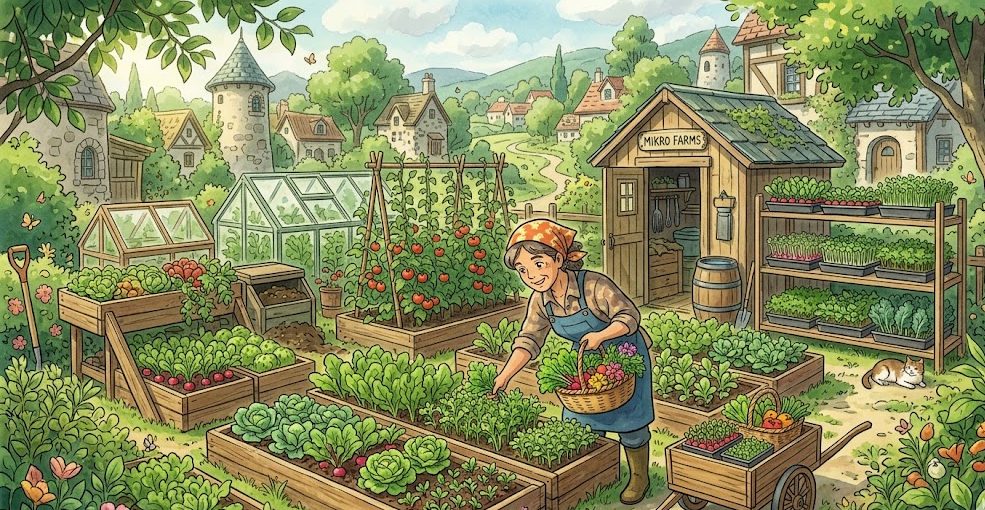
The agricultural narrative is shifting. For decades, “bigger was better,” but in 2026, the most profitable farmers are those who think small. Commercial Micro Farming—the practice of growing high-value crops on small plots (ranging from a backyard to a few thousand square feet)—is becoming the go-to model for urban and suburban entrepreneurs.
By focusing on high-turnover crops and vertical space, micro-farmers can often generate more net profit per square foot than traditional industrial farms. Here is how you can master the art of small-space agriculture and turn a tiny plot into a high-yield business.
1. The “High-Value” Crop Selection Strategy
In a small space, you cannot compete with commodity crops like wheat or rice. Your success depends on growing “Niche Winners”—crops that are expensive to buy but relatively fast to grow.
- Microgreens: These are the undisputed kings of micro-farming. They grow in trays, can be stacked vertically, and are ready for harvest in 7–14 days.
- Gourmet Mushrooms: Varieties like Oyster or Shiitake grow on vertical “fruiting walls” or in hanging bags. They don’t require sunlight, making them perfect for indoor micro-farms or shaded areas.
- High-End Herbs: Fresh basil, cilantro, and mint have a high turnover and are constantly in demand by local cafes and restaurants.
- Specialty Peppers: Growing “super-hot” or rare heirloom peppers allows you to sell to a specific niche of foodies and hot sauce makers who are willing to pay a premium.
2. Verticalization: Farming in 3D
When you run out of floor space, the only way to go is up. Vertical farming is the secret weapon of the high-yield micro-farmer.
- A-Frame Systems: Ideal for outdoor or greenhouse setups, A-frame hydroponic or soil-based racks double your planting surface area.
- Tower Gardens: Aeroponic towers allow you to grow up to 30–50 plants in a 3-square-foot radius.
- Shelving Units with LED Grow Lights: For indoor setups, heavy-duty shelving units combined with full-spectrum LED lights allow you to stack 4 or 5 “layers” of crops on top of each other.
3. Precision Management & Automation
In a micro-farm, every inch counts. You cannot afford a “bad batch.” This is where smart technology comes in.
- Automated Drip Irrigation: Even in a small backyard, hand-watering is inefficient. Automated timers ensure your plants get a precise “sip” of water at the exact right time, reducing waste and preventing plant stress.
- Smart Climate Sensors: Use low-cost IoT sensors to monitor temperature and humidity. If a heatwave hits, you get an alert on your phone to turn on your misting system or open the greenhouse vents.
- Succession Planting: This is a scheduling technique where you plant new seeds every week. This ensures a consistent, weekly harvest rather than one massive harvest that you can’t sell all at once.
4. The “Micro” Business Model: Selling Your Story
Profit margins in micro-farming aren’t just about the veg; they are about the brand.
- Hyper-Local Marketing: Sell your produce as “Grown within 5 miles of your house.” Consumers in 2026 are willing to pay more for food that didn’t travel on a truck for three days.
- Subscription Boxes (CSA): Create a weekly “Micro-Farm Box” for 20 local families. This provides you with guaranteed, upfront cash flow every month.
- Direct-to-Chef: Skip the wholesalers. Build direct relationships with local chefs who value freshness. A chef will pay a premium for microgreens that were harvested just two hours before service.
5. Economic Breakdown: The Small Space Advantage
| Farm Type | Space Required | Potential Annual Revenue | Key Advantage |
| Indoor Microgreens | 200 Sq. Ft. | ₹10L – ₹15L | Year-round harvest, high demand. |
| Vertical Mushroom Farm | 500 Sq. Ft. | ₹8L – ₹12L | Low light requirement, high ROI. |
| Backyard Market Garden | 1/8th Acre | ₹5L – ₹9L | Low overhead, great for agritourism. |
Conclusion: Small Plot, Big Future
Commercial micro-farming is the perfect entry point for the modern agritech entrepreneur. It allows you to start with low capital, test your market quickly, and scale up by adding more “layers” rather than more land.
By combining vertical growing techniques with high-value crop selection, you can build a resilient, profitable, and sustainable business in the palm of your hand. In the future of food, the smallest farms are often the ones making the biggest impact.
Are you ready to turn your backyard or balcony into a revenue stream? Tell us which crop you want to start with in the comments!