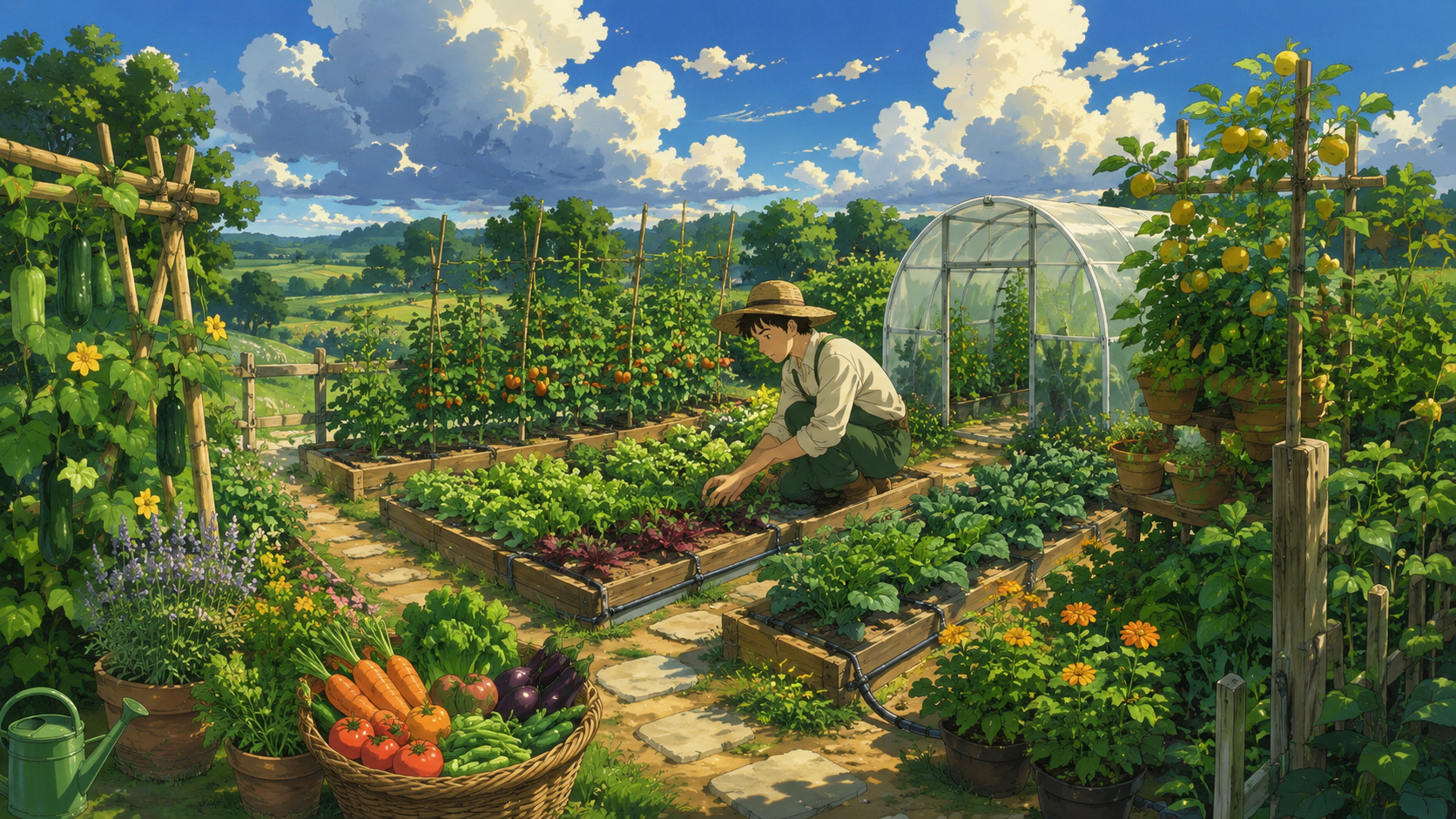
You do not need hundreds of acres and heavy machinery to build a highly productive, profitable farm. In fact, some of the most successful modern agricultural businesses operate on less than a single acre of land. For years, the agricultural industry pushed the idea that bigger is always better. However, rising land costs and changing consumer habits have proven that working smarter easily beats having more space.
Micro farming is the ultimate solution for growers with limited land. It is an intensive, highly focused approach to agriculture where every square foot of soil is managed carefully to maximize output. Instead of growing large fields of low-value commodity crops, micro farmers focus on specialized, high-demand products that grow quickly and sell for premium prices.
If you have a large backyard, a rented vacant lot, or a small field, you have exactly what it takes to start. This comprehensive guide covers the most profitable micro farming ideas, the strategies you need to maximize your small space, and how to build a sustainable agricultural business from the ground up.
The Most Profitable Micro Farming Ideas
When farming on a small scale, you cannot compete on volume. You must compete on quality and speed. The best micro farming crops have a short growing cycle and a high market value.
Gourmet Mushroom Cultivation
Mushrooms are incredibly space-efficient because they do not require deep soil or direct sunlight. They can be grown vertically on shelving units inside an old barn, a spare garage, or a dedicated growing tent. Gourmet varieties like Oyster, Shiitake, and Lion’s Mane grow incredibly fast and command high prices at local restaurants and weekend farmers’ markets.
Microgreens and Shoots
Microgreens are the young seedlings of edible vegetables and herbs, harvested just a few weeks after germination. They are packed with intense flavor and nutrients. Because they are harvested so early, you can grow a complete crop in just 10 to 14 days. A simple rack system with basic grow lights can produce hundreds of dollars worth of microgreens per square meter every single month.
High-Density Cut Flowers
While growing vegetables is the standard route, cut flowers are arguably the highest-grossing legal crop per square foot. Varieties like zinnias, dahlias, and sunflowers grow densely and regenerate multiple blooms after cutting. A small, well-managed patch of cut flowers can easily supply a season’s worth of profitable bouquets for local florists, weddings, and farm stands.
Step-by-Step Guide: Setting Up Your Micro Farm
Starting a micro farm requires more careful planning than standard farming because you cannot afford to waste any space. Follow these steps to set up your land for maximum production.
Step 1: Test and Amend Your Soil In micro farming, your soil will be worked intensively. It must be incredibly rich. Send a sample to a local lab to test for major nutrients and organic matter. Instead of relying on chemical fertilizers, build permanent, raised planting beds heavily amended with high-quality compost.
Step 2: Map Your Space Strategically Draw a strict map of your growing area. Plan where your water lines will run, where your washing and packing station will be, and how you will walk between the beds without stepping on the soil. Keep the beds narrow—usually around 30 inches wide—so you can easily reach the center from either side without ever compacting the dirt.
Step 3: Implement Succession Planting Never leave a bed empty. Succession planting means having your next batch of seedlings already growing in trays while the current crop is in the ground. The exact day you harvest a row of lettuce, you immediately clear the bed, add a layer of fresh compost, and transplant the new seedlings.
Step 4: Establish Your Sales Channels Early Do not plant a single seed until you know exactly who is going to buy your harvest. Visit local restaurants, speak to independent grocery store owners, and sign up for local community markets. Growing the crop is only half the business; selling it efficiently is where the profit is made.
Practical Tips You Can Apply Right Now
- Grow upward, not outward: Whenever possible, use vertical space. Train vining crops like cucumbers, small melons, and tomatoes up sturdy trellises. This keeps the fruit clean, prevents soil-borne diseases, and frees up the ground below for fast-growing greens.
- Standardize your tools: Make all your planting beds the exact same length and width. This allows you to use standardized irrigation lines, floating row covers, and harvesting tools without having to adjust or measure them for different sections of the farm.
- Automate your irrigation: Hand-watering is a massive waste of a micro farmer’s time. Install a simple drip irrigation system connected to an inexpensive battery-operated timer. This ensures your crops get consistent moisture directly at the root zone, exactly when they need it.
- Focus on high-value leafy greens: Salanova lettuce, arugula, and baby spinach grow quickly and can often be harvested multiple times from a single planting. They are lightweight, highly sought after, and provide an excellent return on investment.
Real-Life Example: The Urban Market Garden
Consider a practical example of a farmer who transformed a standard quarter-acre suburban lawn into a highly profitable micro farm. Instead of planting space-hungry crops like corn or pumpkins, which take months to mature and yield very little per square foot, he focused entirely on quick-turnover salad greens and radishes.
He built standardized, 50-foot permanent raised beds. Using intensive spacing, he planted his radishes just a few inches apart. Because radishes mature in just under 30 days, he was able to grow and harvest four complete crops from the exact same bed within a single spring and summer season.
He washed and packaged the greens and radishes immediately after harvesting, selling them directly to a network of five local restaurants that valued same-day freshness. By utilizing succession planting and focusing strictly on high-value, fast-growing crops, this grower generated a full-time income from a piece of land smaller than a standard parking lot.
Common Mistakes to Avoid
Even highly enthusiastic beginners can fail if they fall into these common traps.
Growing Too Many Different Crops When you first look at a seed catalog, it is tempting to order thirty different vegetables. This is a massive mistake. Managing thirty different watering schedules, pest issues, and harvest times on a small plot will lead to burnout. Pick three to five highly profitable crops, master them completely, and establish a strong market presence before diversifying.
Ignoring Post-Harvest Handling Many new growers spend all their energy growing the crop and forget to plan for the harvest. If you do not have a clean, shaded area to wash your produce and a commercial refrigerator to cool it down instantly, your beautiful crops will wilt and rot before you can ever sell them.
Stepping on the Growing Beds In micro farming, soil compaction is your worst enemy. Never step on your planting beds. When you compress the soil, you crush the air pockets that roots and beneficial microbes need to survive. Always stay on the designated walking paths.
Conclusion
Micro farming proves that you do not need vast open fields to be a highly successful agricultural producer. It is a business model built on efficiency, high-quality soil management, and strategic crop selection. By choosing the right high-value crops and managing every square foot of your space with intention, you can generate an impressive yield from even the smallest plot of land.
The secret is to start small. Build your soil structure, master a few fast-growing crops, and secure your local buyers. With dedication, sharp planning, and a commitment to intensive farming practices, your small piece of land can easily outperform farms ten times its size.
Frequently Asked Questions (FAQ)
1. How much land is considered a micro farm? A micro farm is typically defined as any commercial farming operation situated on less than five acres of land. However, many highly profitable and successful micro farms operate on a quarter of an acre, or even less, particularly in urban and suburban environments.
2. Is micro farming actually profitable? Yes, it can be highly profitable. Because the overhead costs (land, heavy tractors, large-scale irrigation) are extremely low, the profit margins are much wider. By focusing on direct-to-consumer sales and high-value crops, micro farmers keep a much larger percentage of their total revenue.
3. What is the fastest crop to grow for quick income? Microgreens are the fastest agricultural crop you can grow. Varieties like radish, broccoli, and sunflower shoots go from raw seed to harvestable, sellable product in just 10 to 14 days, providing an incredibly fast return on your initial seed investment.
4. Do I need a tractor to start a micro farm? No. Micro farming relies on “biointensive” human-scale techniques. Broadforks, simple push seeders, and specialized hand hoes are the primary tools. Heavy tractors actually compress the soil and require wide turning spaces that micro farms simply cannot spare.
5. How do I maintain soil fertility if I am planting constantly? Intensive planting drains soil nutrients rapidly. You must replenish the earth continuously. Micro farmers maintain fertility by applying thick layers of high-quality organic compost between every single crop cycle, ensuring the soil biology remains active and fully fed year-round.