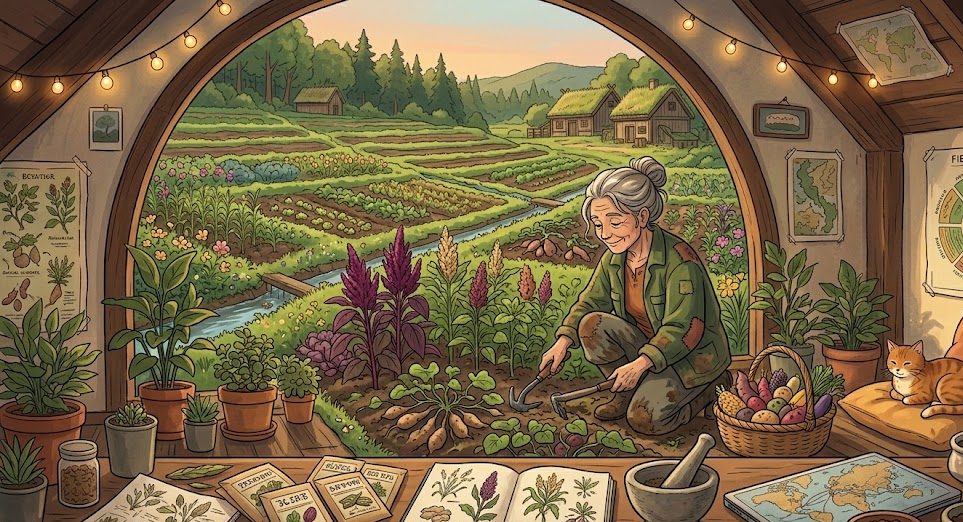
For the past century, global agriculture has narrowed its focus to just a handful of major staples: corn, wheat, soy, and rice. While these crops have played a massive role in feeding a growing population, this reliance has come at a cost. Our food systems have become vulnerable, our diets less diverse, and our farmlands increasingly reliant on heavy chemical inputs. Meanwhile, thousands of ancient, “forgotten” crops—plants that fed civilizations for millennia—have been pushed to the edges of our fields and memories.
These resilient crops, such as finger millet, amaranth, teff, and various heritage beans, are the unsung heroes of agriculture. They are naturally drought-resistant, highly nutritious, and often thrive in soil where modern hybrids fail. Bringing these forgotten crops back into cultivation is not just a nostalgic pursuit; it is a vital strategy for building sustainable, climate-resilient farming systems. Let us explore why these crops deserve a comeback and how you can successfully incorporate them into your own farming or gardening plan.
The Resilience of Ancient Varieties
Why were these crops abandoned in the first place? Often, it was not because they were less healthy or tasty, but because they did not fit the industrial model of farming. Some have smaller seeds that are harder to harvest by machine, or they mature at different rates than standardized varieties.
However, nature’s design is often superior to modern shortcuts. Many forgotten crops have deep, aggressive root systems that allow them to scavenge for nutrients in poor-quality soil, meaning they require significantly less synthetic fertilizer. Their natural resistance to local pests also means you can often produce a healthy harvest without reaching for heavy chemical pesticides. By choosing these crops, you are essentially partnering with plants that have been evolving to handle nature’s challenges for thousands of years.
Practical Tips for Growing Forgotten Crops
Adding ancient varieties to your fields requires a shift in how you view “efficiency.” It is less about maximizing yield through chemicals and more about maximizing stability through diversity. Here are practical ways to integrate these crops into your system.
1. Start with Local Adaptations Forgotten crops often have strong regional histories. Before buying seeds from halfway across the world, reach out to local agricultural heritage organizations or farmers’ markets to find varieties that have already proven they can grow well in your specific climate. A variety that thrived in your grandparents’ garden will almost certainly perform better than a generic, mass-marketed seed.
2. Embrace Diverse Planting Ancient crops were rarely grown in vast, uniform monocultures. They thrive in “polycultures,” where different plants support each other. For example, growing amaranth alongside beans and maize creates a mutually beneficial environment. The amaranth can provide shade for the soil, the beans add nitrogen to the dirt, and the maize provides a natural structure for the other plants to climb.
3. Focus on Soil Regeneration Because these crops are often “tougher,” many beginners assume they don’t need good soil. This is a mistake. While they are resilient, they produce their best nutrient density when grown in soil that is alive with microbial activity. Use compost and organic mulch to keep the earth healthy, and avoid heavy mechanical tilling, which destroys the delicate soil structures that these deep-rooted plants love.
4. Plan for Harvest and Processing This is where many beginners get stuck. Forgotten crops often require different post-harvest handling than modern staples. You might need to dry them differently or use specialized cleaning methods to remove husks. Research the harvest requirements before you plant the first seed so you are not caught off guard when it is time to bring the crop in.
A Real-Life Example: The Millet Revival
Take the case of a smallholder farmer in an arid region where wheat yields had been declining for years due to erratic rainfall and increasing temperatures. Year after year, he spent more on irrigation and fertilizer, only to watch his crop fail.
He decided to dedicate a portion of his land to a forgotten local variety of finger millet. Unlike the wheat, the millet required very little supplemental water. He planted it at the start of the rainy season, and while the wheat struggled to stay green, the millet thrived, developing deep roots that kept it productive even through a mid-season dry spell.
At the end of the year, he didn’t have the same high-volume yield as a successful wheat crop, but he had a much higher profit. He spent almost nothing on chemical inputs or extra water. Because the crop was “forgotten” but highly nutritious, he was able to sell it at a premium price to health-conscious local markets. He didn’t just save his farm; he diversified his income and improved the quality of his soil for future seasons.
Step-by-Step Guide: Planting Your First Ancient Bean Crop
If you want to start small, heritage beans are an excellent entry point. They are easy to manage, improve your soil, and are incredibly versatile in the kitchen.
Step 1: Choose Your Variety. Select a pole-bean or bush-bean variety that has a local heritage. Look for beans that are described as “heirloom” or “landrace” to ensure you are getting a plant with natural genetic diversity.
Step 2: Soil Preparation. Clear a small patch of ground. Add a generous amount of finished compost. Do not use chemical fertilizers; the bean plants will naturally fix nitrogen in the soil themselves.
Step 3: Timing the Planting. Ensure the soil has warmed up. Ancient bean varieties are often more sensitive to late-spring frost than modern commercial hybrids. Wait until the danger of frost is fully passed.
Step 4: Planting and Spacing. Plant your seeds about an inch deep. If using pole beans, set up sturdy bamboo or wooden poles before you plant the seeds so you don’t disturb the roots later.
Step 5: Watering and Care. Water gently until germination. Once the plants are established, they are remarkably self-sufficient. Only water if the soil becomes bone-dry, as these varieties often prefer a slightly drier cycle than modern, pampered crops.
Step 6: Harvesting. Watch the pods. Unlike modern snap beans, heritage beans are often grown to full maturity. Wait until the pods turn dry and brittle before harvesting. Shell the beans, dry them completely in the shade, and store them in airtight jars.
Common Mistakes to Avoid
The journey back to ancient farming is rewarding, but it is easy to stumble. Avoid these common pitfalls:
- Over-fertilizing: Modern crops are bred to be “heavy feeders” that suck up massive amounts of chemical nitrogen. Forgotten crops are not. If you treat them with modern chemical fertilizers, you will often end up with lush green leaves but very little fruit or grain.
- Underestimating Drying Times: Many forgotten grains and legumes have thicker hulls than modern commercial varieties. If you harvest them and store them even slightly damp, they will mold within days. Give them plenty of time to dry in a well-ventilated space.
- Ignoring Seed Saving: The true value of a forgotten crop is its ability to adapt to your specific land over generations. If you buy new seeds every year, you are losing that adaptation. Save the best-looking seeds from your harvest to plant the following year. This is how you develop a crop that is perfectly suited to your farm.
Conclusion
The rediscovery of forgotten crops is a vital step toward a more stable food future. These plants remind us that agricultural success does not have to come at the expense of our soil, our water, or our health. They offer a path toward farming that is more naturally productive, less expensive to maintain, and deeply connected to the heritage of our land.
Whether you are a commercial grower looking for drought-resistant varieties or a gardener looking to diversify your patch, these ancient plants have much to offer. By planting these seeds, you are doing more than just growing food—you are helping to preserve a precious biological legacy that has supported humanity for centuries. Start small, be patient, and watch as your land begins to thrive in new, healthier ways.
Frequently Asked Questions (FAQs)
Q: Why are forgotten crops usually more expensive in the market? A: They are often more expensive because they are grown on a smaller scale and frequently require more hand-labor to harvest and process compared to highly mechanized, industrial corn or wheat. However, their superior nutritional density and unique flavor profiles provide excellent value to consumers.
Q: Are ancient grains always gluten-free? A: Not all of them. Some ancient grains like einkorn, emmer, and spelt are forms of ancient wheat and do contain gluten. However, others like amaranth, millet, teff, and quinoa are naturally gluten-free. Always check the specific variety if you have dietary restrictions.
Q: Can I grow forgotten crops in an urban garden? A: Absolutely. In fact, many heritage varieties, such as bush beans or specific types of small-seed millet, are very well-suited to container gardening or small raised beds. Their resilience makes them easier to manage in the variable microclimates of an urban setting.
Q: How do I know if a seed is truly “heritage” or “forgotten”? A: Look for seed sellers that specialize in heirloom varieties. They will usually provide the historical background of the seed. Avoid seeds labeled as “F1 Hybrids,” as these are modern creations designed for mass-market farming and will not produce true-to-type seeds if you try to save them for the next year.
Q: Will switching to forgotten crops lower my total harvest volume? A: It might initially seem like a lower volume compared to high-input industrial hybrids. However, because you are spending significantly less on irrigation, chemical fertilizers, and pesticides, the net profitability of the crop is often higher. You are trading raw volume for stability and reduced overhead costs.