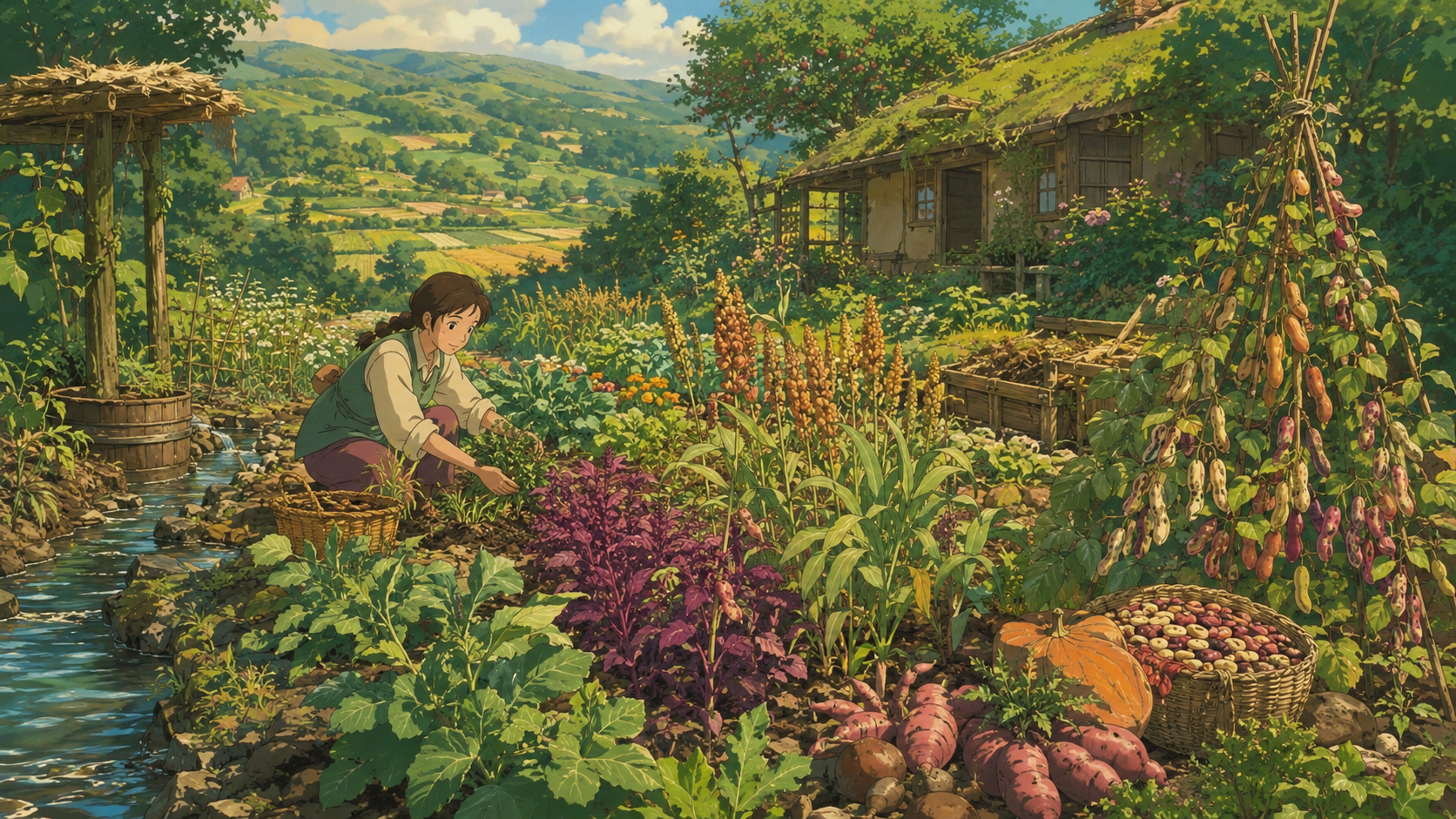
Today, roughly 75% of the world’s food supply comes from just twelve plants and five animal species. This intense reliance on major commodity crops like corn, wheat, rice, and soybeans has created a fragile agricultural system. When severe droughts hit or new pests emerge, vast monoculture fields often fail, leaving farmers with devastating financial losses.
However, long before modern commercial agriculture took over, our farming ancestors cultivated a rich, diverse variety of resilient plants. These “forgotten crops”—often referred to as orphan, ancient, or heritage crops—are currently experiencing a massive revival. Rediscovering these seeds is not merely about preserving agricultural history. It is a highly practical, forward-thinking strategy for building a truly sustainable, weather-resistant, and profitable farming business.
What Are Forgotten Crops?
Forgotten crops are plant species that were once widely grown but have been marginalized over the last century by modern, high-yield hybrid varieties. Because they are not heavily traded on the global commodity market, they have largely been ignored by major agricultural research and corporate funding.
Examples include grains like sorghum, pearl millet, and teff; pseudocereals like amaranth and quinoa; and root vegetables like taro and cassava. What makes these plants incredibly special is their genetic memory. Because they have not been pampered in laboratory conditions, they have retained their natural ability to survive in harsh, unforgiving environments.
Why You Should Grow Forgotten Crops
Shifting a portion of your land to cultivate heritage crops offers incredible benefits for both the earth and your farm’s financial stability.
First, these plants are natural survivors. Crops like millet and sorghum have incredibly deep, extensive root systems. They can reach moisture locked far beneath the topsoil, allowing them to thrive during dry spells that would easily kill a field of standard corn. As weather patterns become more unpredictable, growing drought-tolerant plants is an excellent insurance policy for your harvest.
Second, forgotten crops require minimal expensive inputs. Modern hybrid crops are designed to produce massive yields, but only if they receive heavy doses of synthetic fertilizers, chemical pesticides, and constant irrigation. Ancient crops, by contrast, naturally adapt to poor, degraded soils. They generate their own defenses against local pests, drastically reducing your need to buy expensive chemical sprays.
Finally, they offer exceptional nutritional value. As consumers become more health-conscious, the demand for nutrient-dense, gluten-free ancient grains is soaring. This high demand allows farmers to sell these crops at a premium price directly to health food stores, local bakeries, and farmers’ markets.
Practical Tips for Integrating Heritage Crops
You do not need to abandon your current cash crops to start benefiting from ancient varieties. Here are a few practical ways to bring them onto your land.
Start with Border Planting
If you are hesitant to dedicate a large field to a new crop, start by using them as border plants. Tall, sturdy plants like sorghum make excellent natural windbreaks. Planting a dense row of sorghum around the perimeter of your main vegetable field protects your delicate crops from wind damage while allowing you to test the local growing conditions for the ancient grain.
Utilize Intercropping
Many forgotten crops grow beautifully alongside standard vegetables. For example, amaranth grows tall and straight. You can plant it alongside low-growing squash or melons. The broad leaves of the squash act as a living mulch, shading the soil and retaining moisture, while the amaranth towers above, soaking up the sun. This maximizes your output per square foot.
Source Seeds Locally
Do not buy your heritage seeds from massive commercial catalogs if you can avoid it. Seek out local seed-saving networks, heritage farming groups, or university agricultural extensions. Seeds that have been saved and adapted in your specific region for generations will always outperform seeds shipped from across the country.
A Real-Life Example: The Millet Miracle
Consider the experience of a dryland farmer who traditionally grew field corn for animal feed. For three consecutive years, late-summer droughts stunted his corn, leaving him with half-empty cobs and massive financial losses due to wasted fertilizer.
Realizing he could not change the weather, he changed his crop. He dedicated his driest, sandiest ten-acre plot to pearl millet, a forgotten grain known for its extreme heat tolerance. While his remaining corn struggled through the August heat, the pearl millet thrived, staying vibrant and green with almost zero supplemental irrigation.
Not only did the millet survive, but the farmer discovered a lucrative local market for it. Instead of selling it for cheap animal feed, he milled the harvest into gluten-free flour and sold it at a premium to artisanal bakeries. By stepping back in agricultural history, he stabilized his income and completely eliminated his irrigation costs for that field.
Step-by-Step Guide: Planting and Harvesting Amaranth
Amaranth is one of the easiest forgotten crops for beginners to grow. It is highly productive, and you can harvest both the nutritious leaves and the protein-packed seeds.
- Step 1: Choose the Right Location. Amaranth loves the heat. Select a spot on your farm that receives full, direct sunlight for at least eight hours a day.
- Step 2: Prepare the Soil. You do not need rich, heavily fertilized soil. In fact, too much nitrogen will cause the plant to grow weak stems. Simply till the top few inches of dirt to create a loose, fine seedbed.
- Step 3: Sow the Seeds. Amaranth seeds are tiny. Wait until the danger of frost has completely passed and the soil is warm. Broadcast the seeds very lightly over the soil and rake them in gently. They should not be buried more than a quarter-inch deep.
- Step 4: Thin the Seedlings. Once the plants are about two inches tall, thin them out so there is at least 12 to 18 inches of space between each plant. Overcrowded amaranth will produce tiny seed heads.
- Step 5: Harvest the Leaves. While waiting for the grain to mature, you can harvest the young, tender leaves to sell as a premium summer green, similar to spinach.
- Step 6: Harvest the Grain. In late summer, the bright flower heads will begin to dry out. Cut the seed heads off, place them in a dry paper bag, and hang them in a well-ventilated barn. Once fully dry, shake or thresh the heads to release the tiny, nutritious grains.
Common Mistakes to Avoid
Growing ancient crops requires a slightly different mindset than conventional farming. Avoid these frequent traps:
- Over-Watering: Most forgotten crops originate from arid regions. Their roots are prone to rotting if left in soggy, poorly draining soil. Always underwater rather than overwater these plants.
- Over-Fertilizing: Applying heavy synthetic fertilizers can actually harm these crops. They have evolved to scavenge for nutrients in poor soil. Excessive nitrogen often results in massive leaf growth but zero grain production.
- Poor Early Weed Control: While mature ancient crops are incredibly tough and will easily outcompete weeds, their seedlings are often tiny and slow to start. You must keep the field strictly weed-free for the first three weeks until the crop establishes its canopy.
Conclusion
Farming sustainably means working with nature, rather than constantly fighting against it. By reintroducing forgotten crops like millet, sorghum, and amaranth to our fields, we are reviving plants that possess the natural resilience required to handle the changing climate. These ancient seeds offer independent growers a pathway to lower input costs, healthier soil, and diverse, profitable income streams. The future of secure, profitable agriculture might just rely on the crops we left behind.
Frequently Asked Questions (FAQs)
1. Are forgotten crops profitable to sell? Yes, they can be highly profitable. Because they are not grown on a massive industrial scale, they often command a premium price in niche markets. Health food stores, ethnic grocers, and gluten-free consumers actively seek out crops like amaranth, teff, and specialty millets.
2. Can I grow these crops alongside my regular vegetables? Absolutely. Many forgotten crops make excellent companion plants. Tall grains can provide necessary afternoon shade for heat-sensitive crops like lettuce, while deep-rooted ancient crops help break up hardpan soil for your standard vegetables.
3. Do I need special equipment to harvest ancient grains? On a small scale, no. Crops like amaranth and quinoa can easily be harvested by hand using sickles or clippers, and threshed manually. If you are scaling up to commercial acreage, standard combine harvesters can typically handle these grains if you adjust the screen and airflow settings for smaller seed sizes.
4. Where can I buy high-quality seeds for forgotten crops? Avoid large commercial hybrid catalogs. Look for organizations dedicated to seed preservation, such as local seed banks, heirloom farming cooperatives, and indigenous agricultural networks. These sources provide seeds that are naturally adapted to your specific regional climate.
5. Are ancient crops resistant to modern pests? Generally, yes. Because they have not had their natural defenses bred out of them in favor of extreme yields, many forgotten crops possess natural resistance to common insects and soil-borne diseases. However, they are still plants; regular monitoring and basic field hygiene are always recommended.