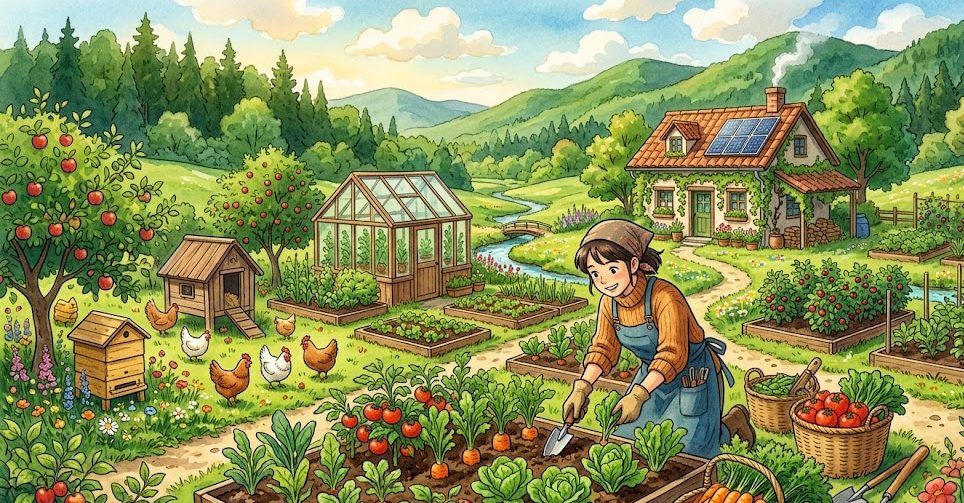
The global food system is undergoing a massive shift. For decades, the dominant belief was that an agricultural business required hundreds of acres, massive tractors, and heavy chemical budgets to turn a meaningful profit. Small-scale growing was often dismissed as a casual hobby or a modest way to feed a single family.
Today, a new generation of agricultural entrepreneurs is completely turning that old mindset on its head. Welcome to the world of Micro Farming.
Micro farming is the practice of running a highly efficient, commercially viable agricultural business on a fraction of the land used by traditional farms—often on less than two acres, and sometimes even in a backyard, urban plot, or converted indoor space. Instead of focusing on maximizing the total volume of low-margin commodity crops, micro farmers focus intensely on maximizing the net profit per square foot.
By combining smart space-saving designs, high-value specialty crops, and direct-to-consumer sales, micro farming allows individuals to launch a profitable business with low upfront capital. This comprehensive guide provides a practical blueprint for starting, scaling, and managing a highly successful micro farm.
The Economics of Micro Farming: Why Smaller is Smarter
To understand the exceptional profitability of a well-managed micro farm, you have to look past gross yield numbers and analyze the relationship between input costs and retail margins.
Traditional commodity growers sell their harvests to regional wholesalers or corporate middlemen. By the time a crop passes through multiple distribution channels, the individual farmer often keeps only a small fraction of the final retail price. To make a living, that farmer must operate on an enormous scale.
Micro farming completely flips this financial equation.
- Direct-to-Consumer Margins: By selling directly to local families, upscale restaurants, juice bars, and farmers’ markets, you pocket 100% of the retail price.
- Low Operating Overhead: You do not need a massive bank loan to purchase commercial combines or heavy field machinery. Micro farms rely on high-quality hand tools, small walk-behind tillers, and affordable vertical racks.
- Rapid Asset Turnover: Traditional crops occupy a field for 90 to 150 days. Many micro-farming crops have exceptionally fast growth cycles, allowing you to harvest, replant, and generate revenue from the exact same square foot of soil up to 20 times a year.
Choosing High-Value Crops for Maximum Square-Foot Revenue
The absolute golden rule of micro farming is simple: do not grow crops that require massive space and yield low financial returns. Growing wholesale potatoes or field corn on a quarter-acre plot is a financial dead end. Instead, focus on premium, fast-growing, space-efficient niche specialties.
1. Gourmet and Exotic Mushrooms
Mushroom cultivation is one of the most profitable indoor micro-farming ventures available. Standard button mushrooms are cheap and abundant, but gourmet varieties like Oyster (Blue, Yellow, and Pink), Lion’s Mane, and Shiitake command premium prices from local culinary chefs.
Mushrooms grow vertically on shelves or hanging bags filled with pasteurized straw or hardwood sawdust. Because they thrive in controlled, dark, high-humidity environments, you can produce hundreds of pounds of gourmet mushrooms monthly inside a standard spare room, insulated garage, or repurposed shipping container.
2. Vertical Microgreens and Sprouts
Microgreens—the young seedlings of herbs and vegetables harvested just 7 to 14 days after germination—are a massive hit with health-conscious consumers and high-end restaurants. Varieties like sunflower shoots, pea shoots, radish microgreens, and spicy mustard greens are loaded with nutrition and intense flavor profiles.
The cash flow cycle of a microgreens operation is incredibly fast. Grown in shallow plastic trays stacked vertically under energy-efficient LED grow lights, a vertical rack setup taking up just 20 square feet of floor space can generate a predictable, consistent weekly income year-round.
3. High-Value Salad Greens and Culinary Herbs
If you have access to a small outdoor plot or a compact greenhouse, high-rotation market gardening is a fantastic option. Focus on premium salad mixes (like baby leaf spinach, arugula, and mesclun) and fresh culinary herbs (such as sweet basil, cilantro, and mint).
By using intensive planting patterns—where crops are spaced closely together to form a living canopy over the soil—you can harvest high volumes of tender, premium greens continuously throughout the growing season.
Production Models: Selecting the Right Infrastructure
Depending on your budget, available location, and physical environment, you can tailor your micro farm using three distinct production architectures.
| Micro Farming System | Space Requirement | Initial Setup Cost | Primary Advantage | Best Suited Crops |
|---|---|---|---|---|
| Controlled Indoor Racks | Spare Room / Basement | Low to Moderate | Complete climate immunity; year-round production. | Microgreens, Sprouts, Mushroom Blocks. |
| Bio-Intensive Market Beds | Backyard / Small Plot | Very Low | Minimal infrastructure; improves natural soil capital over time. | Specialty Salad Mixes, Radishes, Baby Carrots, Kale. |
| Compact Hydroponics | Garage / Greenhouse | Moderate to High | High water efficiency; ultra-rapid growth rates; clean harvest. | Hydroponic Basil, Head Lettuce, Strawberries. |
Step-by-Step Blueprint to Launching a Profitable Micro Farm
Moving from a casual backyard garden to a highly efficient commercial micro farm requires a disciplined, structured approach. Follow this sequential roadmap to build a sustainable agricultural enterprise.
1
Analyze Local Demand and Secure Early Buyers
Market Validation
1.Analyze Local Demand and Secure Early Buyers:Market Validation.
Before purchasing seed trays or building mushroom racks, understand your local market gaps. Visit nearby farmers’ markets, high-end independent grocers, and local cafes. Talk directly to head chefs to find out what specialty items they struggle to source fresh. Let their immediate culinary needs dictate your initial crop selection.
2
Build High-Efficiency Operational Racks and Beds
System Configuration
2.Build High-Efficiency Operational Racks and Beds:System Configuration.
Set up your growing infrastructure based on your space constraints. If growing indoors, install sturdy shelving units equipped with automated timers for your LED grow lights and ventilation fans. If growing outdoors, form raised permanent beds using the “no-dig” philosophy to preserve the underlying soil structure and natural biology.
3
Establish a Successional Sowing Schedule
Production Synchronization
3.Establish a Successional Sowing Schedule:Production Synchronization.
To keep your buyers happy, you must provide a steady, predictable supply of fresh produce every single week. Implement successional sowing—planting a fresh batch of seeds or setting up a new flight of mushroom blocks on a strict rotating schedule (e.g., every Monday morning). This eliminates the problem of having a massive oversupply one week and zero inventory the next.
4
Create Premium Eco-Friendly Packaging and Delivery Funnels
Branding & Distribution
4.Create Premium Eco-Friendly Packaging and Delivery Funnels:Branding & Distribution.
Harvest your perishable products during the cool morning hours and chill them immediately to maximize shelf life. Package your gourmet crops in clean, professional, eco-friendly containers featuring your local farm brand logo. Deliver directly to your restaurant clients or neighborhood subscribers within hours of harvest to command a top-tier premium price.
Critical Pitfalls to Avoid in Micro Farming
While micro farming has exceptional profit potential, running a commercial small-space farm comes with unique challenges that require precise management.
Pitfall 1: Over-Diversifying Your Crops Too Early It is tempting to try growing thirty different varieties of vegetables, fruits, and herbs all at once. This destroys your operational efficiency. Managing dozens of different germination times, watering preferences, and harvest schedules will quickly lead to burnout. Start by mastering just two or three highly profitable crops. Once your systems are completely automated, slowly expand your product catalog.
Pitfall 2: Neglecting Strict Sanitation Protocols When growing crops at a high density indoors or in compact beds, a minor sanitation failure can spread rapidly. High humidity levels in an indoor mushroom room can trigger green mold (Trichoderma) outbreaks, while crowded microgreen trays can suffer from root rot (Pythium). Clean all trays, tools, and shelves thoroughly with food-safe sanitizers between every single production cycle.
Pitfall 3: Failing to Factor in Packing and Delivery Labor Many growers calculate their potential profits based purely on the time it takes to plant and water a crop. They forget that harvesting tiny greens, washing salad mixes, packaging items nicely, and driving around town to make deliveries takes significant time. Value your personal labor hours accurately and design compact local delivery routes to preserve your net profit margins.
FAQs: Frequently Asked Questions
1. How much land do I actually need to start a profitable micro farm?
You don’t need acres of land to begin. Many highly successful micro farmers generate a substantial side income using less than 500 square feet of indoor space (such as a garage or basement) for vertical microgreens and gourmet mushrooms. For an outdoor market garden, a quarter-acre of well-managed soil can support a full-time, profitable business if focused entirely on high-value salad greens and quick-turnaround root vegetables.
2. Is micro farming viable in areas with harsh winter climates?
Yes, absolutely. By utilizing Controlled Environment Agriculture (CEA) methods—such as indoor vertical racks or small insulated greenhouses equipped with modest heating systems—you can produce high-quality microgreens, herbs, and gourmet mushrooms completely unaffected by blizzards, freezing temperatures, or outdoor droughts.
3. How do micro farmers manage weeds without using toxic chemical sprays?
Micro farms rely heavily on preventative, cultural practices. Outdoor growers use the “no-dig” method, applying a thick layer of rich compost directly on top of undisturbed soil beds. This suppresses buried weed seeds by blocking out light. Any opportunistic weed seedlings that manage to break through are easily managed using manual, ultra-shallow hand tools before they can take root.
4. What is the average turnaround time from seed to sale for microgreens?
Microgreens have one of the fastest growth cycles in all of agriculture. Depending on the specific variety, most microgreens are ready for harvest and sale within 7 to 14 days after sowing. This rapid cycle allows you to maintain continuous cash flow and pivot production scales quickly based on shifting customer demands.
5. How do I approach local restaurant chefs to sell my micro-farm products?
Never visit a restaurant during their hectic lunch or dinner rushes. Instead, drop by during their quiet prep hours, typically between 2:00 PM and 4:00 PM. Bring pristine, neatly labeled sample boxes of your freshest harvests. Chefs are deeply passionate about using hyper-local, fresh ingredients that look beautiful on a plate; once they see and taste your premium quality, they will gladly talk about weekly orders and pricing.
Conclusion
Highly profitable micro farming is not about the physical size of your land; it is about the smart optimization of your space, time, and crop selection. By shifting away from the traditional model of industrial agriculture and leaning into a boutique, high-margin ecosystem, you transform small plots into powerful wealth-generating engines.
Through meticulous market research, tight successional planting routines, and a deep focus on sanitation, you build an agile business that can thrive in any environment.
Avoid the temptation to grow low-value crops, protect your post-harvest quality with professional branding, and maintain direct connections with your local culinary community. Start small, master your chosen niche step by step, and watch your compact micro farm blossom into a highly efficient, sustainable, and extraordinarily profitable enterprise.