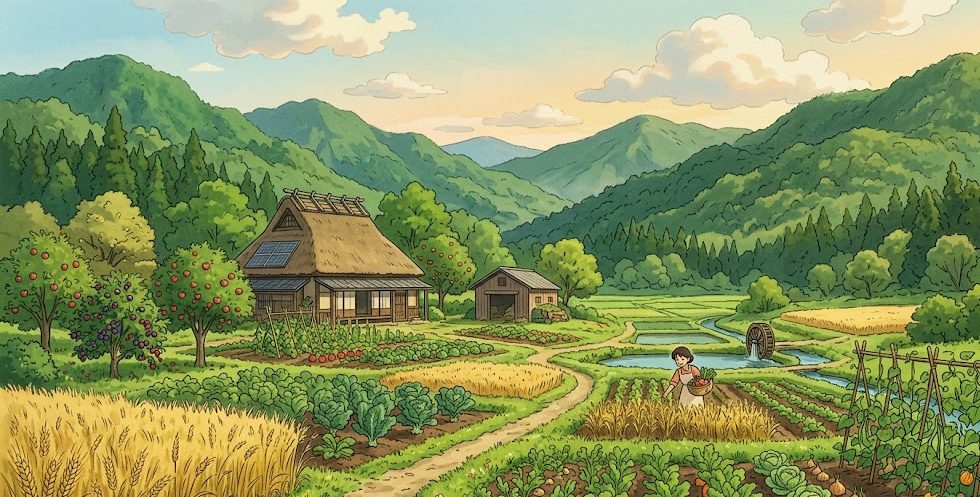
There is a profound sense of security that comes from looking out at a piece of land and knowing that, no matter what happens in the outside world, you can feed your family. In an era marked by unpredictable weather patterns, fragile supply chains, and volatile food prices, the idea of self-sufficiency has shifted from a niche hobby into a practical, necessary life strategy. This movement is known as survival farming.
True survival farming is entirely different from casual backyard gardening. When you are gardening for a hobby, it does not matter if your heirloom tomatoes split or your summer squash gets eaten by pests—you can simply drive to the local supermarket and buy dinner. But when you are farming for actual self-sufficiency, your life and well-being depend directly on your harvest yields.
To transition from a hobby gardener to a self-sufficient survival farmer, you must completely change how you choose your crops. You can no longer prioritize low-calorie, water-heavy vegetables like celery, cucumbers, or radishes just because they taste fresh. Instead, you need to focus on heavy-hitting, nutrient-dense crops that offer the highest possible calories per square foot, store exceptionally well for months without electricity, and require minimal industrial interventions to thrive.
This ultimate guide will break down the essential survival crops you need to plant, how to manage your soil naturally, and the best practices for securing a continuous, life-sustaining food supply from scratch.
Phase 1: The Golden Rules of Survival Farming
Before you drop a single seed into the earth, you must understand the core principles that separate a fragile backyard plot from a highly resilient, self-sustaining survival farm.
1. Focus on Calories, Not Just Variety
The absolute foundation of human survival is energy, which we measure in calories. If your entire plot is filled with leafy greens like lettuce and spinach, you will technically have plenty of vitamins, but you will physically starve to death because those crops lack the necessary carbohydrates, fats, and proteins to sustain hard manual labor. Your survival layout must be dominated by starchy root crops, grains, and legumes.
2. Choose Stable, Low-Maintenance Varieties
In a true self-sufficiency scenario, you cannot afford to pamper delicate, finicky crops that require constant applications of synthetic chemical fertilizers or daily pest management. You need “set-and-forget” crops—plants that possess aggressive root networks, tolerate fluctuating water levels, and naturally outcompete local weeds.
3. Prioritize Storage Life (Shelf-Stable Crops)
A massive harvest is completely useless if 80% of it rots within two weeks of pulling it from the ground. Your primary survival crops must be naturally shelf-stable. They should be capable of being dried, cured, or stored in a simple, cool, dark root cellar for six months to a year without requiring a freezing unit or complex canning equipment.
Phase 2: The Core Survival Crops for Maximum Payout
To build a complete, nutritionally balanced diet from the ground up, your farm should focus on these five elite survival crop categories.
1. Potatoes (The Calorie Heavyweight)
When it comes to pure survival, the potato is the undisputed king of the agricultural world. There is a reason entire civilizations have relied on this single root crop for survival.
Potatoes produce more digestible energy per square foot than almost any other plant on earth. They are incredibly easy to plant using simple sprouted “seed potatoes,” grow entirely underground away from many airborne pests, and thrive in poor, slightly acidic soils where other crops fail. Furthermore, a properly harvested and cured potato can sit in a dark, cool space for up to six months, providing essential carbohydrates and Vitamin C all winter long.
2. Corn (Flour and Grain Varieties)
Forget about sweet corn meant for summer barbecues; for survival, you need flint or dent corn varieties (often called field or flour corn). These varieties are left to dry completely on the stalk until the kernels are rock-hard.
Once harvested, you can easily shell the kernels and store them in airtight containers for years. This dry corn can be ground into cornmeal, baked into flatbreads, or boiled into nutrient-dense porridge. The tall, sturdy stalks also serve a double structural purpose on a self-sufficient homestead, acting as natural stakes to support climbing climbing vines.
3. Beans and Legumes (The Protein Engine)
You cannot survive on carbohydrates alone; your body requires a steady stream of amino acids and proteins to repair muscle tissue. Dry beans—such as pinto, black, kidney, and navy beans—are the ultimate plant-based protein engines.
Like field corn, dry beans are left on the vine until the pods turn brown and brittle. Once shelled, dry beans can keep indefinitely in a cool, dry pantry.
     [ Dry Bean Pods ] ---> ( Shelling Process ) ---> [ Airtight Jars ]
                                                            |
     ( Essential Amino Acids & Long-Term Storage ) <---------+
4. Winter Squash (The Natural Storage Vaults)
Winter squashes—including butternut, kabocha, and hubbard varieties—are incredible assets for self-sufficiency. Unlike tender summer zucchini, winter squashes develop an incredibly thick, hard, waxy outer rind as they mature.
This tough skin acts as a natural storage vault, protecting the sweet, nutrient-dense flesh inside from bacteria and moisture. After harvesting them in the autumn, you can simply wipe down the rind with a light vinegar solution and store them directly on a shelf at room temperature for up to nine months. They are packed with vitamin A, healthy sugars, and dense complex carbohydrates.
5. Cabbage and Hardy Brassicas
To balance out your diet with essential vitamins, fiber, and minerals, you need a cool-weather crop that can survive freezing temperatures. Cabbage is the perfect choice. It can withstand intense morning frosts and can be left in the ground well into early winter.
Additionally, cabbage can be easily preserved through wild fermentation using nothing more than natural sea salt, transforming your harvest into sauerkraut. This process preserves the vitamins for up to a year while populating your food with gut-healthy probiotics.
Phase 3: The “Three Sisters” Symbiotic Planting Method
To maximize your yield when space or labor is limited, you should look to historical companion planting strategies. The most celebrated survival layout in history is the Native American Three Sisters method, which combines corn, beans, and squash into a single, self-sustaining ecosystem.
         ^  [ Corn Stalk ] (Acts as a natural climbing pole)
        / \
       /   \ [ Climbing Beans ] (Fixes Nitrogen into the soil)
      /=====\
     [ Squash Leaves ] (Spreads wide to block weeds and lock in moisture)
How the Ecosystem Works:
- The First Sister (Corn): The corn grows tall and straight, creating a solid, natural vertical trellis for the climbing vining plants. This eliminates the need to cut and install expensive wooden stakes.
- The Second Sister (Beans): Climbing beans wrap themselves securely around the corn stalks for support. In return, the roots of the bean plants house beneficial bacteria that absorb nitrogen from the air and convert it into a usable fertilizer in the soil, directly feeding the hungry corn.
- The Third Sister (Squash): The squash plant grows horizontally along the ground, using its massive, prickly leaves to form a dense living mulch over the bare soil. This thick canopy blocks sunlight, stopping weeds from germinating, while drastically reducing water evaporation from the earth.
Phase 4: Long-Term Soil Fertility Without Stores
In a true self-sufficiency loop, you cannot rely on driving to a garden center to buy plastic bags of synthetic chemical fertilizers. If your soil runs out of nutrients, your crop yields will collapse. You must build a self-sustaining system that generates its own fertility.
1. High-Yield Composting
Every scrap of organic material on your homestead must be treated like pure gold. Establish a multi-bin composting system to recycle:
- Kitchen vegetable scraps and coffee grounds.
- Animal bedding and aged manure from backyard poultry or livestock.
- Dry leaves, straw, and pulled garden weeds (as long as they haven’t gone to seed).
2. Cover Cropping (Green Manure)
Never leave your survival plot bare during the offseason. Plant aggressive cover crops like winter rye, crimson clover, or field peas. These plants act as placeholders that prevent heavy rains from washing away your premium topsoil. In the spring, you simply chop these plants down and let them rot right on top of the bed, creating a rich layer of organic matter that naturally feeds the next generation of food crops.
Survival Crop Performance Metrics
| Crop Variety | Caloric Density | Storage Method | Minimal Shelf Life | Primary Nutritional Value |
|---|---|---|---|---|
| Potatoes | Extremely High | Dark, Cool Room (Cured) | 5 to 6 Months | Carbohydrates, Vitamin C, Potassium |
| Flour Corn | High | Airtight Container (Dried) | 2 to 3+ Years | Complex Carbs, Dietary Fiber |
| Dry Beans | High | Airtight Glass Jars | Indefinite | High Protein, Iron, Magnesium |
| Winter Squash | Moderate to High | Open Shelves (Room Temp) | 6 to 9 Months | Vitamin A, Beta-Carotene, Carbs |
| Cabbage | Low | Fermentation (Sauerkraut) | 12+ Months | Vitamin K, Vitamin C, Probiotics |
Frequently Asked Questions (FAQs)
Q1: How much land do I actually need to grow enough food to feed one person for a year?
For complete, 100% self-sufficiency, a standard rule of thumb is roughly one-quarter to one-half acre of well-managed, fertile land per person. However, this assumes you are focusing heavily on the high-yield, high-calorie survival crops listed in this guide and utilizing intensive vertical spacing methods like the Three Sisters configuration.
Q2: Can I save the seeds from my survival harvest to plant again next year?
Yes, but only if you plant Open-Pollinated or Heirloom seeds. If you plant common F1 Hybrid seeds bought from standard commercial packets, the seeds collected from your harvest will either be sterile or will revert back to the random traits of their parent plants, giving you a highly unpredictable, low-yield harvest. Always verify that your initial survival seed vault contains 100% heirloom varieties.
Q3: How do I protect my survival crops from wild animals and pests without chemical sprays?
Physical defense is your most reliable option. Construct sturdy perimeter fencing to keep out larger foraging animals like deer or rabbits. For smaller insect pests, rely heavily on companion planting (such as planting fragrant marigolds and garlic around your beds to naturally confuse the scent trails of harmful bugs) and encourage local biodiversity by inviting beneficial predators like ladybugs, frogs, and birds into your garden zone.
Q4: What is the single most critical tool for a survival farmer?
While high-quality hand tools like a heavy-duty forged hoe and a classic digging fork are essential for daily labor, your most critical asset is stored water. A reliable rain-harvesting system featuring large collection barrels connected to your roof gutters is absolute insurance against unexpected summer droughts or grid failures.
Conclusion
Stepping onto the path of survival farming is a deeply transformative experience. It shifts your relationship with the natural world from one of passive consumption to active collaboration. By intentionally stepping away from low-calorie luxury crops and focusing your energy on starchy, resilient, high-yield powerhouses like potatoes, dry beans, field corn, and winter squash, you build an unshakeable foundation of food security.
Remember, self-sufficiency is not a race that you have to win overnight. It is a long-term craft built on patience, careful soil preparation, and keen observation. Start by converting a small portion of your yard into a high-calorie survival plot this season, master the art of seed saving and winter storage, and enjoy the profound peace of mind that comes from knowing you can truly sustain yourself from your own soil!