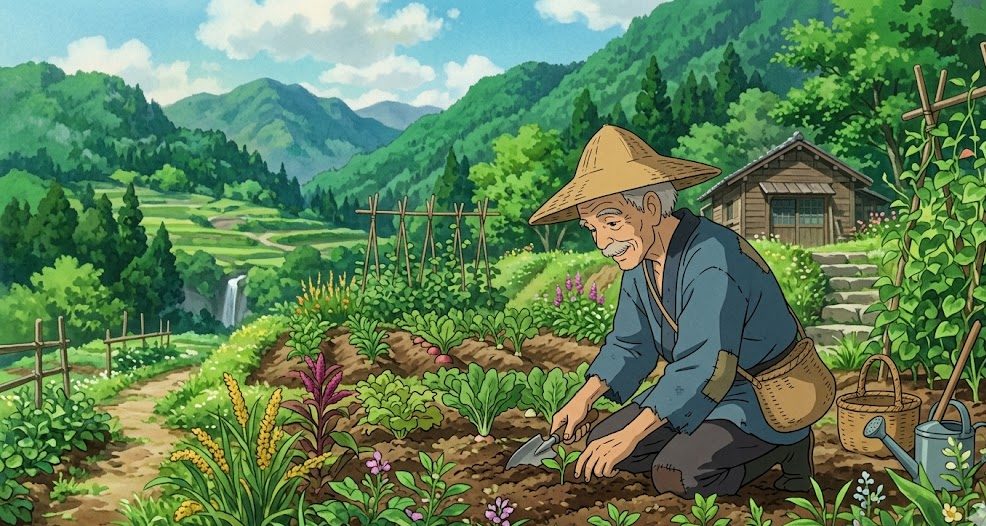
In an era of industrial monocultures and global supply chain volatility, a movement toward Small-Scale Agriculture is gaining momentum. Focusing on “forgotten crops”—ancient grains, heirlooms, and nutrient-dense varieties that have been sidelined by modern commercial demand—is not just an act of biodiversity preservation; it is a vital strategy for survival farming and local food security.
This guide explores how to leverage small-scale plots to achieve self-sufficiency and create a resilient agricultural footprint.
1. The Power of Forgotten Crops
Forgotten or “lost” crops refer to varieties that were once staples but have been replaced by high-yield, mass-produced alternatives. For the small-scale farmer, these varieties offer unique advantages.
Why Focus on Forgotten Varieties?
- Adaptability: Many ancient varieties are hardier than their modern counterparts, having evolved over centuries to thrive in specific local climates without heavy chemical intervention.
- Nutritional Density: Forgotten crops often contain higher levels of micronutrients and fiber compared to commercial varieties engineered purely for appearance and shelf life.
- Market Niche: There is a growing premium market among health-conscious consumers and high-end chefs for unique heirloom vegetables, legumes, and grains, providing a clear path to monetization for small plots.
Strategies for Reintroduction
- Seed Saving: The cornerstone of survival farming is self-reliance. Learn to identify, harvest, and store seeds from your best-performing plants to build a genetic stock that is increasingly adapted to your specific land.
- Community Exchange: Join local gardening or agricultural cooperatives to trade seeds and share knowledge about how these crops perform in your microclimate.
2. Survival Farming: Designing for Resilience
Survival farming is about maximizing output in limited spaces while ensuring that your system can withstand unexpected weather events or supply shortages.
Space-Efficient Growing Systems
- Intensive Intercropping: Do not grow crops in isolation. Practice companion planting—such as pairing nitrogen-fixing legumes with leafy greens—to maximize every square inch of your soil.
- Vertical Utilization: Use trellises and vertical supports for vining crops like beans or squash, which frees up valuable ground space for root crops or shade-tolerant varieties.
Resource Independence
- Compost Loops: In survival farming, the soil is your most precious asset. Establish a robust composting system that uses all garden waste, kitchen scraps, and local organic matter to keep your soil fertility high without relying on store-bought fertilizers.
- Water Harvesting: Small-scale farms should prioritize drought resilience. Simple rainwater collection barrels and mulch-heavy irrigation techniques are critical for keeping your crops alive during dry spells without excessive water use.
3. Integrating Small-Scale Systems for Profit
Even on a small plot, you can structure your farm to provide both survival staples and a surplus for sale.
Data-Backed Crop Planning
- Track Yields per Square Meter: Document exactly how much food each crop produces. This data allows you to optimize your plot layout over time, focusing your energy on the crops that provide the highest calories or the highest retail value.
- Phased Harvesting: Aim for a constant harvest cycle by planting in successions. This ensures you always have produce available to eat or sell, which is essential for consistent income flow.
Creating Value-Added Products
- Preservation: Survival farming is as much about storage as it is about growing. Learn to dry, ferment, can, or freeze your surplus produce. Preserved goods have a longer shelf life and can often be sold at a higher price than raw produce.
4. The Future of the Small-Scale Farmer
Small-scale farming is a rebellion against the inefficiency of industrial food systems. By focusing on crops that nature intended for your region and designing systems that prioritize long-term soil health, you are building an asset that grows in value every year.
- Community Engagement: Use your small farm as a hub for education. Selling your surplus to local neighbors or participating in farmers’ markets builds a loyal customer base that values the “locally grown” and “forgotten variety” aspects of your produce.
- Continuous Improvement: Treat your survival farm as a living laboratory. Keep detailed logs of your successes and failures to refine your methods, making your operation more efficient and profitable each season.
Conclusion
Small-scale agriculture and the cultivation of forgotten crops represent a return to the roots of sustainable food production. By focusing on hardy, nutrient-dense varieties and designing your farm for maximum space and resource efficiency, you can build a system that supports your survival while also generating a sustainable profit.
Start small, document everything, and focus on building a genetic library of seeds that thrive on your land. The future of sustainable food security lies in the hands of the small-scale farmer.