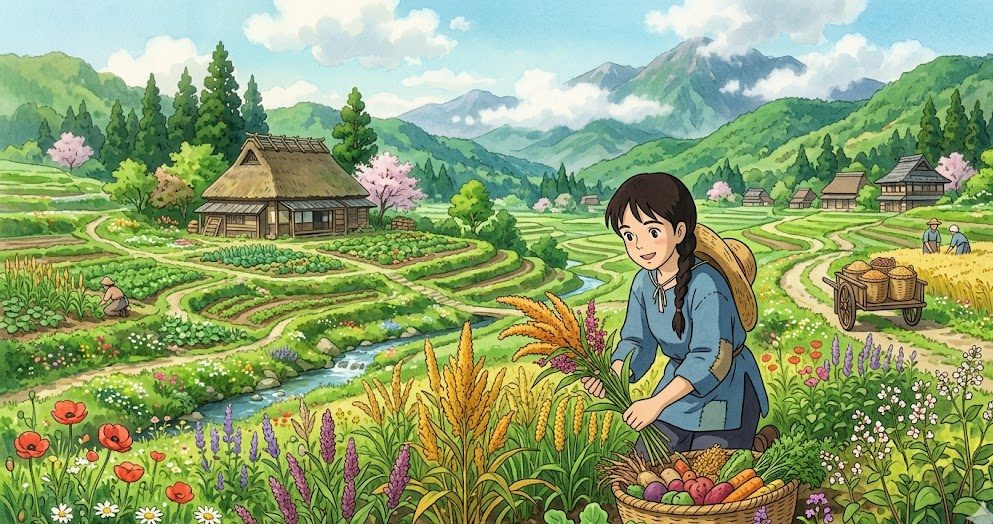
The global food system stands at a critical crossroads. While modern agriculture has succeeded in producing massive quantities of calories, it has done so by narrowing our global diet to just a handful of crops—primarily wheat, rice, and maize. This “genetic erosion” has left our food supply vulnerable to climate change and contributed to a global nutritional crisis.
However, a quiet revolution is stirring in the fields. Farmers and entrepreneurs are looking backward to move forward, reviving “Forgotten Crops”—ancient grains, tubers, and legumes that sustained civilizations for millennia. These crops aren’t just relics of the past; they are the high-profit, climate-resilient superfoods of the future.
1. The Renaissance of “Lost” Crops
Forgotten crops, often referred to as “orphan crops” or “underutilized species,” include ancient grains like Millet, Teff, Amaranth, and Quinoa, as well as hardy legumes like Bambara groundnut and tubers like Cassava or Taro.
For decades, these were sidelined in favor of high-yield commercial crops. But the tide is turning due to three major drivers:
- Climate Change: Many ancient crops are naturally drought-tolerant and can grow in poor soil where modern hybrids fail.
- Health Consciousness: Consumers are fleeing processed carbohydrates in search of gluten-free, high-protein, and mineral-rich alternatives.
- Biodiversity: Reintroducing these crops restores soil health and reduces the need for synthetic fertilizers.
2. Top Profitable Ancient Crops for Modern Markets
To turn a profit, farmers must choose crops that balance ease of growth with high market demand. Here are the frontrunners:
A. Millets (The Miracle Grains)
Once considered “birdseed” in the West, millets are now a global sensation. Varieties like Pearl Millet (Bajra), Finger Millet (Ragi), and Foxtail Millet are gluten-free and have a low Glycemic Index (GI).
- Profit Potential: High demand in the snack food industry (millet crackers, puffs) and as a rice substitute.
- Resilience: They require significantly less water than rice—making them ideal for arid regions.
B. Amaranth and Quinoa (The Pseudo-Cereals)
These “Inca Golds” are complete proteins, containing all nine essential amino acids.
- Market Growth: Quinoa has already become a pantry staple, but Amaranth is the next big thing. It can be popped like popcorn, milled into flour, or used in high-end cosmetic oils.
C. Ancient Wheats (Einkorn, Emmer, and Spelt)
For those who miss bread but struggle with modern “dwarf” wheat sensitivities, ancient wheats are the answer.
- The Edge: These grains have a different gluten structure that many find easier to digest. They command premium prices in artisanal bakeries and “farm-to-table” establishments.
3. The Economics of Ancient Farming: Why It’s Profitable
Switching to forgotten crops isn’t just an environmental choice; it’s a strategic business move.
| Feature | Modern Monoculture | Forgotten Crop Farming |
|---|---|---|
| Input Costs | High (Seeds, Fertilizers, Pesticides) | Low (Hardy, often pest-resistant) |
| Water Usage | Extremely High | Low to Moderate |
| Market Competition | High (Global Commodity Prices) | Low (Niche, Premium Markets) |
| Price Stability | Volatile | Stable/Premium |
Export to Sheets
Value-Addition: The Key to 10x Returns
The real money isn’t in selling raw grain; it’s in processing. A farmer selling raw Ragi might make a modest profit, but a brand selling “Sprouted Ragi Baby Food” or “Ancient Grain Pasta” taps into the lucrative health and wellness sector where margins are significantly higher.
4. Navigating the Challenges
Reviving ancient crops isn’t without its hurdles. Success requires more than just planting a seed.
- Processing Infrastructure: Many forgotten crops have tough outer husks. Traditional manual processing is too slow, and modern mills are often calibrated only for wheat or rice. Investment in small-scale de-hulling and milling machinery is essential.
- Seed Access: Finding high-quality, standardized seeds for ancient varieties can be difficult. Farmers often need to work with seed banks or local cooperatives.
- Consumer Awareness: While the “superfood” trend is growing, some markets still view these crops as “poor man’s food.” Marketing must focus on the story, the heritage, and the nutrient density.
5. Strategic Steps for the Modern “Agri-preneur”
If you are looking to enter this space, follow this roadmap:
Step 1: Market Research and Niche Selection
Don’t grow what everyone else is growing. Identify a gap. Is there a local demand for gluten-free flour? Is the beverage industry looking for sustainable plant-based milk bases (like Millet milk)?
Step 2: Soil and Climate Alignment
The beauty of ancient crops is their local adaptation. Choose crops that were historically grown in your region. This ensures the plant’s natural defenses are optimized for your specific pests and weather patterns.
Step 3: Certification and Branding
To command premium prices in modern markets (especially export markets), Organic and Fair Trade certifications are vital. Modern consumers want to know that their “ancient” food is being grown ethically and without chemicals.
Step 4: Building a Direct-to-Consumer (D2C) Brand
Social media and e-commerce have leveled the playing field. Use storytelling to explain the history of the crop. Show the “farm-to-fork” journey. Selling directly to health-conscious consumers via a website or local farmers’ markets bypasses the middlemen who eat into profits.
6. The Environmental Impact: A Hidden Asset
As carbon credits and “regenerative agriculture” become part of the financial landscape, farming forgotten crops offers an additional revenue stream.
- Soil Health: Crops like pigeon peas or bambara groundnuts fix nitrogen in the soil, reducing the need for expensive chemical fertilizers for the next planting cycle.
- Carbon Sequestration: Deep-rooted ancient grains are better at storing carbon in the ground than shallow-rooted modern hybrids.
In the near future, farmers may be paid not just for the grain they produce, but for the ecosystem services their ancient crops provide.
7. Conclusion: The Future is Ancient
The revival of forgotten crops is a rare “triple-win” scenario: it benefits the planet by restoring biodiversity, the consumer by providing superior nutrition, and the farmer by opening up high-margin, resilient niche markets.
We are moving away from an era of “big and uniform” toward an era of “diverse and authentic.” For the modern farmer, the greatest opportunity doesn’t lie in the next lab-created GMO, but in the resilient, nutrient-packed seeds that our ancestors perfected thousands of years ago. By bringing these ancient grains to the modern table, we aren’t just farming; we are preserving history and securing our future food security.
Final Thought: In the world of modern agriculture, the most “innovative” thing you can do is look back at what worked for ten thousand years before the industrial age began. Profit follows purpose, and there is no greater purpose than feeding the world well.