➡️ INTRODUCTION
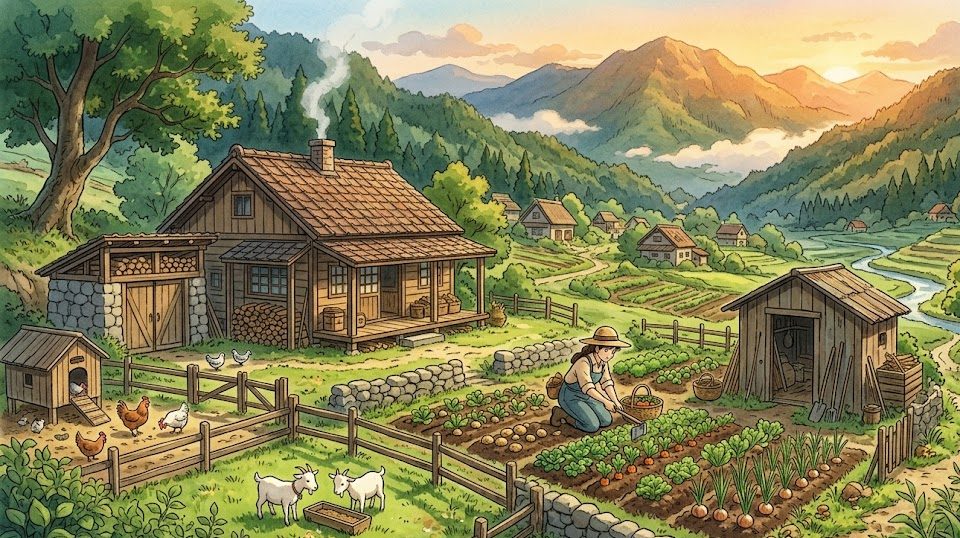
→ Survival farming is a method of agriculture focused on growing enough food to meet personal and family needs. In today’s uncertain world, many people are turning towards self-sufficient farming to ensure food security and independence. Unlike commercial farming, survival farming prioritizes sustainability, low cost, and essential crop production. It is especially useful in rural areas, small farms, and even backyard gardens. By growing basic crops, raising small livestock, and managing resources efficiently, individuals can reduce dependency on markets and ensure a stable food supply for the future.
➡️ Key Points / Benefits
→ Ensures food security for families
→ Reduces dependency on external markets
→ Low-cost farming approach
→ Promotes sustainable living
→ Suitable for small land areas
→ Provides long-term self-reliance
🔵 1️⃣ → What is Survival Farming?
Survival farming focuses on producing essential food crops for personal consumption.
Main features:
- Small-scale farming
- Basic crop production
- Self-sufficiency
Benefits:
- Reliable food source
- Low financial risk
- Simple farming methods
It is a practical solution for long-term food security.
🔵 2️⃣ → Essential Crops for Survival Farming
Choosing the right crops is important.
Best crops:
- Rice or wheat
- Potatoes
- Beans and lentils
- Vegetables like spinach and carrots
Why these crops:
- High nutrition value
- Easy to grow
- Long storage life
These crops provide balanced nutrition.
🔵 3️⃣ → Water and Resource Management
Efficient use of resources is key in survival farming.
Practices:
- Rainwater harvesting
- Drip irrigation
- Water conservation
Benefits:
- Saves water
- Ensures crop survival
- Reduces cost
Proper management ensures sustainability.
🔵 4️⃣ → Small Livestock Integration
Animals play an important role in survival farming.
Examples:
- Chickens
- Goats
- Cows
Benefits:
- Provides milk, eggs, and meat
- Produces organic manure
- Adds extra income
Livestock supports a complete farming system.
🔵 5️⃣ → Organic and Natural Farming Methods
Chemical-free farming is preferred in survival farming.
Methods:
- Composting
- Natural pest control
- Crop rotation
Advantages:
- Healthy food
- Improved soil fertility
- Sustainable farming
Organic methods are safe and effective.
🔵 6️⃣ → Long-Term Sustainability and Planning
Planning is important for long-term success.
Key tips:
- Store seeds for future use
- Diversify crops
- Maintain soil health
Result:
- Continuous food supply
- Reduced risks
- Strong farming system
Good planning ensures stability.
➡️ CONCLUSION
→ Survival farming is a practical and sustainable approach to ensure food security and independence. By focusing on essential crops, efficient resource management, and natural farming methods, individuals can build a reliable food system for themselves and their families. In uncertain times, survival farming offers stability, security, and peace of mind. It is not just a farming method but a way of life that promotes self-reliance and sustainability.