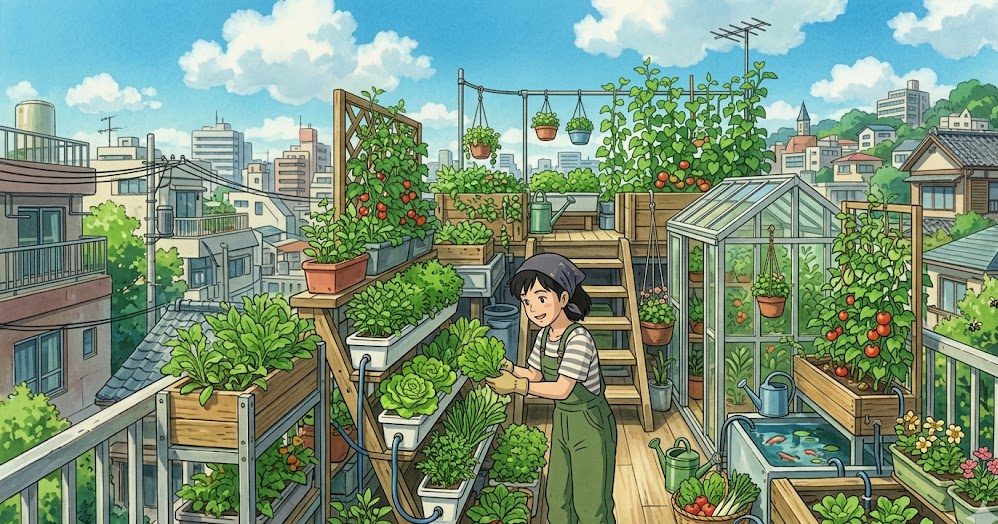
The rapid pace of global urbanization, coupled with a steady decline in arable per-capita farmland, has forced modern agriculture to rethink traditional cultivation paradigms (Kabil et al., 2026; Swileh, 2026). As concrete environments expand, Urban Agriculture and High-Yield Micro-Farming Systems are emerging as vital solutions for local food security (Kabil et al., 2026). By utilizing advanced Space Optimization techniques, commercial growers, entrepreneurs, and smart-city developers can now achieve unprecedented crop yields per square foot within compact, non-traditional footprints (Swileh, 2026).
Whether you are looking to deploy an automated commercial indoor facility or optimize a localized suburban greenhouse, understanding the core architectures of high-density, controlled environment production is essential. This comprehensive guide breaks down the technical frameworks, system configurations, and automated workflows driving modern space-optimized farming.
1. High-Yield Micro-Farming: Engineering Maximum Output
The core philosophy of micro-farming centers on maximizing the biological output of a growing area while minimizing raw resource consumption. This operational model moves away from massive, heavy machinery and relies instead on high-precision biological management.
A) Controlled Environment Agriculture (CEA) & Vertical Framing
When horizontal acreage is limited, space optimization dictates a vertical approach. Vertical farming stacks crop layers upward, transforming simple square footage into multi-dimensional cubic volume (Swileh, 2026).
- Microclimate Stabilization: Utilizing enclosed CEA frameworks isolates the crop matrix from external weather anomalies. Environmental parameters such as ambient temperature, relative humidity, and carbon dioxide ($CO_2$) concentration are kept at optimal ranges via automated HVAC systems (Kabil et al., 2026).
- Photosynthetic LED Light Tuning: Instead of relying on unpredictable solar radiation, these facilities use specialized LED grow lights. Tuning the light spectrum specifically to blue (450 nm) and red (660 nm) wavelengths maximizes chlorophyll absorption, speeding up vegetative growth cycles by up to 25%.
B) Commercial Microgreens Production
Microgreens—the young seedlings of edible vegetables and herbs harvested just 10 to 14 days after germination—represent one of the highest-yielding micro-farming sectors. Because of their ultra-short growth window, a vertical facility can run over 25 crop cycles annually, delivering a rapid return on investment while using minimal soil or substrate.
2. Urban Agriculture: Advanced Soilless Growing Methods
To operate successfully within urban limits, growers must bypass traditional soil requirements, which are often heavy, inefficient, and prone to urban contaminant risks. Modern micro-farming relies almost exclusively on advanced soilless media systems.
                  ┌──────────────────────────────────────────┐
                  │    Advanced Soilless Growing Methods     │
                  └────────────────────┬─────────────────────┘
                                       │
         ┌─────────────────────────────┼─────────────────────────────┐
         ▼                             ▼                             ▼
┌─────────────────┐           ┌─────────────────┐           ┌─────────────────┐
│   Hydroponics   │           │   Aeroponics    │           │   Aquaponics    │
│ Water Solutions │           │ Oxygen-Rich Mist│           │   Closed-Loop   │
│  (NFT/DWC/Ebb)  │           │   Suspended     │           │ Fish Co-Culture │
└─────────────────┘           └─────────────────┘           └─────────────────┘
1. Hydroponic Infrastructure (Liquid-Based Systems)
Hydroponics delivers essential mineral elements directly to plant roots via a highly oxygenated water solution. Popular commercial variations include:
- Nutrient Film Technique (NFT): A continuous, shallow stream of nutrient-rich water flows over the tips of bare root networks housed in slanted PVC or food-grade plastic channels.
- Deep Water Culture (DWC): Plants are suspended on floating rafts, keeping their root systems submerged in a highly aerated nutrient reservoir. This setup is highly effective for large-scale leafy green production.
2. Aeroponics (Oxygen-Rich Suspended Systems)
Aeroponics represents the pinnacle of root-zone space efficiency. Plant roots hang suspended in an enclosed chamber, completely free of soil or liquid pooling. An automated high-pressure misting mechanism applies a fine, nutrient-dense spray directly to the exposed roots every few minutes. This layout maximizes root access to gaseous oxygen, resulting in exceptional nutrient absorption rates and drastically reducing water usage compared to standard field methods.
3. Aquaponics (Closed-Loop Bio-Systems)
Aquaponics blends recirculating aquaculture (fish farming) with hydroponic crop production. Nitrifying bacteria break down organic fish waste into natural plant nutrients. The plant roots absorb these nitrates, filtering the water before it loops back to the aquatic tanks. This self-sustaining ecosystem eliminates the need for synthetic chemical fertilizers, aligning well with sustainable urban agricultural goals.
3. Space Optimization: Structural Architecture Matrices
Overcoming space constraints in urban zones requires specialized equipment layouts designed to capture maximum light and facilitate seamless irrigation routing.
| System Blueprint | Mechanical Design Profile | Optimal Crop Groupings |
| A-Frame Structural Racks | Triangular, dual-sided frames that maximize light interception and facilitate clean gravity-fed drainage. | Strawberries, spinach, fresh coriander, basil. |
| Vertical Aeroponic Towers | Cylindrical modular columns with multiple planting pockets wrapped around a central core. Can house over 40 plants per square foot. | Loose-leaf lettuce, culinary herbs, compact dwarf chilies. |
| Ebb and Flow Multi-Tier Benches | Stacking horizontal flood trays that fill with nutrient solutions periodically and drain completely via gravity. | Microgreens, wheatgrass, initial propagation plugs. |
4. IoT Automation & Digital Integration
Modern micro-farming systems operate with high technical precision. Incorporating the Internet of Things (IoT) and smart automation transforms traditional manual tasks into streamlined, software-managed operations:
- Real-Time Root Chemistry Scans: Integrated inline probes continuously track the pH and Electrical Conductivity (EC) of the liquid fertilizer stream, ensuring accurate nutrient balance.
- Automated Dosing Integration: If nutrient levels fall below target benchmarks, smart dosing systems automatically inject precise volumes of stock concentrate into the main reservoirs.
- Cloud-Based Remote Controls: Sensor hubs track relative humidity, light levels, and ambient temperatures, allowing operators to monitor system performance and adjust climate settings remotely via web dashboards or mobile applications.
Maximizing Monetization & Content Value
For digital entrepreneurs and content strategists writing about modern agri-tech, creating highly informative, search-engine-friendly resources requires prioritizing practical value and technical accuracy.
- Focus on Practical Blueprints: Audiences value deep-dive operational guides, clear hardware lists, and step-by-step assembly tutorials over generic overviews.
- Clean Interface Layouts: Ensure ad placements do not disrupt the presentation of complex data tables, system blueprints, or step-by-step processes.
- Build Authority with Data: Cite current academic research and industrial case studies to establish reliable content depth, keeping reader retention high and bounce rates low.
Conclusion: The Future of Urban Cultivation
Implementing High-Yield Micro-Farming Systems is no longer just an innovative trend; it is a critical strategy for sustainable urban development (Kabil et al., 2026). By pairing structural Space Optimization with advanced soilless irrigation systems and automated IoT monitors, growers can build resilient, highly profitable production hubs inside urban environments (Kabil et al., 2026; Swileh, 2026). These data-driven agricultural methods optimize space and resource efficiency, offering a robust foundation for next-generation local food networks.