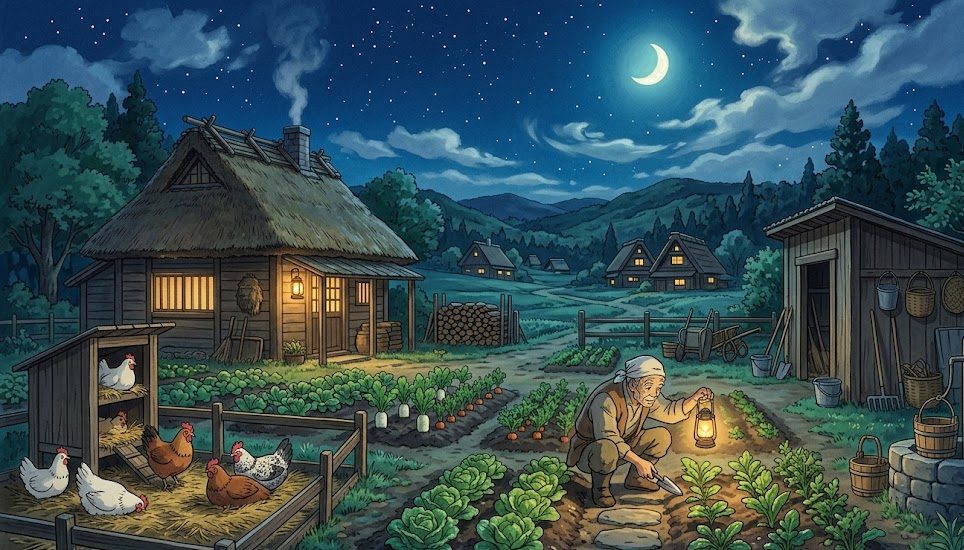
➡️ INTRODUCTION
→ Survival farming is becoming more important as people look for ways to reduce expenses and become self-dependent. This type of farming focuses on growing essential food using simple and low-cost methods. It is especially useful for small farmers, rural families, and individuals with limited resources. By using natural techniques and available resources, survival farming helps in producing healthy food without heavy investment. In a world where food prices are rising, survival farming offers a reliable and affordable solution for long-term sustainability and security.
➡️ Key Points / Benefits
→ Requires low investment
→ Ensures regular food supply
→ Reduces household expenses
→ Promotes natural farming methods
→ Suitable for small land areas
→ Builds self-reliance
🔵 1️⃣ → Importance of Low-Cost Farming
Low-cost farming is the foundation of survival farming.
Key ideas:
- Use local resources
- Avoid expensive inputs
- Focus on basic needs
Benefits:
- Reduced financial risk
- Easy to start
- Sustainable approach
It allows anyone to start farming with minimal investment.
🔵 2️⃣ → Growing Food with Local Resources
Using locally available materials reduces costs.
Examples:
- Homemade compost
- Natural fertilizers
- Rainwater storage
Advantages:
- Cost savings
- Eco-friendly farming
- Better soil health
Local resources make farming simple and effective.
🔵 3️⃣ → Mixed Cropping for Better Output
Growing multiple crops together improves productivity.
Best combinations:
- Vegetables with legumes
- Grains with pulses
Benefits:
- Balanced nutrition
- Reduced risk
- Better land use
Mixed cropping ensures steady food supply.
🔵 4️⃣ → Water Conservation Techniques
Water management is essential for survival farming.
Methods:
- Rainwater harvesting
- Mulching
- Drip irrigation
Benefits:
- Saves water
- Supports crop growth
- Improves sustainability
Efficient water use is key to success.
🔵 5️⃣ → Natural Pest Control Methods
Avoiding chemicals keeps farming safe and low-cost.
Techniques:
- Neem spray
- Companion planting
- Manual pest removal
Advantages:
- Healthy crops
- Reduced expenses
- Safe environment
Natural methods protect crops effectively.
🔵 6️⃣ → Food Storage and Planning
Storing food properly ensures long-term availability.
Tips:
- Dry grains properly
- Store in clean containers
- Protect from pests
Benefits:
- Reduces waste
- Ensures food security
- Supports long-term planning
Good storage is as important as production.
➡️ CONCLUSION
→ Survival farming with low-cost techniques is a powerful way to achieve self-sufficiency and reduce dependence on external resources. By using local materials, natural methods, and smart planning, farmers and families can grow their own food with minimal expenses. This approach not only saves money but also promotes a healthier and more sustainable lifestyle. In the long run, survival farming provides stability, security, and independence, making it an essential practice for the future.