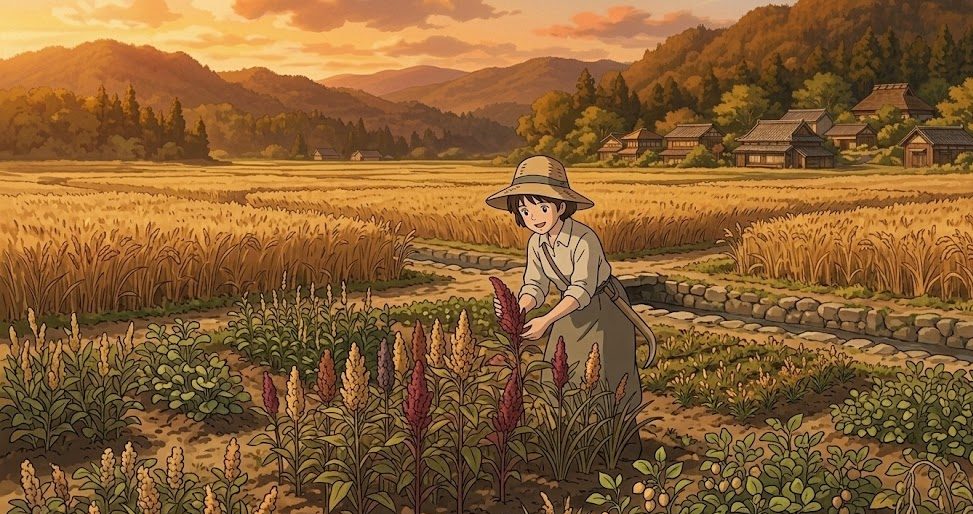
What if I told you that agriculture consumes approximately 70% of the world’s freshwater, yet nearly a third of that water is used to grow crops that are increasingly failing due to rising temperatures? For the modern farmer or agricultural investor, the “Pain Point” is clear: water is becoming more expensive and less reliable, while traditional commodity crops like corn and rice demand more of it every year. This creates a “profit squeeze” that threatens the very livelihood of those who feed the world.
The “Challenge” lies in our heavy reliance on a few “thirsty” staples that were optimized for an era of climate stability that no longer exists. However, the “Main Concept” for a profitable, sustainable future is hidden in our history. Forgotten crops—resilient, drought-tolerant species that sustained ancient civilizations—are making a comeback. These crops don’t just survive on less water; they thrive in conditions that would kill modern hybrids.
In this guide, we will explore the most profitable low-water crops, the science behind their resilience, and a practical roadmap for integrating these “climate-smart” plants into your production cycle to maximize both water efficiency and market returns.
Understanding Low-Water Forgotten Crops: Key Concepts and Importance
To understand why “forgotten crops” are so water-efficient, we have to look at their biological evolution. Most modern commercial crops have been bred for maximum yield under “perfect” conditions, meaning they expect a steady, heavy supply of water and fertilizer. In contrast, forgotten crops like Millet, Sorghum, and Tepary Beans evolved in arid environments.
Think of a modern high-yield crop as a luxury sports car: it’s fast and impressive, but it requires high-octane fuel and a pristine road to function. Forgotten crops are the rugged off-road vehicles of the plant world. They have deep root systems, specialized leaf coatings to prevent evaporation, and the ability to go dormant during extreme dry spells.
In the modern context, these crops are becoming essential. As aquifers deplete and irrigation costs skyrocket, the ability to produce a harvest with 30-50% less water isn’t just an environmental win—it’s a massive competitive advantage. These plants are often “orphan crops,” meaning they have been ignored by industrial science, but they carry the genetic “memory” of how to survive in a warming world.
Why It Matters: The Top Benefits of Drought-Tolerant Crops
Transitioning to low-water forgotten crops offers more than just survival; it offers a path to higher margins and healthier land.
- Drastic Reduction in Input Costs: Because these crops are naturally hardy, they require significantly less expensive irrigation infrastructure and fewer synthetic fertilizers. This directly increases your Net Farm Income.
- Market Diversification: As consumers move toward “Ancient Grains” and “Superfoods,” crops like Amaranth and Fonio command premium prices in health-conscious markets, shielding you from the price volatility of corn and soy.
- Soil Health and Nitrogen Fixation: Many drought-tolerant forgotten crops are legumes, such as the Bambara groundnut. These plants take nitrogen from the air and put it back into the soil, acting as a natural fertilizer for your next planting cycle.
- Risk Mitigation: During a drought year, a farmer growing standard wheat might lose 80% of their crop. A farmer growing Sorghum may only see a 10-15% dip, ensuring financial stability when others are facing total loss.
Pro Fact: According to the World Resources Institute, by 2040, nearly 40% of all irrigated crops will face high water stress. Investing in drought-tolerant varieties now is a form of “climate hedging.”
How to Get Started: A Practical Guide for Beginners
Shifting your focus to profitable, low-water crops requires a strategic approach. Follow this 5-step plan to begin your transition.
1. Conduct a “Water Audit”
Assess your historical rainfall data and the cost of your irrigation. Identify the “dry spots” on your land where traditional crops consistently underperform. These are your prime locations for testing forgotten crops.
2. Select the Right “Warrior” Crop
Choose a crop that matches your climate.
- For extreme heat: Look at Tepary Beans or Cowpeas.
- For poor soil + low water: Consider Millet or Sorghum.
- For high-value “Superfood” markets: Explore Amaranth or Quinoa.
3. Source Quality Heritage Seeds
Modern seed stores may not stock these. Connect with specialized seed banks (like Native Seeds/SEARCH) or university agricultural extensions that focus on arid-land studies. Ensure the seeds are non-hybridized for better long-term resilience.
4. Implement “Minimum Tillage”
To maximize the water-saving potential of these crops, use no-till or minimum tillage methods. This keeps the soil structure intact, allowing the deep roots of forgotten crops to penetrate easier and keeping moisture trapped underground.
5. Build Your “Niche” Supply Chain
Before you harvest, identify your buyers. Reach out to local health food cooperatives, artisan bakeries, or specialty grain millers. Many “forgotten” crops are highly profitable when sold as flour or value-added snacks.
Beginner’s Tip: Don’t over-irrigate out of habit. These crops can actually suffer or produce less grain if they are given too much water. They need a “stress period” to trigger their deep root growth.
Overcoming Challenges and Looking into the Future
The transition isn’t without hurdles. The two biggest challenges are Processing Infrastructure and Consumer Awareness. Many forgotten grains have a tough outer husk that requires specialized hulling equipment. Furthermore, you may need to educate your customers on how to cook these unique varieties.
However, the future is bright. Agri-tech innovations are currently focusing on “orphan crop” genomics. By mapping the DNA of these resilient plants, we can improve their yield without losing their drought-tolerant properties. We are also seeing a rise in Regenerative Finance, where investors specifically fund farmers who switch to low-water, soil-building crops.
Conclusion
The future of profitable farming isn’t about fighting nature with more water and chemicals; it’s about working with the plants that have already won the battle against drought. By reintroducing forgotten crops like Millet, Amaranth, and Cowpeas, we can build an agricultural system that is resilient to climate change and financially robust.
Your next step is simple: Identify one acre of marginal, dry land on your property and commit to a trial of a drought-tolerant forgotten crop this season. The seeds of the past are the only way to guarantee the harvests of the future.
Would you like me to create a comparison chart showing the specific water requirements of Millet versus Corn for your region?
FAQs
Q1: How much less water do these crops actually use? On average, crops like Sorghum and Millet require about 30% to 50% less water than maize (corn) to produce a comparable amount of biomass, depending on the specific variety and soil conditions.
Q2: Are these crops harder to harvest with modern machinery? Most can be harvested with standard combines, though you may need to adjust the settings (like the concave gap and fan speed) because these grains are often smaller and lighter than modern wheat or corn.
Q3: Is there a real market for “forgotten” crops? Yes. The market for ancient grains and gluten-free alternatives is growing at a CAGR (Compound Annual Growth Rate) of over 9%. Companies are increasingly looking for sustainable, low-water ingredients to satisfy their ESG (Environmental, Social, and Governance) goals.
Q4: Do these crops require different types of soil? Actually, one of their biggest benefits is that they often thrive in marginal or “poor” soil where modern staples struggle. They are excellent for utilizing land that is currently considered “unproductive.”